


India-UK FTA Delivers Strong Start with $140 Million Export Orders on Opening Day
The first day of the India-UK Comprehensive Economic and Trade Agreement (CETA) witnessed robust export activity as Prime Minister Narendra Modi highlighted new opportunities for businesses, farmers, MSMEs, and skilled professionals in both nations.
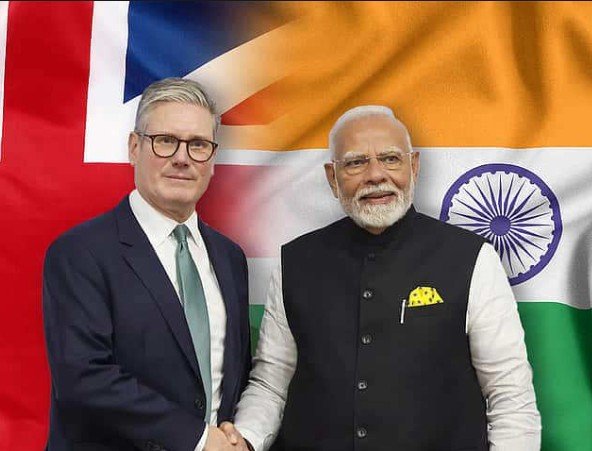
New Delhi: India marked a promising start to its landmark trade partnership with the United Kingdom as exporters dispatched goods worth nearly $140 million on the opening day of the India-UK Comprehensive Economic and Trade Agreement (CETA). The strong initial performance reflects growing confidence among exporters and signals the beginning of a new phase in economic cooperation between the two countries.
Prime Minister Narendra Modi welcomed the successful launch of the agreement, describing it as a milestone that will deepen commercial ties while opening new avenues for businesses, professionals, and investors. Alongside the trade pact, the accompanying social security agreement is expected to facilitate greater workforce mobility and reduce financial burdens for Indian professionals employed in the UK.
According to government officials, the first day’s export figures demonstrate the preparedness of Indian industries to capitalize on reduced tariffs and easier market access offered under the agreement. Exporters across multiple sectors moved shipments to the UK immediately after the pact came into effect, indicating strong demand and efficient implementation.
Boost for Farmers and MSMEs
Prime Minister Modi emphasized that the agreement would generate fresh opportunities for India’s agricultural community, micro, small and medium enterprises (MSMEs), entrepreneurs, and manufacturers. Reduced trade barriers are expected to improve the competitiveness of Indian products in the British market while encouraging greater investment in export-oriented industries.
The agreement is likely to particularly benefit sectors including textiles, garments, leather goods, engineering products, gems and jewellery, food processing, marine products, pharmaceuticals, and handicrafts. Easier access to the UK market could help Indian businesses expand exports while creating additional employment opportunities across the country.
Industry representatives believe that lower import duties on Indian goods will improve pricing competitiveness, enabling exporters to increase market share in one of Europe’s largest consumer markets.
Technology and Innovation Partnership
Beyond merchandise trade, the agreement seeks to strengthen collaboration in technology, digital services, research, innovation, and professional services. Both governments have identified emerging technologies, artificial intelligence, fintech, green energy, and advanced manufacturing as priority areas for future cooperation.
Officials believe enhanced business partnerships between Indian and British companies will encourage knowledge sharing, joint ventures, and investments in innovation-driven industries. Increased cooperation is also expected to support startups and technology firms seeking opportunities in international markets.
Greater Mobility for Skilled Professionals
A significant feature of the broader bilateral framework is the social security arrangement designed to ease financial obligations for Indian professionals working temporarily in the United Kingdom. The agreement aims to prevent double social security contributions while simplifying compliance for employers and employees.
Business organizations have welcomed this provision, stating that it will improve workforce mobility and encourage greater exchange of skilled professionals between the two countries. Sectors such as information technology, healthcare, engineering, financial services, education, and consulting are expected to benefit from easier movement of talent.
Experts believe the arrangement strengthens India’s position as a global supplier of highly skilled professionals while enhancing opportunities for international career growth.
Exporters Respond Quickly
Export promotion councils reported that companies across various sectors had prepared shipments well in advance to take immediate advantage of the new trade framework. The first day’s export value of nearly $140 million reflects both strong buyer confidence in the UK and the readiness of Indian exporters to leverage tariff concessions.
Trade analysts expect export volumes to grow steadily in the coming months as businesses become more familiar with the agreement’s rules of origin, customs procedures, and market access provisions.
Several exporters noted that improved predictability in trade regulations would encourage long-term contracts and strengthen supply chain partnerships with British buyers.
Strengthening Bilateral Economic Relations
India and the United Kingdom have steadily expanded economic cooperation over the past decade, with bilateral trade witnessing consistent growth. The implementation of CETA is expected to further accelerate this momentum by removing trade barriers, encouraging investment, and creating a more business-friendly environment.
Government officials believe the agreement will also attract fresh foreign investment into India’s manufacturing and services sectors while supporting the country’s objective of becoming a major global export hub.
The trade pact complements broader strategic cooperation between the two nations in areas including education, defence, climate action, clean energy, healthcare, financial services, and digital transformation.
Industry Welcomes the Agreement
Business associations have praised the launch of the agreement, describing it as one of the most significant developments for India’s export sector in recent years. Industry leaders believe improved market access will help companies diversify export destinations while reducing dependence on traditional markets.
MSMEs, in particular, are expected to gain from simplified trade procedures and improved access to British consumers. Export promotion organizations are also planning awareness programmes to help smaller businesses understand the agreement’s provisions and maximize its benefits.
Manufacturers anticipate that stronger demand from the UK could encourage additional investment in production capacity, technology upgrades, and employment generation.
Positive Outlook for Future Trade
Economists expect the agreement to contribute to sustained growth in bilateral trade over the coming years. With reduced tariffs, stronger regulatory cooperation, and improved mobility provisions, businesses from both countries are likely to expand commercial partnerships across multiple sectors.
The early export performance offers an encouraging indication of the agreement’s potential to enhance India’s global trade footprint while reinforcing the country’s role in international supply chains.
As implementation progresses, policymakers and industry stakeholders will closely monitor export growth, investment flows, and sector-specific opportunities to ensure that businesses of all sizes benefit from the new economic partnership.
The successful launch of the India-UK Comprehensive Economic and Trade Agreement marks an important milestone in bilateral relations, laying the foundation for deeper cooperation in trade, investment, technology, innovation, and human capital while supporting long-term economic prosperity for both nations.

