


Industrial Credit Surges 17.5% in May as Bank Lending Gains Momentum: RBI
RBI data shows strong expansion in industrial, services and agriculture credit, reflecting rising investment activity and improving business confidence across key sectors.
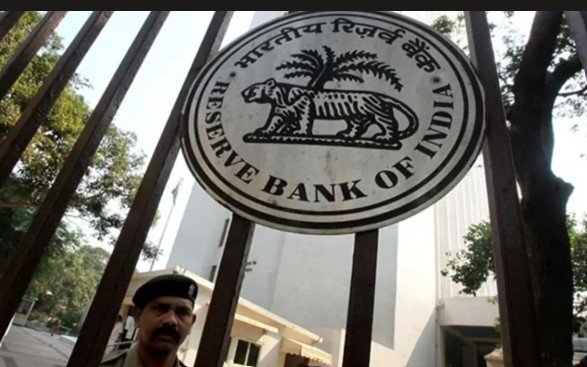
Mumbai: India’s banking sector witnessed a significant rise in lending to industries during May 2026, with bank credit to the industrial sector expanding by 17.5 percent year on year, according to the latest sectoral deployment of credit data released by the Reserve Bank of India (RBI). The strong performance was driven by faster lending to large industries while micro, small and medium enterprises (MSMEs) continued to receive healthy credit support, highlighting improved business sentiment and increased investment across multiple sectors.
The RBI’s data for the fortnight ended May 31, 2026, showed that overall non-food bank credit registered an annual growth of 17.4 percent, nearly doubling from the 8.8 percent growth recorded during the corresponding period last year. The sharp increase reflects stronger demand for loans from businesses, farmers and consumers as economic activity remains on a firm footing.
Industrial credit emerged as one of the strongest contributors to the overall lending growth. The central bank noted that while lending to micro and small enterprises and medium-sized industries continued to maintain robust momentum, credit to large industries accelerated considerably compared to last year. The broad-based improvement indicates that companies are stepping up investment plans, expanding production capacity and increasing working capital requirements to meet rising demand.
According to the RBI, several major industries witnessed substantial growth in bank financing during May. Infrastructure projects remained among the biggest beneficiaries as banks continued to extend credit for roads, transport, energy and urban development projects. Engineering companies also recorded healthy borrowing, reflecting increased manufacturing activity and rising capital expenditure.
The textile industry saw a notable increase in credit availability as businesses expanded operations to meet domestic and export demand. Construction companies also attracted higher lending amid continued growth in housing, commercial projects and public infrastructure development. Credit to petroleum, coal products and nuclear fuel industries expanded significantly, supported by ongoing investments in energy production and processing.
Chemical and chemical product manufacturers also registered strong growth in borrowing, indicating sustained demand from industrial users as well as consumer-oriented sectors. However, the RBI observed relatively slower credit expansion in the rubber, plastic and wood product industries, suggesting more moderate investment activity in these segments.
The agriculture and allied activities sector also maintained healthy credit growth during the reporting period. Bank lending to agriculture increased by 14.9 percent year-on-year compared with 7.5 percent during the same period last year. The stronger flow of institutional credit is expected to support farmers through crop production, irrigation projects, farm mechanisation and allied activities such as dairy, fisheries and horticulture.
Credit growth remained strong in the services sector as well. Lending to service-oriented businesses increased by 20.4 percent, a significant improvement over the 8.4 percent growth recorded during the corresponding period last year. The acceleration was primarily driven by higher loans extended to non-banking financial companies (NBFCs), commercial real estate developers and businesses engaged in wholesale and retail trade.
The expansion in credit to NBFCs reflects rising demand for liquidity among financial intermediaries, while increased financing for commercial real estate indicates renewed investment in office spaces, shopping complexes, warehouses and industrial parks. Trade-related borrowing also remained healthy as businesses expanded inventories and strengthened supply chains to cater to improving consumer demand.
Retail lending also continued to contribute positively to overall credit growth. Personal loans expanded by 15.4 percent during May, improving from 11.1 percent growth recorded a year earlier. Housing loans maintained stable growth as homebuyers continued to benefit from sustained demand in the residential property market.
Vehicle financing also registered consistent growth, supported by rising automobile sales across passenger and commercial vehicle segments. However, the RBI pointed out that outstanding credit card balances witnessed some moderation compared with previous trends, indicating a gradual slowdown in unsecured consumer borrowing.
The latest figures suggest that credit expansion is becoming increasingly broad-based across sectors, reflecting stronger economic fundamentals and improving confidence among businesses and consumers alike. Economists believe sustained credit growth remains essential for supporting investment, employment generation and higher economic output.
Higher lending to infrastructure projects is particularly significant as government and private sector investments continue to focus on transportation networks, logistics, renewable energy and urban infrastructure. Increased availability of bank finance is expected to accelerate project implementation and strengthen long-term economic growth.
Similarly, the continued expansion of credit to MSMEs highlights the banking sector’s growing role in supporting India’s small business ecosystem. Easier access to institutional finance enables smaller enterprises to invest in technology, expand production capacity, improve productivity and generate employment.
The RBI stated that the sectoral credit deployment data has been compiled from 41 select scheduled commercial banks, which together account for nearly 95 percent of the country’s total non-food credit. The data provides an important snapshot of lending trends across major sectors of the economy and serves as a key indicator of overall economic activity.
Financial analysts expect bank credit growth to remain healthy over the coming months as economic expansion continues, infrastructure investments gather pace and corporate capital expenditure gradually strengthens. Continued policy support, stable financial conditions and improving demand are likely to sustain lending momentum across industrial, agricultural, services and retail sectors.
The latest RBI figures underscore the resilience of India’s banking system and reflect growing confidence among borrowers across diverse segments of the economy. With industrial lending recording one of its strongest performances in recent years, banks are expected to continue playing a crucial role in financing the country’s growth ambitions throughout the current financial year.

