


Iran Launches Missile Strike on Jordan Air Base Hosting US Troops
Tehran targets military sites in Bahrain, Kuwait and Jordan after Washington blames Iran for Apache helicopter crash; ceasefire efforts face renewed uncertainty.
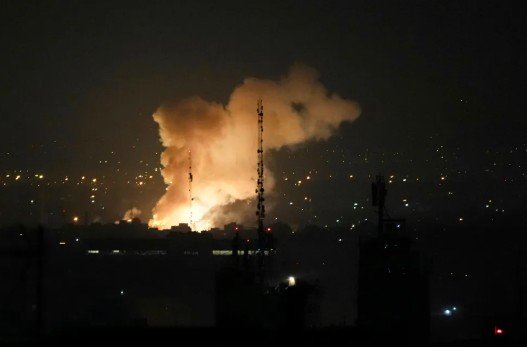
DUBAI, Jun 10: The United States carried out airstrikes on Iranian military infrastructure early Wednesday, marking a significant escalation in regional tensions after Washington accused Tehran of involvement in the crash of an American Apache attack helicopter near the Strait of Hormuz.
Iran responded by launching missile attacks toward military installations in Bahrain, Kuwait and Jordan. Authorities in Bahrain and Kuwait activated air-defence systems and reported intercepting incoming threats, while Jordan said its forces shot down five missiles aimed at the Muwaffaq Salti Air Base, a facility that hosts US military aircraft.
The latest exchange of hostilities has raised concerns about the stability of ongoing diplomatic efforts aimed at ending the conflict, which has unsettled global markets, pushed up energy prices and added pressure on food and commodity costs worldwide.
According to the US Central Command, American fighter aircraft targeted Iranian air-defence positions, surveillance radar installations and command-and-control facilities. Iranian officials confirmed strikes in the Bandar Abbas and Qeshm Island areas but did not disclose the extent of the damage.
Washington described the operation as a measured response to attacks on US personnel and international shipping routes in the region. Tehran, however, warned that foreign military deployments near its borders remain vulnerable and vowed to retaliate against any future aggression.
Iranian Foreign Minister Abbas Araghchi said the country’s armed forces would respond decisively to threats and urged foreign militaries to leave the region if they sought security.
Jordan’s military said no casualties were reported after the missile interceptions and that explosive disposal teams had examined debris recovered from the incident.
The escalation follows the crash of a US Army AH-64 Apache helicopter during a patrol mission near the Strait of Hormuz. A US official, speaking anonymously, said preliminary findings indicate the aircraft collided with an Iranian drone before going down. The circumstances surrounding the collision remain under investigation.
Both crew members were rescued in a first-of-its-kind operation involving an autonomous drone boat. US Central Command said the unmanned vessel located and recovered the aviators before they were transferred to safety by helicopter. President Donald Trump later confirmed that the service members were unharmed.
Apache helicopters have played a central role in US operations aimed at enforcing restrictions on Iranian oil shipments and monitoring regional waterways.
Despite the latest military developments, Trump expressed optimism that negotiations with Tehran could still produce a breakthrough. Diplomatic efforts led by regional mediators, including Pakistan, have struggled to bridge differences over Iran’s nuclear programme, sanctions relief and access to frozen assets.
The broader regional picture remains complicated by continued fighting between Israel and Hezbollah in Lebanon. Lebanese Army Commander Gen. Rodolphe Haykal visited Pakistan on Tuesday for talks with Army Chief Field Marshal Asim Munir, who has been involved in diplomatic efforts related to the Iran-US standoff.
As military activity intensifies across multiple fronts, concerns are growing that renewed confrontation could further delay prospects for a lasting political settlement in the region.

