


Karan Singh Appeals to Sonam Wangchuk to End Hunger Strike Amid Health Concerns
Former Jammu and Kashmir Governor urges dialogue while protesters announce fresh campaign demanding reforms in India's public examination system.
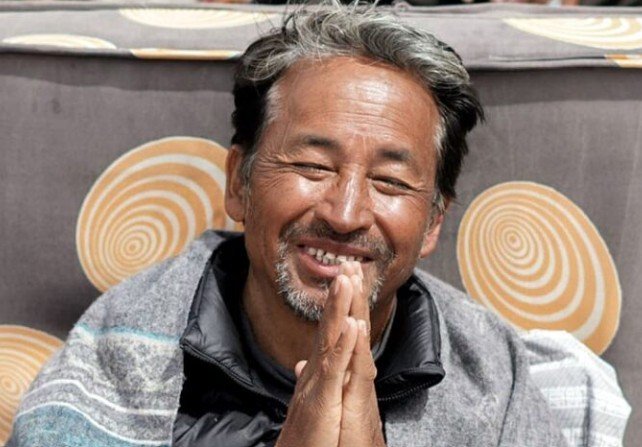
NEW DELHI, July 15: Former Jammu and Kashmir Governor Karan Singh has appealed to Ladakhi innovator and social activist Sonam Wangchuk to end his indefinite hunger strike, warning that his prolonged fast could pose a serious threat to his health. The appeal comes as Wangchuk continues his protest demanding that the Union Government initiate formal discussions over issues raised by demonstrators, while supporters of the Cockroach Janta Party (CJP) continue their agitation at Jantar Mantar over alleged irregularities in the NEET examination process.
According to fellow protesters, Wangchuk has now completed 18 days without food, and his physical condition has weakened considerably. They claim that he has lost nearly 8.5 kilograms, experienced noticeable muscle loss, and is enduring persistent pain due to the extended fast. Medical concerns surrounding his condition have prompted appeals from several public figures urging him to discontinue the protest.
Expressing concern, Karan Singh described Wangchuk as a respected social reformer whose contributions to Ladakh and sustainable innovation have earned national recognition. He said that while Wangchuk had successfully drawn attention to the issues he wished to highlight, continuing the hunger strike could endanger his life.
Singh urged the activist to resume a normal diet, stating that the country should not risk losing an individual who has made significant contributions to environmental conservation, education, and community development in the Himalayan region. He also expressed hope that meaningful dialogue between the government and the protesters could still take place.
Despite these appeals, Wangchuk has reportedly remained firm in his decision. CJP founder Abhijeet Dipke said several politicians, artists, activists, and well-wishers had requested Wangchuk to end the fast, but he continued to insist that the government should first agree to hold discussions with the protesters.
Sharing Wangchuk’s response, Dipke said the activist maintained that instead of asking him to abandon his protest, people should question why the government had not initiated dialogue despite repeated demands. He added that Wangchuk’s commitment to the cause remained unwavering even as his health deteriorated.
Dipke further stated that the activist had begun losing muscle mass and continued to suffer severe physical discomfort, making the situation increasingly worrying for those participating in the protest alongside him.
Alongside the health update, the Cockroach Janta Party released a five-point reform charter aimed at overhauling India’s public examination framework. The organisation argued that repeated controversies surrounding competitive examinations have undermined public confidence and called for structural reforms to restore transparency and accountability.
Among its principal demands, the charter proposes replacing the existing legislation governing public examinations with a new law titled the Public Examinations (Transparency, Accountability and Candidates’ Rights) Act. The group also called for the dissolution of the National Testing Agency (NTA) and the establishment of a statutory National Testing Commission to oversee entrance examinations with greater independence and accountability.
The organisation said additional reforms should strengthen candidates’ rights, improve institutional oversight, and create mechanisms to ensure fairness and transparency throughout the examination process.
To intensify its campaign, CJP announced a “Chalo Sansad” march scheduled for July 20, coinciding with the opening day of Parliament’s Monsoon Session. Organisers said the demonstration aims to press lawmakers and the government to address concerns regarding examination reforms and engage in meaningful discussions with stakeholders.
The developments have brought renewed attention to demands for examination reforms while highlighting growing concerns over Wangchuk’s health as his indefinite hunger strike continues.

