


Meghwal, Shah Push Lok Sabha Bills to Amend Women’s Quota Law, Propose Delimitation Panel
Government defends constitutional changes and Census timeline as opposition questions urgency and process
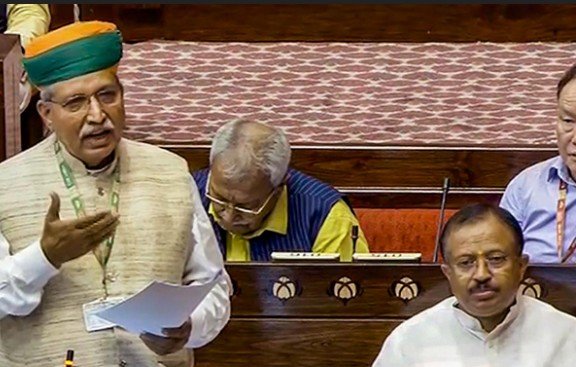
NEW DELHI, Apr 16: Union ministers Arjun Ram Meghwal and Amit Shah on Thursday introduced a set of three significant bills in the Lok Sabha aimed at modifying the existing framework of the women’s reservation law and establishing a fresh delimitation commission, triggering strong resistance from opposition benches.
The proposed legislation, which seeks to operationalise the long pending reservation of seats for women in legislative bodies, was met with sharp criticism from several opposition parties. They argued that the move raises constitutional concerns and lacks procedural clarity.
Senior Congress leader K. C. Venugopal questioned the necessity of bringing amendments at this stage. He pointed out that the suggested changes could have been incorporated when Parliament originally cleared the women’s reservation framework. Calling the new proposals “anti-constitutional,” he accused the government of bypassing established legislative norms.
Echoing similar concerns, Samajwadi Party chief Akhilesh Yadav raised doubts about the timing of the bills. While reiterating his party’s support for women’s representation, he questioned the government’s urgency and emphasised the need for an updated Census before undertaking such a major exercise. He argued that population data forms the backbone of any fair delimitation process.
Responding to the criticism, Home Minister Amit Shah defended the government’s approach, stating that preparations for the 2027 Census are already underway. He further revealed that the Centre has decided to include caste enumeration in the upcoming Census exercise. However, he firmly ruled out any scope for religion-based reservation, terming it unconstitutional and contrary to the foundational principles of the country.
According to the draft Constitution amendment bill circulated among members, the proposed reforms include a substantial increase in the strength of the Lok Sabha. The number of seats is expected to rise from the current 543 to a maximum of 850. This expansion is aimed at facilitating the implementation of 33 per cent reservation for women ahead of the 2029 general elections, following a comprehensive delimitation exercise based on the 2011 Census.
In addition to Parliament, similar changes are proposed for state legislative assemblies and Union territory legislatures. The objective is to ensure proportional representation for women across all levels of elected governance.
The draft also outlines a rotational system for reserved seats. Under this mechanism, constituencies allocated for women representatives will change periodically, ensuring wider participation and equitable distribution of opportunities across regions.
Despite the government’s assurances, opposition parties remain unconvinced. Several of them have come together to oppose the delimitation-related provisions within the bill. They clarified that their resistance is not against women’s reservation itself but against the manner in which the government is attempting to implement it.
The debate surrounding the women’s quota law amendment has once again highlighted deeper political divisions over representation, federal balance, and the sequencing of electoral reforms. As the bills move forward in Parliament, they are expected to spark intense discussions on constitutional validity, demographic fairness, and the broader implications for India’s democratic structure.

