


Multilingualism Strengthens Society
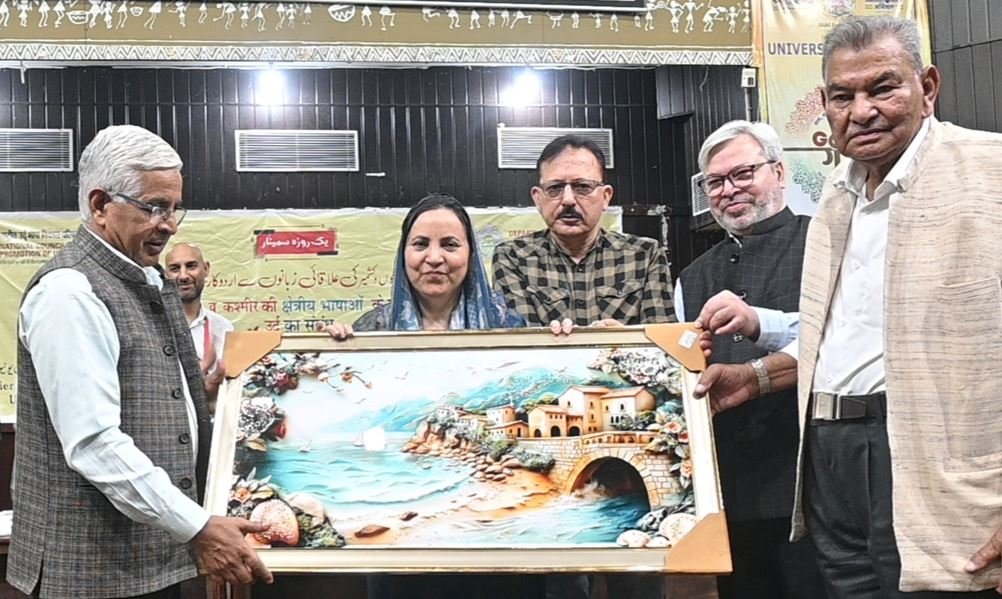
The seminar on the relationship of Urdu with regional languages at the University of Jammu offered an important opportunity to reflect on the deeper role of language in shaping culture, identity, and social understanding. Education Minister Sakeena Itoo’s remarks on the occasion carried a thoughtful message. By describing languages as guardians of history, identity, and culture, she drew attention to a truth that is especially relevant in a region like Jammu and Kashmir, where linguistic diversity forms a vital part of public life and cultural memory.
Languages are never just tools of communication. They carry within them the experiences, values, and histories of generations. They preserve stories, emotions, traditions, and collective memory in ways that few other media can. In Jammu and Kashmir, this becomes even more meaningful because the region has long been home to multiple languages and literary traditions that have grown together over time. Urdu, Kashmiri, Dogri, Gojri, Pahari, and other regional languages all form part of this rich and layered cultural landscape. In this setting, Urdu holds a special and unifying place. Over the years, it has served not only as a language of expression and literature but also as a bridge between communities. Its development has been shaped by interaction with many local and classical traditions. It has absorbed words, expressions, and tones from regional languages, while also giving them a broader platform of communication and literary visibility. This relationship has been one of mutual enrichment rather than separation. It reflects how languages can coexist, influence one another, and strengthen a shared cultural identity. The minister’s observations about Urdu’s bond with languages such as Kashmiri, Dogri, Gojri, and Pahari are therefore of great significance. These relationships are not merely linguistic in a technical sense, but cultural and historical in nature. They reveal how people of different backgrounds have remained connected through everyday speech, literature, spirituality, and social exchange. In Jammu and Kashmir, Sufis, Rishis, Persian and Sanskrit scholars, and local literary traditions all contributed to shaping an environment in which Urdu became accessible to the masses and deeply rooted in society. This is why the discussion on language must also be seen as a discussion on coexistence and harmony. When a language helps different communities understand one another better, it becomes more than a medium of words. It becomes a means of connection. In that sense, Urdu has often played a gentle and unifying role in Jammu and Kashmir. It has helped bring emotional warmth, literary beauty, and cultural dialogue into public life. Its relationship with regional languages reflects the wider plural character of the region itself. The emphasis on multilingual education and inclusive language policy is also timely and important. If languages are to remain vibrant, they must be nurtured through education, research, and public engagement. Young people should be encouraged not only to learn widely used languages but also to value and understand their mother tongues and regional linguistic traditions. Such an approach helps preserve identity while also strengthening respect for diversity. It allows students to remain connected to their roots while growing into informed and open-minded citizens. The need for research and documentation is equally important. Many regional languages and oral traditions carry rich literary and cultural material that deserves careful study and preservation. Universities, language departments, and cultural bodies have a valuable role to play in this regard. By creating spaces for dialogue, scholarship, and reflection, they help protect the linguistic heritage of the region and pass it on to future generations in a meaningful way. Seen in a broader light, the relationship between Urdu and regional languages in Jammu and Kashmir offers a hopeful message. It shows that diversity can be a source of strength and that languages can bring people closer rather than divide them. The seminar at Jammu University was therefore more than an academic exercise. It was a reminder that the preservation of language is also the preservation of memory, belonging, and cultural continuity.
If such conversations continue with sincerity and depth, they can help build a stronger appreciation for the region’s multilingual heritage. In doing so, they can also contribute to a more inclusive and culturally aware society, where Urdu and regional languages are seen not as separate spheres but as shared expressions of a rich and enduring civilizational legacy. The government deserves appreciation for encouraging multilingual harmony and valuing linguistic heritage. It should now strengthen research, translation, digital archiving, and language-based academic programmes so that Urdu and regional languages continue to flourish together as living pillars of culture, identity, and unity.

