


Netanyahu Visits Israeli Troops in Southern Lebanon, Vows Military Will Remain
Israeli Prime Minister says forces will remain deployed until Hezbollah no longer poses a security threat, despite a recently announced US-mediated security arrangement with Lebanon.
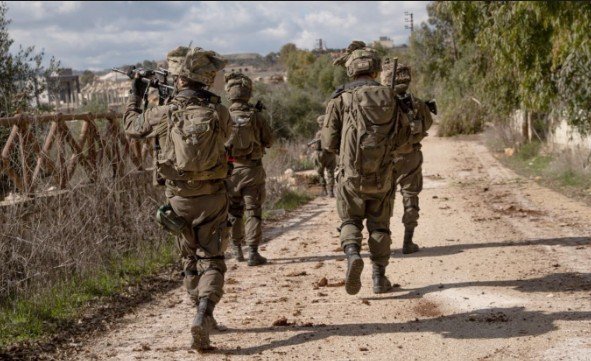
Iran, July 01 : Israeli Prime Minister Benjamin Netanyahu visited Israeli military positions in southern Lebanon on Tuesday and reaffirmed that Israeli forces would continue operating in the area until the government determines that the security threat posed by Hezbollah has been eliminated. His remarks came days after Israel and Lebanon agreed to a US-mediated security arrangement aimed at facilitating a phased transfer of control in parts of southern Lebanon.
Addressing Israeli troops during the visit, Netanyahu stressed that national security would remain Israel’s top priority and said the military would not withdraw solely because of diplomatic understandings. According to a statement issued by the Prime Minister’s Office, he maintained that Israel’s deployment would continue as long as Hezbollah retained the capability to threaten Israeli communities along the northern border.
The Prime Minister stated that Israel’s objective is to ensure lasting security for residents living near the Lebanon border. He said Israeli forces would remain stationed in southern Lebanon until authorities are satisfied that Hezbollah no longer poses an operational risk.
Netanyahu was accompanied by Defence Minister Israel Katz and senior commanders from the Israel Defense Forces (IDF). The visit marked his first trip to Israeli-held positions in southern Lebanon since the announcement of the US-brokered security agreement last week. His previous public visit to the area took place in April.
The recently announced arrangement reportedly outlines a phased withdrawal of Israeli troops from two designated pilot zones, with responsibility for those areas expected to be transferred to the Lebanese Armed Forces. However, officials have not released detailed information on the implementation timeline or the verification mechanism for the transition.
Netanyahu’s comments suggested that while limited adjustments may occur under the agreement, Israel’s broader military presence will continue to depend on its security assessment. Israeli authorities argue that Hezbollah’s military infrastructure and continued presence near the border remain significant concerns.
Israel has said it established a security buffer extending approximately 10 kilometres into southern Lebanon to protect northern Israeli communities from cross-border attacks. According to the Israeli military, operations in the area have targeted Hezbollah infrastructure, including weapons storage facilities, observation posts and underground tunnel networks.
The ongoing military campaign has also had a significant humanitarian impact inside Lebanon. Thousands of homes and buildings have reportedly been damaged during military operations, while many civilians have been displaced from villages near the border due to continued hostilities.
During his interaction with troops, Netanyahu claimed Hezbollah still possesses approximately 12,000 rockets and missiles despite months of military operations. He also asserted that Israeli forces had killed around 9,000 Hezbollah fighters during the conflict, although he did not specify the exact period covered by the estimate. Hezbollah has not publicly released casualty figures, making independent verification difficult.
The latest phase of fighting began after hostilities escalated earlier this year, leading to intensified cross-border exchanges between Israeli forces and Hezbollah. The conflict has since evolved into one of the most serious military confrontations between the two sides in recent years, raising concerns about broader regional instability.
According to available estimates, the fighting has resulted in thousands of deaths in Lebanon and displaced more than one million people. Israel has also reported military and civilian casualties resulting from Hezbollah rocket attacks targeting northern communities.
Although Israel and Hezbollah agreed to a ceasefire framework under international mediation in June, sporadic violence has continued in several border areas. International mediators have urged both sides to adhere to the agreement and prevent further escalation that could destabilise the region.
The United States has continued diplomatic efforts to support implementation of the security arrangement, while regional stakeholders have called for a broader de-escalation. Iran has repeatedly advocated a ceasefire in Lebanon during its wider diplomatic engagements with Washington, though Israel has maintained that developments on the Lebanese front should remain separate from negotiations involving Tehran.
With Israeli troops still deployed in parts of southern Lebanon and Hezbollah maintaining its positions across the border, the security situation remains fragile. Netanyahu’s latest visit underscores Israel’s position that any future military withdrawal will be guided primarily by security considerations rather than fixed diplomatic timelines, leaving the implementation of the recent agreement subject to conditions on the ground.

