


Oil Prices Fall Below $90 as Trump Declares End to Iran Conflict
Brent and WTI decline after Donald Trump signals breakthrough in talks with Tehran, raising hopes for the reopening of the Strait of Hormuz and smoother global energy flows
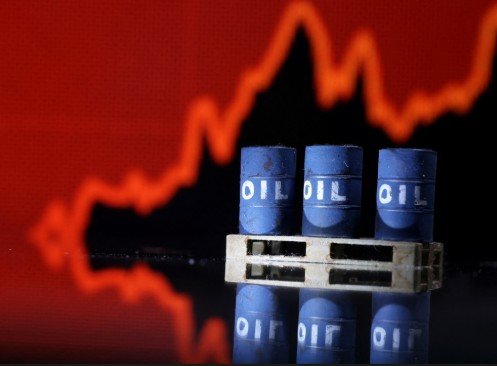
US, June 12 : Oil prices retreated below the $90 per barrel level on Friday as markets responded positively to indications of a potential diplomatic breakthrough between the United States and Iran, easing fears of prolonged disruptions to global energy supplies.
In early trade, US benchmark West Texas Intermediate (WTI) crude fell 1.12 per cent, or $0.98, to $86.73 per barrel. Brent crude, the international benchmark, declined 1.03 per cent, or $0.93, to $89.45 per barrel, reflecting growing optimism over a possible resolution to the months-long conflict that has rattled global oil markets.
The decline followed comments by US President Donald Trump, who claimed that Washington had reached a framework understanding with Tehran and suggested that hostilities between the two countries had effectively ended.
Addressing supporters during a tele rally for Georgia Lieutenant Governor Burt Jones, Trump stated that the conflict with Iran had come to an end and expressed confidence that a formal agreement could be finalized within days. He also indicated that the strategically important Strait of Hormuz would be reopened once the deal is concluded.
Market sentiment improved after Trump’s remarks, as investors interpreted them as a sign that a major threat to global oil transportation could soon be removed. The Strait of Hormuz remains one of the world’s most critical energy corridors, facilitating the movement of a significant share of internationally traded crude oil and liquefied natural gas.
The US President’s latest comments marked a notable shift from his earlier hardline stance. Earlier this week, Trump had warned of strong military action against Iran but later announced that planned strikes had been suspended as diplomatic engagement showed progress.
However, uncertainty remains over the status of any proposed agreement. Iran’s semi-official Fars news agency reported that Tehran had not formally approved the text of a deal, indicating that negotiations may still face hurdles before a final settlement is reached.
The development comes after a sharp escalation in tensions earlier this week when Iran announced the closure of the Strait of Hormuz, warning that vessels attempting to transit the waterway could face military action. The move intensified concerns about energy security and triggered a surge in oil prices.
The prolonged disruption in one of the world’s busiest maritime energy routes had raised fears of supply shortages, pushing crude prices significantly above pre-conflict levels. The blockade also heightened concerns over inflationary pressures across major economies heavily dependent on imported energy.
Despite the tensions, the US military has maintained that commercial shipping activity has continued in the region, suggesting that maritime traffic has not completely halted.
The conflict, which began following joint US and Israeli military operations against Iranian targets in late February, has remained a major source of volatility for global commodity markets. Traders have closely monitored developments in the Gulf region, where any disruption to energy exports can have immediate repercussions for oil-importing nations.
Analysts said the latest price correction reflects expectations that a diplomatic settlement could restore confidence in energy markets and reduce fears of supply disruptions. However, they cautioned that crude prices may remain volatile until a formal agreement is reached and normal operations in the Strait of Hormuz are fully restored.
Investors are expected to continue tracking developments in US-Iran negotiations, regional security conditions, and shipping activity in the Gulf for further direction on global oil prices.

