


Parliament Budget Session Concludes as Lok Sabha and Rajya Sabha Are Prorogued
President Droupadi Murmu closes extended session marked by key legislation, high productivity, and intense debates
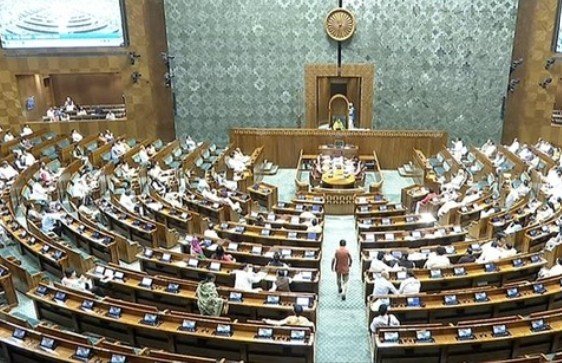
NEW DELHI, Apr 21: The Parliament Budget Session for 2026 officially came to a close after President Droupadi Murmu prorogued both the Lok Sabha and the Rajya Sabha on Monday, bringing an end to one of the most consequential legislative periods of the year. The move followed the adjournment sine die of both Houses two days earlier, formally marking the conclusion of proceedings that began on January 28.
According to an official statement from the Lok Sabha Secretariat, the Lower House, which had been in session for nearly three months, was prorogued on April 20. A parallel notification issued by the Rajya Sabha Secretariat confirmed the same development for the Upper House, which had adjourned sine die on April 18 before being formally prorogued by the President.
The session was marked by significant legislative activity, fiscal decision-making, and moments of political contestation. Among the most notable developments in the Lok Sabha was the defeat of a crucial bill proposing a 33 per cent reservation for women in legislatures. The proposal also included increasing the strength of the Lower House to 816 seats through a delimitation exercise, but it failed to secure passage amid political divisions.
Despite such setbacks, the session successfully completed the constitutionally mandated budgetary process. This included the passage of the Union Budget for the financial year 2026–27, along with Demands for Grants across ministries and the Appropriation Bill, enabling government expenditure.
In his closing remarks, Lok Sabha Speaker Om Birla highlighted the productivity and efficiency of the House. He noted that the Lower House held 31 sittings, functioning for approximately 151 hours and 42 minutes, and achieved a productivity rate of 93 per cent. He acknowledged the contributions of members despite disruptions and emphasized the importance of maintaining parliamentary decorum.
The second half of the session, which commenced on March 9, witnessed heightened political tensions and opposition protests. Nevertheless, several key financial legislations, including the Finance Bill 2026–27, were passed, ensuring continuity in governance and fiscal planning.
Meanwhile, the Rajya Sabha demonstrated even higher efficiency levels during the session. Chairman C. P. Radhakrishnan reported that the Upper House functioned for 157 hours and 40 minutes, achieving an impressive productivity of around 110 per cent. He commended members for their active participation and constructive engagement in debates.
The Upper House passed multiple significant legislations, including The Jan Vishwas (Amendment of Provisions) Bill, 2026, The Transgender Persons (Protection of Rights) Amendment Bill, 2026, and The Central Armed Police Forces (General Administration) Bill, 2026. These measures reflect the government’s legislative priorities spanning governance reforms, social justice, and administrative efficiency.
Another key highlight of the session was the re-election of Harivansh as the Deputy Chairman of the Rajya Sabha for a consecutive term during a special three-day sitting held between April 16 and 18. The Chairman praised the House for conducting the election smoothly and maintaining institutional continuity.
In his valedictory address, C. P. Radhakrishnan underscored the significance of the Budget Session, calling it the most critical parliamentary period for shaping the country’s economic and developmental trajectory. He expressed appreciation for the diverse viewpoints shared during debates, noting that they enriched legislative deliberations.
Overall, the 2026 Budget Session reflected a mix of robust legislative output, political disagreements, and institutional efficiency. While contentious issues led to disruptions at times, both Houses managed to complete essential business, particularly the passage of financial legislation vital for governance.
With the prorogation now in effect, Parliament stands adjourned until the next session is convened, concluding a chapter that played a crucial role in determining India’s policy and economic direction for the coming year.

