


Qualcomm Unveils New Mobile Chips as Smartphone AI Moves Towards Agentic Computing
Qualcomm is expanding its focus on AI-powered mobile computing as smartphone makers seek faster on-device processing and more capable digital assistants.
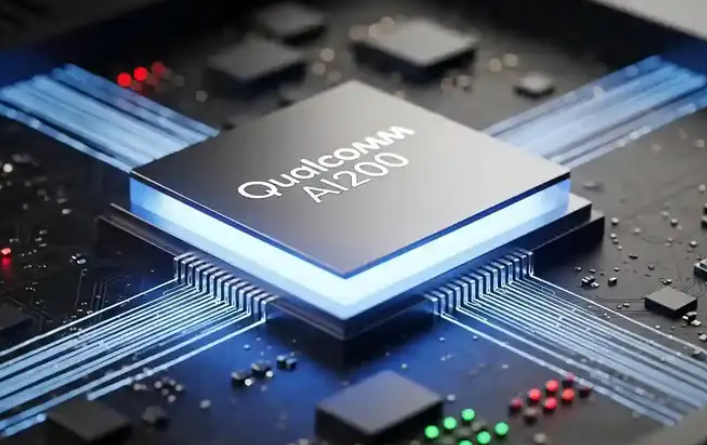
NEW DELHI, Sept 23: Qualcomm is placing greater emphasis on artificial intelligence capabilities in mobile devices as the chipmaker advances its strategy around agentic AI and next-generation computing.
The company has highlighted the growing role of AI in smartphones and other connected devices, with Qualcomm Chief Executive Cristiano Amon describing agentic AI as an important direction for mobile technology. The comments came as the company unveiled new mobile chip technology aimed at supporting increasingly sophisticated AI functions on devices.
The shift reflects a broader change in how smartphone processors are being developed. Earlier generations of mobile chips largely focused on improvements in processing speed, graphics, cameras, connectivity and battery efficiency. AI is now becoming an increasingly important part of chip design, with dedicated processing capabilities being used to handle machine-learning workloads directly on devices.
On-device AI can allow certain tasks to be processed locally rather than sending all information to remote data centres. This approach can potentially reduce dependence on cloud services, improve response times and provide greater control over sensitive information, depending on how individual applications are designed.
Qualcomm’s latest strategy comes as technology companies increasingly explore AI systems that can perform tasks rather than simply respond to questions. Agentic AI could enable smartphones to understand user requests and coordinate multiple actions across applications.
For example, instead of requiring users to open several applications separately, an AI assistant could eventually manage a sequence of tasks based on a single instruction. Such capabilities require chips capable of handling AI workloads efficiently while maintaining battery life and device performance.
The development also has implications for the future of smartphones. As AI features become more deeply integrated into operating systems and applications, processors will need to handle increasingly complex workloads. This is creating competition among semiconductor companies to develop chips that combine conventional computing with specialised AI processing.
Qualcomm’s focus on mobile AI also comes as manufacturers seek to differentiate new devices through software capabilities rather than hardware specifications alone. Features powered by generative and agentic AI could become increasingly important in areas such as photography, communication, productivity and personal assistance.
The company’s strategy reflects the wider industry movement towards what could be described as AI-native devices. Instead of treating artificial intelligence as an additional software feature, manufacturers are increasingly designing hardware specifically to support AI functions.
The transition will also depend on developers creating applications capable of taking advantage of these processing capabilities. Hardware improvements alone cannot determine how consumers use AI. Developers will need to build services that can make practical use of local processing, specialised AI acceleration and connectivity between applications.
Qualcomm’s latest direction therefore highlights how the AI race is extending beyond large cloud-based models. Semiconductor companies are increasingly competing to bring sophisticated AI capabilities directly to personal devices, potentially changing the way consumers interact with smartphones.
As agentic AI develops, the smartphone could increasingly become a platform through which AI systems understand requests, process information and coordinate actions. Qualcomm’s emphasis on mobile AI indicates that chip architecture will remain a key part of that transition.

