


Sensex, Nifty Recover as IT Stocks Rally Following Strong TCS Earnings
Indian equities regain ground after a steep sell-off, with technology shares leading gains as investors assess quarterly earnings, elevated crude prices and foreign fund outflows.
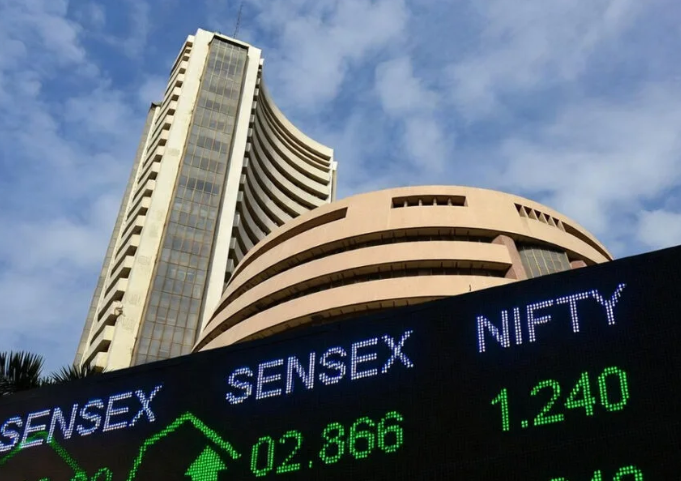
NEW DELHI, Oct 9: Indian equity markets staged a recovery on Friday, supported by gains in information technology stocks following the quarterly earnings announcement by Tata Consultancy Services (TCS). The rebound offered some relief to investors after a sharp decline in the previous session, when rising crude oil prices, a weakening rupee and concerns over global interest rates triggered widespread selling.
The BSE Sensex and NSE Nifty 50 opened higher on Friday, reflecting renewed buying interest in technology shares and selected heavyweight stocks. Early trading saw the Sensex rise by around 423 points, while the Nifty advanced approximately 145 points, although market sentiment remained sensitive to developments in global energy markets and foreign investment flows.
The recovery followed Thursday’s sell-off, during which the Sensex declined 1,045.46 points, or 1.44 per cent, to close at 71,593.24. The Nifty 50 fell 371.25 points, or 1.64 per cent, to settle at 22,231.80, marking a difficult session for domestic equities.
Information technology stocks emerged as the principal source of support on Friday. TCS shares attracted buying interest after the company reported its September-quarter financial results, drawing attention to demand for technology services, international business and artificial intelligence-related offerings.
TCS reported a net profit of Rs 13,884 crore for the second quarter of the 2026-27 financial year, according to its reported results. Revenue stood at Rs 73,188 crore, while the operating margin was around 24 per cent. The company also announced an interim dividend of Rs 12 per share, with October 14 set as the record date.
The quarterly performance provided investors with a fresh set of indicators for assessing the health of India’s technology services industry. Although the results showed growth in profit and revenue compared with the preceding quarter, investors continued to examine operating margins, new contract wins, client spending and the pace at which technology investments are translating into business.
The company reported a total contract value of $9.6 billion for the quarter, highlighting the importance of new business agreements in sustaining future revenue. Its performance also renewed attention on how established IT service providers are adapting to the growing use of artificial intelligence in software development, enterprise operations and customer services.
AI-related demand has become an important consideration for technology companies as businesses increasingly seek automation, cloud migration, data analytics and productivity-enhancing tools. Indian IT firms are attempting to expand their offerings in these areas while maintaining profitability and responding to changes in client budgets.
However, the industry’s outlook remains dependent on spending decisions by customers in major international markets. If companies postpone discretionary technology projects because of economic uncertainty, service providers could face pressure on revenue growth. Conversely, businesses seeking to reduce costs through automation may create opportunities for technology firms with the right expertise.
The market recovery was not limited to TCS. Other technology shares, including Infosys, also gained in early trading, helping lift the broader IT sector. The performance indicated that investors were selectively returning to companies whose earnings announcements could provide greater clarity on demand and business prospects.
Nevertheless, the gains came against a difficult economic backdrop. Crude oil prices had surged above $100 a barrel amid tensions in the Middle East and concerns about shipping through important energy routes. For India, which relies heavily on imported crude, sustained increases in international oil prices can raise the country’s import bill and place pressure on inflation, the rupee and corporate costs.
Higher energy prices can affect several industries, including aviation, transport, chemicals, manufacturing and consumer goods. Companies that use fuel or petroleum-based inputs may face rising operating expenses, while businesses with limited pricing power could find it difficult to pass the additional costs on to customers.
Oil prices also influence expectations about monetary policy. If higher fuel costs feed into broader inflation, central banks may have less room to reduce borrowing costs. Elevated interest rates can increase financing expenses for companies and households, potentially affecting investment, consumption and demand for credit.
Investors were also monitoring movements in global bond yields. Higher yields on government securities, particularly in the United States, can make relatively safe investments more attractive and encourage international investors to reassess their exposure to emerging-market equities. This can add to selling pressure in markets such as India.
Foreign institutional investor activity remained another concern following heavy outflows from domestic equities. On Thursday, foreign investors sold shares worth approximately Rs 12,944 crore on a net basis, while domestic institutional investors provided support through net purchases of around Rs 10,703 crore, according to market updates.
Domestic institutional buying has helped absorb part of the selling pressure, but the sustainability of a market recovery will depend on several factors, including earnings expectations, valuations, currency movements and the direction of international capital flows.
The rupee, which opened marginally stronger at around Rs 96.74 against the US dollar on Friday compared with Thursday’s close of Rs 96.78, remained an important indicator for market participants. A weaker domestic currency can increase the cost of imported goods and overseas borrowing, although it may improve the rupee value of foreign-currency earnings for some exporters.
Market participants are likely to pay close attention to upcoming corporate earnings announcements for evidence of whether companies can maintain revenue growth despite rising costs and uncertain demand. Banking, manufacturing, consumer-facing businesses and technology companies will remain important areas of assessment as investors compare results with expectations.
The difference between the previous session’s broad-based decline and Friday’s early recovery also highlights the volatility facing Indian equities. A positive opening does not necessarily establish that a sustained upward trend has begun, particularly when international developments continue to influence oil prices, currency movements and investor risk appetite.
For investors, the immediate focus is likely to remain on the quality of corporate earnings, management guidance and the ability of businesses to protect margins. Companies with stable cash flows, manageable debt and resilient demand may attract greater attention during periods of uncertainty, although individual share prices can still fluctuate sharply.
The latest market movement demonstrates the competing forces influencing Indian equities: encouraging company-specific results on one side and macroeconomic risks on the other. While technology earnings helped restore some confidence on Friday, a lasting recovery will require broader support from corporate performance and improved global conditions.
Investors will therefore be watching whether buying interest extends beyond IT stocks and whether benchmark indices can hold on to their gains as the trading session progresses.

