


Sonam Wangchuk Denies Any Deal With Centre, Says Fast Ended to Prevent Ladakh Like Crackdown
Activist says written assurance against legal action, fears of a Ladakh like crackdown, and student safety prompted him to call off his hunger strike.
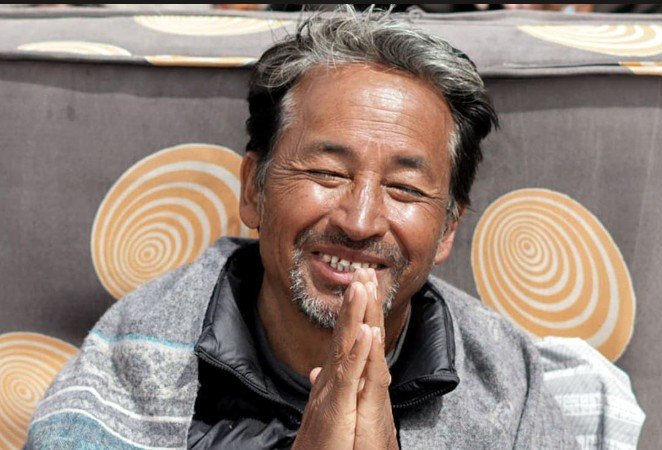
New Delhi, July 25: Activist Sonam Wangchuk has firmly dismissed allegations that he struck a political deal with the Centre to end his 26 day hunger strike, asserting that his decision was guided solely by concerns for the safety of student protesters and the need to prevent a possible police crackdown.
In a video message released on YouTube late Friday, Wangchuk said he agreed to end his indefinite fast only after receiving a written assurance from the Union government that peaceful protesters would not face legal action. He maintained that safeguarding students participating in the agitation remained his foremost priority throughout the negotiations.
Wangchuk said the atmosphere in Delhi had become increasingly tense, raising fears that authorities could take strict action against demonstrators. Recalling the police firing on youths in Ladakh in September 2025, he said he wanted to avoid any situation that could lead to violence or injuries.
According to the activist, he believed ending his fast and appealing for peace would help ease tensions and reduce the likelihood of confrontation between protesters and law enforcement agencies.
Responding to criticism over ending the protest in the presence of Union ministers, Wangchuk rejected claims that he had compromised with the government. He questioned why he would have continued a 26 day hunger strike if his intention had been to negotiate a private agreement, saying such a deal could have been reached without enduring weeks of fasting.
He also explained why he did not insist on the resignation of Union Education Minister Dharmendra Pradhan during discussions with the government. Wangchuk said preventing legal cases against students and ensuring their safety took precedence over political demands, adding that the movement could continue pursuing accountability through democratic means.
The activist further alleged that after being shifted to Safdarjung Hospital on July 18, he was kept under conditions that severely restricted his freedom. He claimed he was not allowed unrestricted movement, could not meet visitors freely and was denied access to his mobile phone and laptop. Even after the Delhi High Court permitted his transfer to another hospital, he alleged that the process was delayed for several hours.
Wangchuk said Union ministers J.P. Nadda and Jitendra Singh later met him at Medanta Hospital, where discussions covered multiple issues linked to the protest. According to him, the government agreed to positively consider financial assistance for families of students who allegedly died by suicide following the NEET paper leak controversy and also expressed willingness to hold a parliamentary discussion on examination reforms and accountability.
However, he claimed the ministers were initially reluctant to provide written assurance that no criminal cases would be registered against peaceful protesters. Wangchuk said he remained firm on this demand and refused to end his fast until the commitment was put in writing.
He also expressed disappointment that many supporters, Members of Parliament and representatives from Ladakh were unable to be present when he concluded his hunger strike. According to Wangchuk, he had hoped to end the protest in their presence, but several people were reportedly prevented from meeting him before the ministers arrived late at night.
The activist officially ended his indefinite fast shortly after midnight on Thursday after the Centre issued a written assurance stating that it would take a positive view on not filing cases against peaceful protesters, hold a detailed parliamentary discussion on examination reforms and paper leak issues, and consider compensation for families affected by the alleged NEET paper leak tragedy.
Wangchuk had launched his hunger strike on June 28 after joining the Cockroach Janta Party-led agitation, which demanded greater accountability over alleged irregularities in competitive examinations, comprehensive reforms in the education system and the resignation of the Union Education Minister. His latest clarification seeks to counter allegations of political compromise while reaffirming that student welfare remained at the centre of his protest.

