


Syama Prasad Mookerjee’s Life and Legacy to Be Included in Bengal School Curriculum: Suvendu Adhikari
Marking Mookerjee’s 125th birth anniversary in Kolkata, the Leader of Opposition urged the state government to include the Jana Sangh founder’s contributions in school curriculum and drop references glorifying the Singur anti-Tata movement.
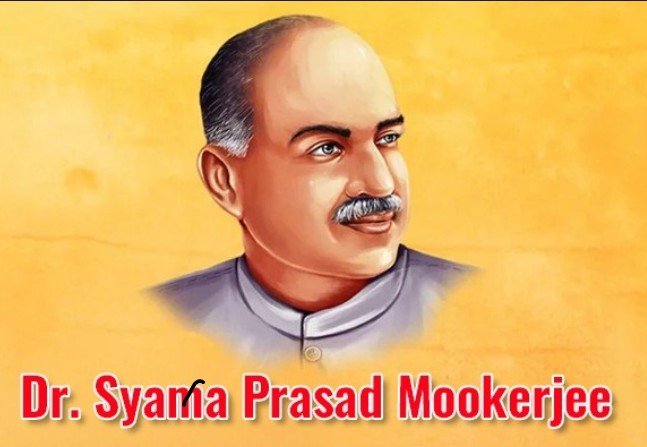
Kolkata, July 7: Leader of Opposition in the West Bengal Assembly Suvendu Adhikari on Monday said the life and contributions of Bharatiya Jana Sangh founder Syama Prasad Mookerjee should be incorporated into school textbooks in the state, while also calling for the removal of content related to the agitation that led to Tata Motors exiting Singur.
Speaking at a programmed organised in Kolkata to mark Mookerjee’s 125th birth anniversary, Adhikari said he would place his “appeal and wish” before the state’s school education minister, urging that Bengal’s students be taught about Mookerjee’s role in public life, politics and national thought.
Addressing the gathering at Mitra Institution in Bhabanipur the alma mater of Mookerjee Adhikari said the former Union minister and educationist deserved a place in the academic curriculum because of his historical and ideological contribution to the country. He argued that school education should present students with the lives of personalities who played a major role in shaping India’s political and intellectual journey.
At the same time, Adhikari took aim at the political legacy of the Singur land agitation, saying the episode involving the exit of the Tata Motors Nano project should not continue to be celebrated in school lessons. In a pointed remark, he said that those associated with driving the Tata project out of Singur should not be part of the syllabus, indicating that the chapter ought to be removed from the state’s educational narrative.
The comments brought back focus on one of West Bengal’s most politically significant industrial controversies. The Singur movement, which centred on protests against land acquisition for Tata Motors’ proposed Nano car factory, became a turning point in the state’s politics and was closely linked to the rise of the Trinamool Congress under Mamata Banerjee. Critics of the movement have long argued that the withdrawal of the project damaged Bengal’s industrial prospects and sent a negative message to investors.
Adhikari’s remarks appeared to frame the issue as a debate over what version of Bengal’s political and developmental history should be taught to students. By pushing for Mookerjee’s inclusion and Singur’s exclusion, he signalled an attempt to reshape the state’s educational discourse around political memory, ideology and public legacy.
Syama Prasad Mookerjee remains a major ideological figure for the Bharatiya Janata Party and the broader Sangh Parivar. A former vice-chancellor of the University of Calcutta and a cabinet minister in independent India, Mookerjee later founded the Bharatiya Jana Sangh, the political predecessor of the BJP. He is also remembered for his opposition to special constitutional provisions for Jammu and Kashmir and for his advocacy of a strong unitary national vision.
The event in Kolkata was organised as part of the celebrations around Mookerjee’s 125th birth anniversary, which has been observed by BJP leaders as an occasion to revisit his political and intellectual legacy. Adhikari used the platform not only to pay tribute to Mookerjee but also to raise the broader issue of curriculum content and historical representation in West Bengal’s school education system.
His statement is likely to sharpen the ongoing political contest in the state over history, identity and the shaping of public memory through textbooks. Curriculum choices in Bengal have frequently become sites of ideological debate, with rival political camps arguing over which leaders, movements and turning points deserve prominence in school education.
Adhikari’s intervention suggests that the BJP wants a stronger presence for nationalist figures associated with its ideological lineage in Bengal’s academic narrative. At the same time, the criticism of the Singur episode reflects the party’s attempt to challenge one of the Trinamool Congress’s most defining political moments by recasting it as a symbol of lost industrial opportunity rather than popular resistance.
Whether the state government acts on Adhikari’s appeal remains uncertain. Any change to school textbooks would require formal review and approval by the relevant educational authorities. However, the demand itself is politically significant because it opens a fresh debate on how Bengal chooses to narrate its past to future generations.
For now, Adhikari’s remarks have added a new dimension to the legacy of Syama Prasad Mookerjee in West Bengal politics not just as a historical figure being commemorated on his birth anniversary, but as a personality whose place in the state’s school curriculum may soon become a subject of public and political discussion.

