


Trump Mocks Iran, Says Tehran ‘Desperate to Settle’ After Khamenei Funeral
Speaking at Mount Rushmore during America’s 250th Independence Day celebrations, Donald Trump mixed foreign policy rhetoric with economic claims, saying Washington had eased pressure on Iran for a week during the funeral ceremonies of Ayatollah Ali Khamenei.
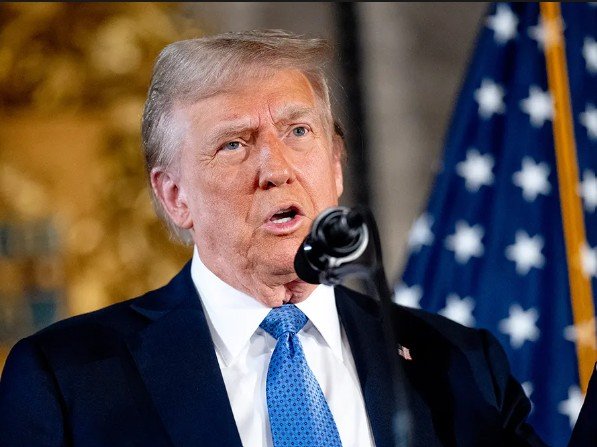
SOUTH DAKOTA, Jul 4: US President Donald Trump on Friday sharpened his rhetoric against Iran, claiming that the country was “dying to settle” and asserting that the United States had granted Tehran a temporary “week off” during the funeral ceremonies of slain Iranian Supreme Leader Ayatollah Ali Khamenei.
Addressing a large gathering at Mount Rushmore during celebrations marking America’s 250th Independence Day, Trump used part of his speech to focus on the Middle East and portray Iran as weakened under US pressure. He said Washington’s actions had left the Iranian leadership desperate for a settlement and framed the temporary pause in pressure as a humanitarian gesture.
“We knocked the hell out of Iran. They’re dying to settle. We gave them a week off for a funeral because we’re nice people,” Trump told the audience, drawing applause from supporters at the event.
The remarks added a dramatic foreign policy dimension to a speech that was otherwise centered on Trump’s claims of economic revival, manufacturing expansion and renewed American strength under his leadership. Throughout the address, the President sought to contrast what he described as the current resurgence of the United States with the condition of the country during the previous administration.
Trump’s comments on Iran came amid ongoing funeral ceremonies for Ayatollah Ali Khamenei, with large-scale mourning events taking place in Iran following his death. The US President did not provide further details about what he meant by giving Iran a “week off,” but his statement appeared aimed at underscoring his administration’s posture of pressure while also projecting a sense of American dominance in dealing with adversaries.
In the same speech, Trump also referred to Venezuela, claiming that his administration had swiftly prevailed over rivals there and using it as another example of American strength on the world stage.
“We beat Venezuela in one day,” he said, while praising what he described as the most powerful military force ever built by the United States.
The President used the Mount Rushmore platform to project a message of national resurgence, blending muscular foreign policy language with repeated assertions that the American economy had entered a historic boom. Trump claimed that the United States was witnessing an unprecedented wave of foreign investment and industrial growth, crediting his administration’s policies and tariff measures for the turnaround.
According to Trump, the US had attracted investment worth $19.2 trillion over the past year, a figure he contrasted with what he said was significantly lower investment during the tenure of former President Joe Biden. He argued that his election victory and tariff regime had helped trigger a surge in factory construction and manufacturing activity across the country.
“We built the biggest and most dynamic economy. Our country today is doing better than it’s ever done before,” Trump said, adding that plants and factories were now being built at a pace “never, ever seen before.”
He also used the occasion to celebrate the strength of the US military, saying America had built the “strongest and most powerful military” in history and had repeatedly emerged victorious in major global conflicts. The President linked that military power to his administration’s broader claims of restoring respect for the United States internationally.
Drawing a contrast with the period before his return to office, Trump said that two years ago the country was being “laughed at” and seen as a nation in decline, but had since regained momentum and global standing. He told supporters that the United States was now “the hottest country anywhere in the world” and insisted that its best days were still ahead.
The speech formed part of a high-profile Independence Day event at Mount Rushmore, where Trump used patriotic imagery and campaign-style messaging to celebrate America’s 250th year while reinforcing his domestic and international political narrative.
His remarks on Iran, however, are likely to attract the greatest international attention, given the highly sensitive backdrop of leadership transition and mass mourning ceremonies in the Islamic Republic. Iranian media have reported extensive funeral rites for Khamenei, with millions expected to participate in the multi-day events.
According to Iranian broadcaster Press TV, the ceremonies are among the largest public gatherings in the country in recent years. Officials estimate that between 15 and 20 million mourners could take part in the events surrounding Khamenei’s funeral.
The body of the late Iranian leader is scheduled to lie in state at Tehran’s Grand Mosalla before a funeral procession through the capital. Additional ceremonies are expected to take place in Qom and later in Baghdad, Karbala and Najaf before burial in Mashhad on July 9.
Organisers have said the gates of the Mosalla would open to the public early on Saturday, with the possibility of an earlier opening depending on crowd management and security arrangements.
Trump’s decision to invoke the funeral in his speech is likely to further inflame tensions with Tehran, especially as relations between the two countries remain deeply strained. His language suggested an attempt to project strength and control over the regional situation, while also reinforcing his long-standing political image as a leader willing to speak bluntly about America’s adversaries.
The President’s comments also reflected his tendency to weave foreign policy confrontation into broader narratives of national revival, economic recovery and military power. By linking Iran, Venezuela, tariffs, investment and patriotism in a single address, Trump sought to present a unified picture of an America that, in his telling, has reasserted itself both at home and abroad.
Whether those claims hold up to scrutiny is likely to be debated, but the speech made clear that Trump intends to continue using major public events to showcase a muscular foreign policy message alongside economic triumphalism. With tensions in West Asia still running high and Iran entering a politically sensitive moment following Khamenei’s death, his latest remarks are expected to draw close attention from governments and observers across the region.

