


Trump Signals Possible Xi Jinping US Visit Around UN General Assembly in September
Remarks by Donald Trump about a possible late-September visit by Chinese President Xi Jinping have sparked attention over a potential high-level US-China diplomatic engagement on the sidelines of the UN General Assembly in New York.
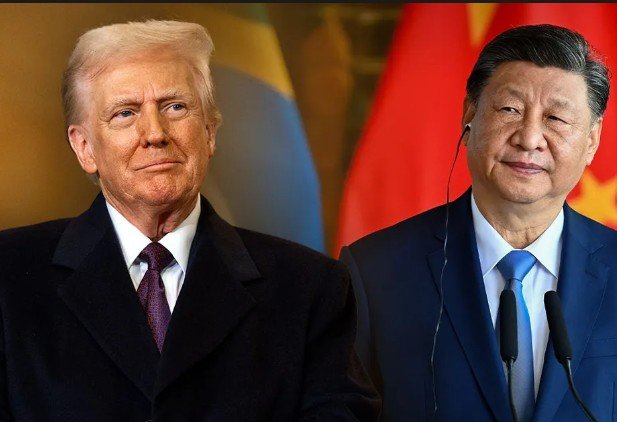
US, July 07 : US President Donald Trump has indicated that Chinese President Xi Jinping could visit the United States toward the end of September, a timeline that would overlap with the annual high-level week of the United Nations General Assembly in New York and potentially set the stage for another significant diplomatic engagement between the world’s two largest economies.
The possibility of Xi’s visit surfaced during an event at the White House on Monday, where Trump was speaking about plans for the construction of a new ballroom at the presidential complex. While explaining the need for a larger ceremonial and event space, Trump referred to a potential trip by the Chinese leader and suggested that preparations for hosting major foreign dignitaries were part of the motivation behind the project.
According to a Bloomberg report, Trump said he believed Xi would be coming to the United States “toward the end of Sept. 24,” a remark that immediately drew attention because it appeared to point to a possible meeting window during the United Nations General Assembly session in New York later that month. Trump reportedly added that a large ballroom would allow the US to host a major event around such a visit, underlining the significance he attached to the possible arrival of the Chinese president.
If Xi were to travel to the United States around that time, the visit would coincide with the annual UN General Assembly gathering, one of the busiest periods in global diplomacy when heads of state and government converge in New York for speeches, bilateral meetings, and strategic negotiations. Trump is scheduled to address the General Assembly on September 22 and, as is customary for the US president, is expected to remain engaged in a series of meetings with world leaders in the days surrounding the event.
A Xi visit timed alongside the UN gathering would be diplomatically notable for several reasons. It would offer an opportunity for direct talks between Washington and Beijing at a moment when the relationship remains defined by both strategic competition and selective cooperation. It would also provide a platform for the two sides to review progress on trade discussions, assess regional flashpoints, and test whether the tentative stabilisation in ties seen in recent months can be sustained.
Trump had earlier suggested that he expected to host Xi in September, but until now he had not publicly mentioned a likely date. His latest remarks therefore add a new layer of specificity to speculation about a possible summit, even though neither the White House nor Chinese authorities have formally announced a visit or released an official schedule.
The prospect of a Trump-Xi meeting carries weight because US-China relations remain among the most consequential and complex in international politics. The two powers are deeply intertwined economically, yet they remain at odds over trade, technology, military influence in Asia, Taiwan, and competing visions of the global order. Every direct exchange between their leaders is therefore closely watched by diplomats, investors, and security analysts alike.
Trump and Xi last met in May during a widely watched summit in Beijing, where both governments sought to ease tensions and create a more stable framework for engagement after a period of friction linked in part to developments surrounding Iran and broader regional security concerns. That meeting was viewed as an effort to reset communication channels and reduce the risk of further deterioration in the bilateral relationship, especially as both countries confronted economic uncertainty and overlapping geopolitical challenges.
The Beijing summit was described at the time as a practical attempt to rebuild momentum in ties that had been repeatedly strained by tariff disputes, strategic mistrust, and differences over security issues. While the summit did not eliminate the core disagreements between the two governments, it did appear to produce a modest thaw in rhetoric and a willingness to continue talking on trade and broader diplomatic issues.
Since then, officials and observers have pointed to limited but meaningful progress in some areas of economic dialogue. Trade discussions between the two countries have remained active, and there has been interest on both sides in avoiding a sharp escalation that could further unsettle global markets and supply chains. However, any movement toward a broader rapprochement remains constrained by structural disagreements and domestic political pressures in both capitals.
One of the biggest factors complicating the relationship is Trump’s continued emphasis on tariffs and trade protection. His push to rebuild tariff barriers has remained a defining feature of his economic approach to China, reflecting a belief that tougher trade measures are necessary to protect US industry and counter what he has long described as unfair Chinese economic practices. For Beijing, such moves are viewed as a direct challenge to its export interests and a sign that Washington’s strategic rivalry with China is deeply rooted.
At the same time, Taiwan continues to be a highly sensitive fault line in US-China relations. Beijing considers Taiwan a core sovereignty issue and strongly opposes any moves that it believes encourage Taiwanese autonomy or strengthen formal international recognition of the island. Washington, meanwhile, continues to maintain ties with Taipei and support Taiwan’s defensive capabilities, making the issue one of the most persistent and dangerous sources of tension between the two powers.
Developments in the Middle East have also added complexity to the bilateral equation. The region’s security landscape, including recent tensions involving Iran and broader instability across West Asia, has created overlapping interests and concerns for both Washington and Beijing. China’s energy and trade interests in the region, along with America’s security commitments and military footprint, mean that Middle East crises increasingly affect the wider strategic balance between the two governments.
Against that backdrop, a possible Xi visit to the United States in September would not be a routine ceremonial trip but a potentially significant diplomatic moment. It could serve as a venue for reviewing the outcome of the Beijing summit, clarifying the direction of trade talks, and managing disputes that neither side wants to see spiral into a larger confrontation. Even if no major agreement emerges, the symbolism of another face-to-face meeting would itself be important at a time when communication between great powers is considered essential to avoiding miscalculation.
The timing of such a visit would also be notable because Xi Jinping has rarely attended the UN General Assembly since taking office in 2012. His personal presence in the United States during the General Assembly week would therefore be seen as an event of major diplomatic significance, especially given the global attention the annual gathering receives. It would raise expectations not only for a Trump-Xi interaction but also for broader Chinese engagement with international leaders during a period of geopolitical flux.
For Trump, hosting Xi during UN week could offer both diplomatic and domestic political advantages. Internationally, it would allow him to project the image of a president capable of engaging directly with America’s principal strategic rival while simultaneously positioning the United States at the centre of global diplomacy. Domestically, it would reinforce his argument that high-profile statecraft and deal-making remain central to his presidency, particularly in the run-up to politically sensitive policy and economic decisions.
For China, a visit could serve multiple purposes as well. It would provide Xi with an opportunity to shape the narrative around Beijing’s relationship with Washington, reassure global markets about China’s commitment to stability, and present China as a major power willing to engage at the highest level despite persistent disagreements. It could also help Beijing gauge Trump’s priorities heading into a crucial phase of US domestic and foreign policy positioning.
Still, significant uncertainties remain. Trump’s remarks, while striking, do not amount to a formal confirmation of a summit or state visit. High-level diplomatic travel of this nature requires extensive planning, security coordination, agenda-setting, and agreement on the substance of any meeting. It is also possible that the date Trump mentioned reflected an informal expectation rather than a finalised plan.
Much will therefore depend on the coming weeks, including whether officials on both sides move to publicly confirm arrangements, whether preparatory talks produce a viable agenda, and whether fresh tensions emerge that could alter the diplomatic calendar. In the past, US-China meetings have often been shaped as much by last-minute strategic calculations as by long-term planning.
Even so, Trump’s remarks have put renewed focus on the state of US-China diplomacy at a time when the relationship is again at a crossroads. The two countries are attempting to keep channels of communication open while still competing intensely across trade, technology, security, and influence. That balancing act has become one of the defining features of the international system, with consequences that extend far beyond Washington and Beijing.
A September meeting, if it takes place, would likely be framed as an effort to manage competition responsibly rather than resolve all disputes. The agenda could include trade barriers, export controls, regional crises, Taiwan, investment restrictions, and mechanisms to reduce the risk of military or diplomatic escalation. It may also provide an opportunity for both leaders to signal whether they want the relationship to move toward greater stability or return to a more openly confrontational phase.
For now, Trump’s public suggestion of Xi’s possible arrival has injected fresh momentum into speculation about another high-level US-China encounter. Whether the visit materialises or not, the mere possibility underscores the enduring importance of direct engagement between the American and Chinese leadership at a moment when global politics remains unsettled and the future of the bilateral relationship is still being negotiated in real time.

