


Trump’s Secret Letter to JD Vance Revealed During High-Stakes China Visit
White House insider reveals emergency succession preparations as global tensions heighten around Trump’s overseas diplomacy
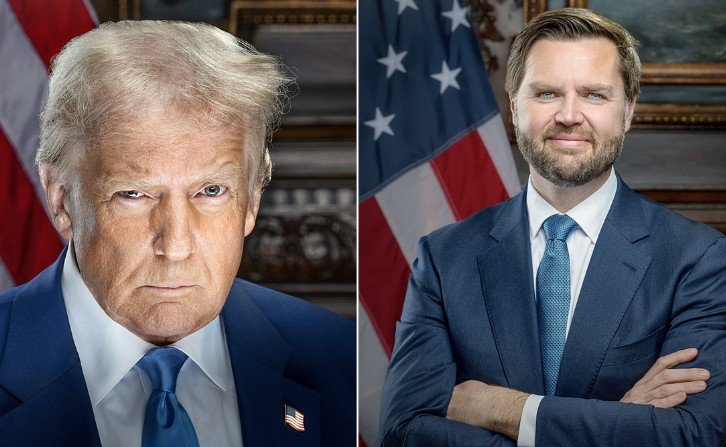
US, May 14 : Fresh details have emerged about internal White House contingency planning after a senior counterterrorism official disclosed that President Donald Trump prepared a confidential written message for Vice-President JD Vance in case of a catastrophic event during his presidency.
The revelation came during an appearance by White House counterterrorism adviser Sebastian Gorka on the New York Post’s “Pod Force One” podcast, where he discussed security procedures surrounding Trump’s ongoing diplomatic visit to China amid escalating geopolitical tensions.
According to Gorka, a sealed letter addressed to Vance is reportedly kept inside the Resolute Desk in the Oval Office as part of presidential emergency protocols. He suggested the measure reflects the seriousness with which the administration approaches threats connected to international diplomacy and national security.
Gorka declined to provide operational details but indicated that extensive safeguards are activated whenever the president travels abroad, especially during high risk diplomatic engagements involving major global powers.
The comments have reignited discussion over Trump’s increasingly forceful rhetoric toward adversarial nations, particularly Iran. Earlier this year, prior to authorising military action linked to the Iran conflict, Trump publicly stated that he had already instructed senior officials on how the United States should respond if he were assassinated while in office.
At the time, Trump warned that any attack against him would trigger an overwhelming American response. His remarks drew international attention and sparked debate among security experts over the implications of such statements during an already volatile period in the Middle East.
The disclosure also highlights growing concern within Washington over the security environment surrounding global diplomacy. Relations between the United States and China remain strained over trade, military competition, cybersecurity concerns and regional influence in Asia-Pacific.
Trump’s China visit is viewed as strategically important as both nations attempt to stabilise economic ties while managing broader geopolitical rivalry. Security analysts say presidential overseas travel, particularly to countries viewed as strategic competitors, always involves heightened threat assessments and classified contingency measures.
In recent months, Trump has also made several unusually personal public comments regarding mortality, legacy and religion. During interviews earlier this year, he questioned whether he would “get to heaven,” while linking his efforts to end international conflicts with his hopes of redemption.
Speaking during a televised interview about the Russia-Ukraine war, Trump suggested that helping prevent further bloodshed could improve his standing in the afterlife. The comments quickly spread across political and media circles, becoming part of fundraising campaigns tied to Trump-aligned political organisations.
Political observers believe the combination of national security rhetoric, foreign policy escalation and personal reflections has created a unique narrative surrounding Trump’s presidency during his second term in office.
The White House has not officially commented further on the existence of the reported letter or the specifics of emergency presidential succession planning. However, historians note that contingency preparations for presidential incapacity or assassination have long existed within US administrations, particularly during periods of international conflict.
The latest revelation comes at a time of heightened global instability involving tensions with China, continued fighting in Ukraine and ongoing uncertainty in the Middle East, placing increased attention on presidential security and continuity-of-government procedures.

