


UNSC Reform Stalemate Enters 18th Year as India Pushes for Long Pending Change
New Delhi warns that stalled negotiations are weakening global governance and urges text based discussions to expand UNSC representation
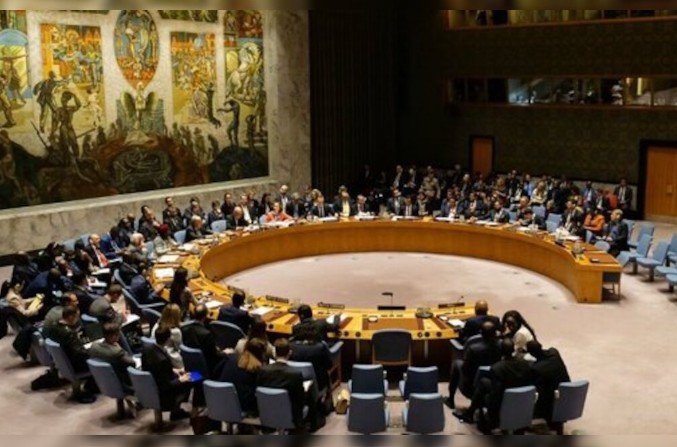
United Nations: India has criticised the prolonged delay in reforming the United Nations Security Council, saying nearly two decades of negotiations have failed to deliver any meaningful outcome. New Delhi warned that the reform process cannot remain blocked by the “narrow and divisive interests” of a few countries.
The United Nations General Assembly on Tuesday decided to continue the Inter-Governmental Negotiations (IGN) on Security Council reforms into its next session, marking the 18th consecutive year of discussions without a concrete agreement or a fixed timeline for completion.
The negotiations on restructuring the powerful 15-member Security Council will now continue during the 81st session of the UN General Assembly, which is scheduled to begin in September.
India supported the consensus decision to carry forward the IGN process on the issue of “equitable representation on and increase in the membership of the Security Council.” However, it expressed disappointment over the absence of progress and criticised attempts by certain nations to delay substantive reforms.
India Flags Lack of Progress in Reform Negotiations
India’s Permanent Representative to the United Nations, Ambassador Parvathaneni Harish, said the latest round of discussions failed to produce any significant initiatives that could lead to actual reform.
“The 80th IGN session, like earlier sessions, has not been successful in generating outcomes or initiatives that could pave the way for implementing genuine reforms,” Harish said during his remarks at the UN General Assembly.
He noted that discussions under various clusters largely repeated existing positions of member states and groups rather than moving towards practical solutions.
Highlighting India’s frustration with the slow pace of negotiations, Harish referred to the Indian philosophical concept of repeated cycles of birth and rebirth before achieving liberation.
“The IGN has already gone through seventeen cycles. Unfortunately, there is still no liberation in sight. How much longer should the world wait?” he said.
New Delhi Calls for Urgent UNSC Restructuring
India said repeated discussions without progress are creating disappointment among countries and weakening confidence in the effectiveness of the United Nations.
Harish pointed out that the inability of the Security Council to respond effectively to several global conflicts has increased the urgency for comprehensive reforms.
“There is a palpable sense of disappointment among member states and global citizens regarding the inability of the Security Council to meaningfully address conflicts around the world,” he said.
According to India, the reform process should not be controlled by limited interests but should reflect the changing realities of the international system.
New Delhi stressed that the only way forward is through text-based negotiations supported by clear deadlines, milestones and a commitment to achieving results.
India Pushes for Greater Global South Representation
India has consistently argued that reforms must include an expansion of both permanent and non-permanent categories of Security Council membership.
New Delhi believes that increasing only temporary seats would not address the imbalance in global decision-making because the five permanent members — China, France, Russia, the United Kingdom and the United States — continue to hold veto power.
India has maintained that meaningful reform requires stronger representation for developing nations, particularly countries from the Global South.
“India stands fully ready to contribute to this endeavour. It is our sincere hope that the 81st IGN session would mark a new beginning,” Harish said.
India Begins Campaign for UNSC Non-Permanent Seat
The reform debate comes at a time when India has launched its campaign for a non-permanent seat on the Security Council for the 2028-29 term.
External Affairs Minister S Jaishankar recently announced India’s official campaign, with elections scheduled for June next year. India will compete against Tajikistan for the single seat allocated to the Asia-Pacific region.
India previously served on the Security Council during 2021-22 and has been elected eight times to the UN’s top security body.
Its earlier terms were in 1950-51, 1967-68, 1972-73, 1977-78, 1984-85, 1991-92 and 2011-12.
Debate Over Permanent and Non-Permanent Membership Expansion
The issue of Security Council expansion has remained a major point of disagreement among UN members.
India has argued that reforms focused only on increasing non-permanent seats would not bring meaningful change because the current power structure would remain dominated by the five permanent members.
New Delhi has warned that expanding only elected membership would fall short of addressing the democratic deficit within the Security Council.
Meanwhile, the Uniting for Consensus (UfC) group, which includes countries such as Pakistan, Canada, Italy and Türkiye, has opposed adding new permanent members.
The group has proposed expanding the Council to 27 members by increasing only non-permanent seats, while keeping the number of permanent members unchanged.
Future of UN Reform Remains Uncertain
The Security Council reform debate has continued for years amid disagreements over representation, veto powers and membership categories.
India and other countries seeking greater representation argue that the current structure reflects the geopolitical realities of 1945 rather than today’s global balance.
With conflicts, humanitarian crises and security challenges increasing worldwide, New Delhi believes reforming the Council is essential to ensure that the United Nations remains effective and representative.
As the 81st UN General Assembly session approaches, India has urged member states to move beyond repeated statements and focus on achieving a practical roadmap for reform.
The coming round of negotiations will determine whether countries can finally overcome decades of differences and bring a long-awaited transformation to the world’s most powerful international security body.

