


US Warns Global Shipping Companies Against Paying Iranian Strait of Hormuz Transit Fees
Washington Tightens Pressure on Maritime Operators
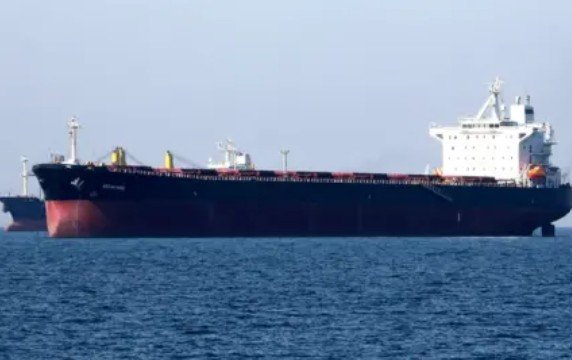
Dubai, May 2: The United States has issued a stern warning to international shipping companies, cautioning that businesses making payments to Iran for safe passage through the Strait of Hormuz could face American sanctions.
The alert, released Friday by the US Treasury Department’s Office of Foreign Assets Control (OFAC), marks a significant escalation in the ongoing confrontation between Washington and Tehran over access to one of the world’s most critical maritime corridors.
The Strait of Hormuz, located at the entrance of the Persian Gulf, carries nearly 20 percent of global oil and natural gas shipments during normal conditions, making it one of the most strategically important waterways for international energy trade.
Washington Tightens Pressure on Maritime Operators
According to the US warning, Iran has been demanding payments from some vessels seeking safer routes near Iranian territorial waters after heightened military tensions disrupted regular shipping operations in the region.
The OFAC notice stated that such transactions could involve direct cash transfers, digital currency, informal exchanges, barter arrangements, or even indirect contributions such as charitable donations and embassy-linked payments.
American authorities stressed that both US and foreign firms could face penalties if they participate in these arrangements, regardless of how the payments are made.
“OFAC is issuing this alert to warn US and non-US persons about the sanctions risks of making these payments to, or soliciting guarantees from, the Iranian regime for safe passage,” the statement said.
The warning comes amid increasing efforts by Washington to isolate Tehran economically and curb its influence over maritime trade routes in the Gulf region.
Strait of Hormuz Crisis Continues to Shake Global Oil Trade
Tensions in the Strait of Hormuz escalated sharply after Iran intensified threats against commercial shipping following the outbreak of war involving the United States and Israel on February 28.
Iran later introduced alternative transit arrangements for some international vessels, reportedly charging fees for guided passage through routes closer to its coastline.
The US has described the practice as an unlawful attempt to control international shipping traffic and generate revenue during the conflict.
In response, the United States launched its own naval blockade on April 13 aimed at restricting Iranian oil exports. The move effectively stopped Iranian tankers from leaving regional waters, adding further pressure on Iran’s already struggling economy.
US Central Command said dozens of commercial vessels have been redirected since the blockade began, highlighting the growing disruption to maritime traffic.
The prolonged standoff has triggered concerns across global energy markets, with rising shipping costs, delayed deliveries, and fears of wider supply shortages impacting industries worldwide.
Trump Rejects Iran’s Latest Peace Proposal
The sanctions warning coincided with remarks from US President Donald Trump, who rejected Iran’s newest proposal aimed at ending hostilities between the two countries.
Speaking at the White House on Friday, Trump said he was dissatisfied with the latest offer presented through mediators in Pakistan.
“They want to make a deal, I’m not satisfied with it,” Trump told reporters, while criticizing what he described as divisions within Iran’s leadership.
Iran’s state-run media reported that Tehran had submitted a new peace framework to mediators on Thursday night as diplomatic efforts continue behind the scenes.
Although a fragile ceasefire between the two sides has largely held for nearly three weeks, accusations of violations and military provocations continue to fuel uncertainty.
Trump also confirmed that negotiations are continuing through indirect channels after his administration cancelled a planned diplomatic mission to Pakistan last week.
The US president recently floated a separate proposal focused on reopening the Strait of Hormuz to stabilize global energy supplies and reassure America’s Gulf allies.
China Calls for Ceasefire and Reopening of Key Shipping Route
China has meanwhile urged all parties to preserve the ceasefire and resume diplomatic talks aimed at restoring stability in the Gulf.
Fu Cong told reporters at the United Nations that maintaining calm in the region and reopening the Strait of Hormuz remain urgent international priorities.
He emphasized that renewed negotiations conducted in good faith are necessary to prevent further economic damage and regional instability.
Fu also praised Pakistan’s mediation efforts and said Chinese Foreign Minister Wang Yi has been engaged in extensive diplomatic discussions with multiple governments involved in the crisis.
China warned that the continuing conflict is not only affecting Middle Eastern countries but also disrupting the global economy, particularly developing nations dependent on stable fuel supplies and affordable energy imports.
Global Markets Remain Under Stress Amid Gulf Uncertainty
The ongoing tensions surrounding the Strait of Hormuz continue to weigh heavily on international markets and shipping industries.
Energy analysts warn that any prolonged disruption to the passage could significantly impact crude oil exports from Gulf producers, increase fuel prices, and create broader inflationary pressure across multiple economies.
Diplomatic contacts between Iran, the United States, European officials, and regional partners are continuing, but no major breakthrough has yet been announced.
Iranian Foreign Minister Abbas Araghchi also held discussions Friday with Kaja Kallas as European nations seek to support mediation efforts and prevent further escalation in the Gulf crisis.

