


White House Claims Early Iran Deal Successes, Reality Tells a Different Story
Administration promotes major diplomatic breakthroughs, but lawmakers and allies seek clarity on the undisclosed Iran agreement.
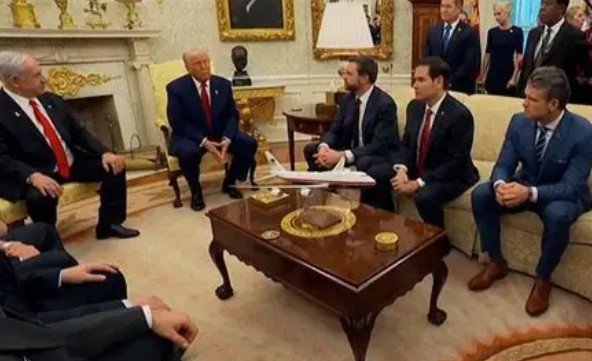
WASHINGTON, June 17: The White House is facing growing scrutiny after circulating talking points that portray President Donald Trump’s emerging agreement with Iran as a major diplomatic success, despite the absence of publicly available details and ongoing negotiations surrounding Tehran’s nuclear programme.
According to documents shared with Republican lawmakers and political supporters, the administration has highlighted several achievements, including assurances that Iran will never acquire nuclear weapons, the restoration of normal shipping through the Strait of Hormuz, and progress toward ending regional conflicts involving Iran-backed groups.
However, the contents of the proposed memorandum of understanding between Washington and Tehran remain confidential, creating uncertainty among members of Congress, foreign allies, and policy experts. The agreement is expected to be formally signed in Switzerland later this week, but few outside the administration have been granted access to its provisions.
The lack of transparency has triggered debate in Washington, where lawmakers from both parties are demanding greater clarity before offering support for the arrangement. Several Republican legislators acknowledged that speculation has filled the information gap created by the administration’s decision to withhold details.
Senator Shelley Moore Capito said uncertainty surrounding the negotiations has made it difficult to separate confirmed information from assumptions. She suggested the document may still be undergoing revisions before its public release.
President Trump defended the administration’s approach while speaking to reporters during the Group of Seven summit in France. He indicated that the agreement would eventually be released in full and suggested he could personally present its contents during a press conference.
The President also expressed openness to congressional review of the final agreement. Such a review could become mandatory under existing US legislation governing nuclear arrangements with Iran, a framework established after the 2015 agreement negotiated during former President Barack Obama’s administration.
The White House document contrasts the current negotiations with the earlier Joint Comprehensive Plan of Action (JCPOA), arguing that the previous accord failed to permanently address concerns about Iran’s nuclear capabilities. Administration officials have described the new approach as a more comprehensive solution to a challenge that has shaped American foreign policy for decades.
One of the central claims promoted by the White House is that the agreement guarantees Iran will never obtain a nuclear weapon. While Iranian leaders have consistently maintained that their nuclear activities are intended for peaceful purposes, international concerns persist because of the country’s advanced uranium enrichment programme.
Nuclear monitoring agencies have reported that Iran possesses significant quantities of uranium enriched to levels far beyond those typically required for civilian energy production. Critics argue that this capability keeps Tehran within reach of weapons-grade enrichment should it choose to pursue that path.
The administration has also emphasized the reopening of the Strait of Hormuz, a strategic maritime corridor responsible for transporting a substantial portion of the world’s oil supplies. White House officials argue that renewed stability in the region could ease pressure on global energy markets and help reduce costs for consumers.
Analysts, however, note that commercial shipping through the waterway only became severely disrupted after hostilities escalated earlier this year. While a ceasefire or broader agreement could restore confidence among shipping companies and energy traders, experts caution that market recovery may take time.
Economic claims included in the administration’s messaging have likewise generated debate. The White House maintains that American taxpayers will not finance incentives for Iran and that any future economic benefits granted to Tehran would be tied to compliance with agreed conditions.
Supporters of the agreement argue that such safeguards would protect US interests while encouraging Iranian cooperation. Opponents, meanwhile, contend that details regarding enforcement mechanisms and verification procedures remain unclear.
The administration has also renewed criticism of the 2015 nuclear deal, claiming it provided substantial financial benefits to Iran. Foreign policy specialists counter that much of the sanctions relief associated with that agreement involved the release of Iranian assets that had previously been frozen abroad rather than direct funding from US taxpayers.
Another contentious issue involves claims that the emerging arrangement could contribute to ending military tensions involving Hezbollah in Lebanon. White House talking points describe the agreement as a framework capable of reducing hostilities across multiple fronts in the Middle East.
Yet significant obstacles remain. Hezbollah has not participated directly in the negotiations and has publicly rejected efforts to link its future actions to discussions taking place between the United States, Israel, and Lebanon.
Israeli officials have also expressed reservations regarding reports that Lebanese issues may be incorporated into the broader understanding with Iran. Diplomats in Jerusalem have indicated that Israel was not involved in drafting the agreement and remains uncertain about its specific provisions.
Israeli Ambassador Yechiel Leiter questioned the inclusion of Lebanon-related matters in discussions centered on Iran’s nuclear programme, arguing that such issues should be addressed separately.
Adding to the uncertainty, a senior US official recently clarified that an Israeli military withdrawal from Lebanon is not among the conditions contained within the memorandum currently under discussion.
As anticipation builds ahead of the expected signing ceremony, political observers say the success of the initiative will ultimately depend on the details that have yet to be disclosed. Until the agreement becomes public, questions are likely to persist regarding its scope, enforcement measures, and long-term impact on regional stability.
For now, the administration continues to present the developing accord as a landmark foreign policy achievement, while critics and allies alike await the release of the document that will determine whether those claims withstand closer examination.

