


CDS Chauhan Says Air Power Could Have Curbed Chinese Offensive in 1962 War
Forward policy missteps and non-utilization of Air Force shaped the outcome, says Chief of Defence Staff
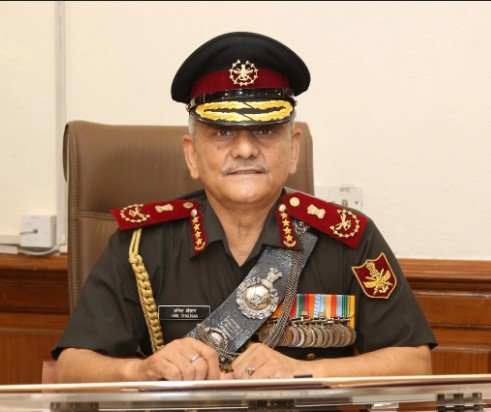
PUNE, Sep 25: Chief of Defence Staff General Anil Chauhan has stated that employing the Indian Air Force (IAF) during the 1962 Sino-Indian War could have significantly slowed the Chinese offensive. Speaking during the release of Lieutenant General S P P Thorat’s revised autobiography, Reveille to Retreat, Chauhan noted that the then-government’s reluctance to deploy air power stemmed from concerns that it would be considered “escalatory,” a perception that has changed in contemporary operations like Operation Sindoor.
Reflecting on the war, Chauhan highlighted that the forward policy should not have been applied uniformly across Ladakh and the North-East Frontier Agency (NEFA), now Arunachal Pradesh. “The two regions had very different histories of dispute, security contexts, and terrain. Pursuing identical policies was flawed,” he said.
Chauhan emphasized that Lt Gen Thorat had considered using the IAF, but permission was denied. “Air power would have provided shorter turnaround times, heavier payloads, and a critical advantage on the battlefield. It would have slowed the Chinese advance and given the Army more time to prepare,” he added.
The CDS also praised Lt Gen Thorat’s illustrious career, which spanned pre- and post-independence India. Thorat served in conflict zones including Waziristan, Peshawar, and Burma, commanded the Custodian Force in Korea post-armistice, and was honored with the Distinguished Service Order, Kirti Chakra, and Padma Bhushan.
Chauhan described Reveille to Retreat as more than a memoir, calling it a reflection on leadership, strategy, and military decision-making, with lessons that remain relevant today.

