


US-Iran Talks End Without Breakthrough as Tehran’s Nuclear Capabilities Stay Off the Negotiating Table
Two days of indirect negotiations in Qatar focused on Strait of Hormuz shipping and frozen Iranian funds, while the core dispute over Tehran’s nuclear programme remained outside the formal discussions.
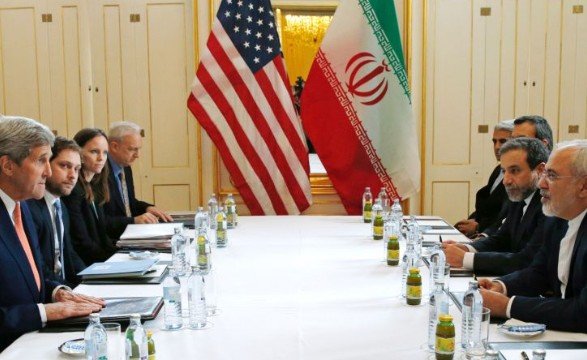
US, July 02 : The latest round of indirect talks between the United States and Iran ended in Doha on Wednesday without any major diplomatic breakthrough, underscoring the fragility of the ceasefire framework that followed the recent conflict and highlighting how far both sides still remain from a durable settlement. While officials from both countries described the discussions as constructive and pointed to progress on implementing parts of the interim understanding reached earlier, the negotiations stopped short of tackling the most contentious issue at the heart of the crisis Iran’s nuclear programme.
Held over two days in the Qatari capital, the talks were designed to build on the memorandum that helped halt open hostilities in June after weeks of military escalation involving Iran, the United States and Israel. According to sources familiar with the discussions, the Doha meetings were narrowly focused on technical and logistical issues connected to the interim arrangement, particularly maritime traffic through the Strait of Hormuz and the release of Iranian funds that remain frozen abroad. Both issues are central to the functioning of the temporary agreement, but neither addresses the broader strategic mistrust that has defined US-Iran relations for decades.
The outcome of the Doha engagement reflected a familiar pattern in Middle East diplomacy: enough movement to keep channels open, but not enough to suggest that the sides are close to a political settlement. Officials in Qatar, which has once again positioned itself as a key intermediary between Washington and Tehran, sought to cast the talks in a positive light. The Qatari Foreign Ministry said the discussions produced “positive progress” on issues related to the memorandum that halted the war in June and described the process as a continuation of earlier diplomatic efforts, including a summit in Switzerland.
Yet beneath the optimistic language, the substance of the talks appeared limited. Multiple sources indicated that the negotiations did not meaningfully engage with the central dispute over Iran’s nuclear activities the very issue that has shaped the current crisis and was repeatedly cited by US President Donald Trump as a justification for launching military action alongside Israel earlier this year. Trump, speaking in Washington, nevertheless projected confidence, telling reporters that the “denuclearization of Iran is moving along well” and that the two sides had held “very good meetings.” His comments suggested momentum toward possible restrictions on Tehran’s nuclear programme.
However, people briefed on the Doha talks painted a different picture. They said the nuclear issue did not come up in the formal sessions, which were technical in nature and aimed primarily at stabilising the ceasefire mechanism rather than resolving the deeper strategic dispute. That gap between public messaging and the actual scope of the talks is likely to fuel questions over whether Washington and Tehran are merely managing the aftermath of war rather than moving toward a comprehensive settlement.
US Vice President JD Vance appeared to acknowledge as much, indicating that the nuclear file remained for a later stage. Speaking to reporters, Vance said Washington remained concerned about Iran’s nuclear programme and that talks on the issue would begin in due course. His remarks effectively confirmed that the Doha round was not designed to settle the core question of uranium enrichment, inspections, stockpiles, or the long-term future of Iran’s nuclear infrastructure. Instead, the immediate priority appears to be conflict management — preventing the ceasefire from collapsing and containing the risks of renewed confrontation in the Gulf.
The structure of the talks also reflected the sensitivity of the current moment. American and Iranian negotiators did not meet directly but instead held separate sessions with Qatari and Pakistani mediators, according to Qatar’s Foreign Ministry. This format allowed both sides to keep diplomacy alive without the political burden of direct engagement at a time when domestic pressure remains intense in both capitals. It also underlined the continuing role of third-party mediators in one of the region’s most combustible rivalries.
Notably absent from the Doha sessions were some of the high-profile figures previously associated with the White House’s Middle East outreach. Jared Kushner, Trump’s son-in-law, and Steve Witkoff, the top US envoy whom the White House had described as part of a “high-level” diplomatic push, did not attend the meetings, according to a source familiar with the matter. Their absence raised questions about the level of political investment Washington was prepared to commit to this round and whether the Doha engagement was intended more as a maintenance exercise than as a decisive negotiating moment.
Iran’s delegation was led by Deputy Foreign Minister Kazem Gharibabadi, who confirmed that the talks had concluded. But neither Tehran nor Washington publicly indicated that they had succeeded in narrowing the main political differences between them. That silence was significant. In high-stakes negotiations, even modest progress is often amplified for diplomatic effect. The lack of a concrete announcement suggested that the two sides had chosen to preserve ambiguity rather than overstate results.
At the centre of the technical discussions was the Strait of Hormuz, one of the world’s most strategically important waterways and a recurring flashpoint in regional security. Before the war, roughly one-fifth of global oil and liquefied natural gas trade moved through the narrow passage linking the Persian Gulf to the Arabian Sea. Any disruption to traffic there carries immediate implications for energy prices, shipping insurance, global inflation and the wider stability of the world economy.
The interim agreement reached in June called for the resumption of shipping through the strait, but implementation has been uneven. Maritime traffic has partially resumed, yet the operational and political status of the waterway remains uncertain. Last weekend, tensions flared again when Iran and the United States exchanged strikes after an Iranian attack on a cargo vessel. The episode served as a reminder that even with a ceasefire in place, the Gulf remains one miscalculation away from renewed escalation.
Iran is reportedly seeking more than just a restoration of commercial shipping. According to two senior Iranian sources, Tehran is determined to secure international recognition of its control over the Strait of Hormuz and is prepared to use force if necessary to defend that position. The sources said Iranian officials have repeatedly signalled their intention to begin levying tolls on shipping from mid-August, after the expiration of a toll-free period included in the interim understanding. Such a move would mark a dramatic assertion of Iranian authority over one of the world’s most critical energy arteries and would almost certainly provoke fierce international resistance.
The question of who effectively controls the strait is therefore becoming as politically explosive as the nuclear issue itself. For Tehran, the waterway offers leverage, symbolism and strategic depth. It is a tool for demonstrating regional power, retaliating against pressure and extracting concessions from rivals. For Washington and its allies, freedom of navigation through Hormuz is a core security interest that cannot be surrendered without significant geopolitical consequences. The Doha talks, by focusing heavily on maritime arrangements, may have helped reduce immediate risks, but they did not resolve this underlying collision of interests.
Trump’s remarks after the talks suggested that the White House wants to emphasise de-escalation rather than confrontation. “I think they’ve come a long way,” he said, downplaying the possibility of a return to full-scale war with Iran. Markets appeared to take that message seriously. Oil prices fell to their lowest level in four months after Trump’s comments, and analysts revised their price forecasts downward for the first time since the conflict began. The market reaction reflected a belief that the immediate danger of a major regional supply shock had receded, at least temporarily.
Still, traders and analysts remain wary. The partial reopening of Hormuz has not restored full confidence in the security of the route. Shipping companies, insurers and energy importers continue to monitor the Gulf with caution, aware that the current arrangement rests on an uneasy political foundation. Vandana Hari, founder of oil market analysis firm Vanda Insights, captured that uncertainty by describing Hormuz as “patchy, unpredictable, and not fully transparent.” Her assessment speaks to the central contradiction of the present moment: the waterway is neither fully closed nor reliably open, and the absence of clarity is itself a source of risk.
Further evidence of instability came from Iranian state media, which reported on Wednesday that a foreign container ship had run aground in shallow waters outside the shipping route designated by Iranian authorities. While the incident did not appear to involve military action, it reinforced concerns about the practical hazards facing commercial traffic in a zone where navigation, politics and military signalling are now tightly intertwined. In such an environment, even routine shipping mishaps can carry strategic overtones.
The international response to the uncertainty in Hormuz has been cautious but telling. Several European countries have reportedly offered to help clear mines from the strait and support maritime security operations. However, Germany’s Defence Minister Boris Pistorius indicated that Berlin was unlikely to participate, citing Iran’s reluctance to cooperate with foreign states. That hesitation reflects a broader dilemma confronting European governments: they have strong interests in keeping Gulf trade flowing, but limited appetite for military entanglement in a confrontation whose political endgame remains deeply unclear.
The timing of the next round of diplomacy adds another layer of complexity. Qatar said further talks would take place after funeral processions for Iran’s late Supreme Leader Ayatollah Ali Khamenei, who is to be buried on July 9. The death of such a towering figure in the Islamic Republic’s political order is not a minor backdrop to negotiations; it is a potentially transformative event. Any transition at the top of Iran’s leadership structure could reshape the balance between pragmatists, security hardliners and ideological conservatives, all of whom will seek to influence the country’s negotiating posture.
That means the current pause in diplomacy is not merely procedural. It may become a period of internal recalibration in Tehran. Much will depend on whether the Iranian leadership views the interim agreement as a tactical necessity, a strategic opportunity or an unwelcome concession made under duress. The answer to that question will determine how flexible Iran is when talks eventually turn to the nuclear file and to the long-term security architecture of the Gulf.
For the United States, the challenge is equally complex. The Trump administration appears to be trying to balance coercion with diplomacy — using military pressure and sanctions to compel concessions while also keeping a negotiating track alive through intermediaries. But that strategy carries risks. If Washington presents technical ceasefire talks as evidence of nuclear progress when the nuclear issue has not actually been addressed, it could create unrealistic expectations at home and deepen mistrust abroad. Iran, for its part, may interpret such messaging as an attempt to claim political gains without paying the diplomatic price of genuine compromise.
The gap between public rhetoric and private negotiations is therefore one of the most important features of the current moment. Official statements from both sides are designed not only for foreign audiences but for domestic constituencies, allies, markets and military establishments. Trump wants to project control and progress. Iran wants to show resilience, sovereignty and regional relevance. Qatar wants to demonstrate that mediation is delivering results. Yet the underlying facts suggest a more restrained conclusion: the ceasefire mechanism is being stabilised, but the central disputes that caused the war remain unresolved.
Those disputes are substantial. On the nuclear front, there is still no public indication of a shared framework on enrichment levels, verification measures, the fate of Iran’s existing stockpiles, or the future of facilities that Washington and Israel consider threatening. On regional security, there is no agreed formula for Hormuz, no settled understanding on freedom of navigation, and no evidence that the two sides have found a way to prevent proxy flare-ups or direct military retaliation from reigniting conflict. On sanctions and economic relief, only limited discussions appear to be under way, focused mainly on unfreezing funds rather than broader normalisation.
In that sense, the Doha round may be best understood as a test of whether the post-war pause can be managed without collapsing. It was not a grand bargain, nor did it pretend to be one. Its real significance lies in the fact that the United States and Iran, despite the bitterness of recent fighting, are still using intermediaries to negotiate practical arrangements rather than relying solely on threats. That is not a small thing in the current Middle East environment. But neither is it a breakthrough.
As diplomacy moves into its next phase, three questions will shape the road ahead. First, can the ceasefire mechanisms around shipping, funds and deconfliction survive repeated provocations in the Gulf? Second, will the next round of talks finally engage with the nuclear programme in a meaningful way, or will that issue continue to be postponed while tensions simmer elsewhere? And third, how will internal political developments in Tehran after Khamenei’s funeral affect Iran’s willingness to negotiate?
For now, the answers remain uncertain. The Doha talks kept the diplomatic process alive and may have reduced immediate risks in the Strait of Hormuz, but they did not alter the fundamental equation. The nuclear issue — the central fault line in US-Iran tensions — remains unresolved and, for the moment, untouched in formal negotiations. Maritime stability in the Gulf is still fragile. And the political conditions for a lasting peace remain elusive.
The result is a tense, incomplete calm: war has paused, diplomacy has not collapsed, but the hardest questions have merely been deferred. Until Washington and Tehran confront those questions directly, every round of talks will carry the same underlying ambiguity — progress enough to prevent immediate breakdown, but not enough to secure lasting peace.

