


Post-Partition Arrivals Were ‘Warriors’, Not Refugees, Says Bhagwat
At the Sindhu Education Society’s 75th Foundation Day event in Nagpur, Bhagwat said those who came to India after Partition chose the nation and their faith over wealth and comfort, and called for value-based education rooted in character, resilience and social responsibility.
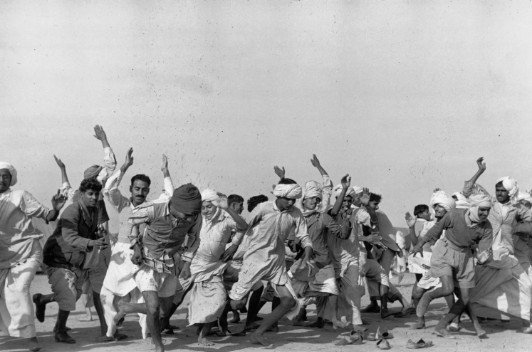
Nagpur, July 2: Rashtriya Swayamsevak Sangh chief Mohan Bhagwat on Wednesday described the people who migrated to India in the aftermath of Partition as “warriors of struggle” rather than refugees, saying they made a conscious and painful choice to leave behind homes, wealth and livelihoods in the newly created Pakistan in order to live in Bharat and preserve their faith without fear.
Speaking at the 75th Foundation Day programme of the Sindhu Education Society in Nagpur, Bhagwat said the term “refugee” did not adequately capture the spirit, sacrifice and emotional resolve of those who crossed over to India during one of the most traumatic chapters in the subcontinent’s history. According to him, the people who arrived in India after Partition were not merely displaced persons escaping turmoil, but individuals who endured enormous suffering out of devotion to their motherland and “dharma”.
Bhagwat’s remarks came at an event organised by the Sindhu Education Society, an institution associated with the Sindhi community, whose history is closely intertwined with the upheaval of 1947. For many Sindhis, Partition was not just a political rupture but a civilisational dislocation that uprooted entire families, businesses and social networks from Sindh, forcing them to rebuild their lives in a new national setting. It was in this historical and emotional context that Bhagwat framed his tribute to those who migrated to India after the country’s division.
Addressing the gathering, the RSS chief said the people who came to India after Partition made a deliberate choice. They left behind properties, businesses and wealth built over generations in territories that became part of Pakistan, not because they lacked options or were simply fleeing instability, but because they wanted to live in a land they regarded as their own, where they could follow their religion freely and without fear. He argued that such a decision should be understood as an act of conviction and sacrifice rather than one of helplessness.
“They were not refugees, though they were displaced,” Bhagwat said, adding that the label used at the time was inadequate and misleading. In his view, those who came to India were “sangharshrath yodha” — warriors who struggled through immense pain and loss for the sake of the nation and their faith. He said they did not choose a future based on comfort, career prospects or financial security, but instead chose India and their religious identity even at the cost of abandoning all that they had built in their previous homes.
Bhagwat’s comments also located the trauma of Partition within a broader collective failure to keep India united. He said those who migrated should not be seen as people defeated by their own circumstances alone. Rather, he suggested, the tragedy of Partition reflected a larger national loss in which “all of us” failed to prevent the division of the country. In that sense, he portrayed the migrants not as passive victims of history but as participants in a painful civilisational struggle whose consequences were borne most heavily by families uprooted from their ancestral homes.
The RSS chief used the occasion not only to reflect on Partition and migration but also to speak about resilience, education and the purpose of social institutions. Referring to the 75-year journey of the Sindhu Education Society, Bhagwat said anniversaries and milestones are important moments for introspection, allowing institutions to review their work, reconnect with their founding purpose and think about the path ahead. Such occasions, he indicated, should not be treated merely as commemorative events but as opportunities to revisit ideals and measure whether an organisation has remained true to its mission.
Bhagwat linked this reflection to a larger message about life’s hardships and the need to confront adversity with courage. He told the audience that difficult circumstances, setbacks and suffering are part of life, but individuals and institutions must not become helpless before fate. What matters, he said, is the willingness to make an effort, rise after defeat and continue moving forward. A person who tries to emerge from hardship, he said, is ultimately the one who succeeds, whereas the person who runs away from difficulty has already accepted defeat.
The message resonated with the historical memory of the Sindhi community, many of whose members rebuilt their lives from scratch in post-Independence India after losing homes and assets during Partition. Bhagwat’s invocation of struggle and perseverance appeared aimed at honouring that journey while also turning it into a broader moral lesson about character, resilience and collective responsibility. The history of displacement, in his telling, was not simply a record of suffering but also a story of reconstruction, social contribution and civilisational continuity.
A substantial part of Bhagwat’s address was devoted to education and the role it should play in shaping individuals and society. He said that while education for employment is necessary and practical, it cannot be the final objective of learning. In his view, the true purpose of education extends beyond securing a livelihood and must include the cultivation of values, judgment and moral clarity. Students, he suggested, should not emerge from educational institutions as merely skilled job-seekers but as responsible human beings capable of distinguishing right from wrong and acting with a sense of duty towards society.
Bhagwat stressed the importance of value-based education, saying that the ability to understand ethical distinctions does not come from textbooks alone. Rather, it emerges from the conduct of teachers, the atmosphere within institutions and the values consciously imparted to students over time. In this formulation, education becomes not only a means of economic mobility but also a cultural and moral process through which future generations are shaped.
The RSS chief’s emphasis on teachers was significant in that context. He suggested that the role of educators goes far beyond delivering subject knowledge or helping students pass examinations. Teachers, he said, influence the moral and social orientation of young people through their own behaviour and by instilling habits of discipline, empathy and responsibility. The kind of education that produces good citizens, he implied, depends not only on curriculum design but also on the values embodied by those who teach.
Bhagwat said the real purpose of education is to create “good human beings” and nurture a generation conscious of society’s welfare. This idea, which has often figured in RSS-linked discussions on education, places social responsibility at the centre of learning. It frames schools and colleges not just as sites of academic training but as institutions with a larger civilisational and national function. In that sense, Bhagwat’s remarks tied together his reflections on Partition, struggle and education through a common emphasis on identity, values and collective duty.
The choice of the Sindhu Education Society’s foundation event as the venue for such remarks also carried symbolic significance. The institution represents a community whose modern history in India is inseparable from displacement, adaptation and educational entrepreneurship. Sindhi organisations across the country have often invested heavily in schools and colleges as part of the community’s post-Partition rebuilding process. By addressing the society’s 75th Foundation Day, Bhagwat was not only speaking about a community’s past but also about the role its institutions have played in preserving memory, transmitting values and enabling social mobility.
His comments are likely to resonate with audiences who view Partition not just as a geopolitical event but as a civilisational wound marked by sacrifice, displacement and enduring questions of identity. The framing of post-Partition migrants as “warriors” rather than refugees reflects an attempt to shift the narrative from victimhood to agency and from displacement to patriotic choice. In Bhagwat’s telling, the act of coming to India was not simply a movement forced by violence and fear; it was also a declaration of belonging and a reaffirmation of faith and national identity.
At the same time, the remarks are part of a broader ideological language often used by the RSS to interpret historical trauma through the lens of cultural nationalism, sacrifice and civilisational continuity. By emphasising that those who crossed over to India chose “the country” and “dharma” over wealth and career, Bhagwat placed their experience within a narrative of moral steadfastness and national commitment. That interpretation aligns with the RSS’s longstanding attempt to frame historical events such as Partition in terms of cultural resilience and the unfinished task of social and civilisational renewal.
The comments may also invite discussion on the politics of memory surrounding Partition, particularly in a period when the event continues to be revisited in public discourse, academic writing and political rhetoric. How Partition survivors and migrants are remembered — whether as refugees, victims, survivors or nation-builders — is not simply a matter of language. It reflects deeper debates about history, belonging, trauma and the way independent India narrates one of its foundational ruptures. Bhagwat’s intervention enters that space by urging a more valorised description of those who left Pakistan for India, especially communities such as Sindhis who were profoundly shaped by the division.
Beyond the historical framing, however, the speech’s other major theme was clearly education as a moral and social project. In recent years, debates around Indian education have often centred on employability, curriculum reform, skill development, digital learning and global competitiveness. Bhagwat’s remarks pushed back against an exclusively career-oriented understanding of education. He argued that employment is important, but a society cannot be sustained by technical competence alone; it also needs citizens with judgment, character and concern for the common good.
That formulation places educational institutions under a larger expectation. They are not merely training centres for the labour market, but spaces where values are transmitted and social purpose is cultivated. For organisations such as the Sindhu Education Society, which were founded in the aftermath of communal rupture and displacement, that message may carry special weight. It suggests that the legacy of communities uprooted by Partition should not be remembered only through grief or nostalgia, but also through the institutions they built and the values they sought to preserve in a new homeland.
Bhagwat’s speech, then, moved across three connected themes: memory of Partition, resilience in the face of suffering, and the role of education in building society. The first theme honoured those who came to India after 1947 as people who sacrificed material security for identity and belonging. The second transformed that experience into a lesson in perseverance and self-effort. The third extended the discussion into the present by arguing that educational institutions must produce not just employable youth but ethically grounded individuals aware of their responsibilities towards society.
For the RSS chief, the story of post-Partition migrants appears to be one not only of loss but of choice, endurance and renewal. By calling them “warriors of struggle,” he sought to elevate their suffering into a form of moral courage and national service. By speaking of education as value-based and society-oriented, he linked that historical experience to the task of shaping future generations. The speech thus served both as a tribute to a community’s past and as a broader statement of the values Bhagwat believes should guide institutions and individuals in contemporary India.

