


Delhi HC Gives WFI Two Weeks to Decide on Vinesh Phogat Notice, Keeps Wider Selection Dispute Open
The Delhi High Court disposed of Vinesh Phogat’s petition on Asian Games trial participation as infructuous, but directed the Wrestling Federation of India to decide her pending show-cause notice within a fortnight after granting her a personal hearing.
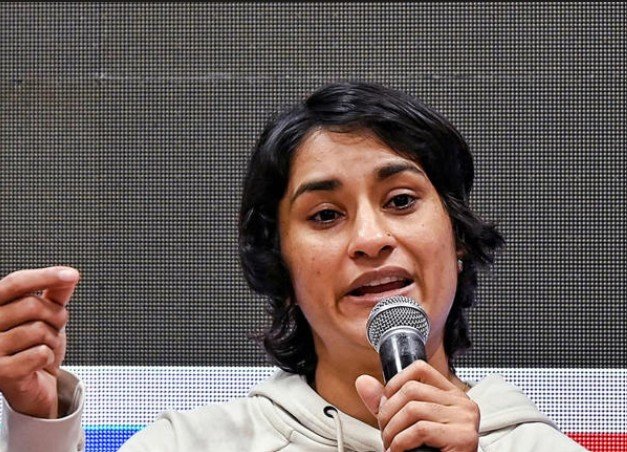
New Delhi, July 7: The Delhi High Court on Monday directed the Wrestling Federation of India (WFI) to decide within two weeks the show cause notice issued to wrestler Vinesh Phogat, closing the immediate round of litigation over her participation in the Asian Games selection trials but leaving the door open for a fresh legal challenge on broader questions surrounding the federation’s selection policy.
The order, passed by Justice Swarana Kanta Sharma, came in a petition filed by Phogat challenging both the show-cause notice issued to her on May 9 and the WFI’s selection criteria for the Asian Games trials. The court disposed of the matter after the federation submitted that the grievance regarding her participation in the trials had become infructuous because she had already been allowed to compete pursuant to earlier judicial directions.
While bringing the current petition to an end, the court made it clear that the disciplinary proceedings initiated by the WFI could not remain pending indefinitely. It therefore directed the federation to take a final decision on the show-cause notice within two weeks and to communicate the outcome to both the petitioner and the court. The WFI’s counsel also informed the court that Phogat would be given a personal hearing before any final order is passed.
The case has become one of the most closely watched disputes in Indian sport because it goes far beyond a technical disagreement over eligibility. It touches on athlete rights, federation governance, maternity-related interruptions in elite sport, and the extent to which sporting bodies can frame selection criteria that may disproportionately affect athletes returning after pregnancy or injury.
Phogat, one of India’s most decorated wrestlers and a three-time Olympian, had approached the High Court after the WFI issued a show-cause notice accusing her of indiscipline and anti-doping rule violations. The federation also declared her ineligible to participate in domestic events till June 26, 2026, citing the mandatory six-month notice period linked to athletes returning from retirement under anti-doping rules.
In her petition, Phogat challenged both the disciplinary action and the federation’s selection policy for the Asian Games trials. She argued that the WFI had limited eligibility to medal winners of certain designated tournaments and had created a qualification window that substantially overlapped with her maternity-related sabbatical and postpartum recovery. According to her plea, the policy operated as a rigid and exclusionary gatekeeping mechanism that unfairly shut her out of the trial process.
Her challenge brought to the forefront a central question in modern sport: whether rules framed in a neutral manner can still become discriminatory if they fail to account for the physiological and professional realities faced by women athletes during pregnancy and recovery. Phogat’s argument was not simply that she had been denied a chance to compete, but that the policy itself was structurally unfair because it ignored a legitimate and medically necessary break in her sporting career.
The court, however, confined itself to the live issues in the petition. Since Phogat had already been permitted to compete in the Asian Games selection trials due to earlier court intervention, the bench noted that her grievance on that count no longer survived in the present proceedings. When Phogat’s senior counsel argued that the petition raised larger questions relating to the legality and fairness of the WFI’s selection framework, the court observed that those issues could be pursued through a fresh writ petition.
“This can be disposed of and then you can file a fresh writ petition,” the court said, effectively separating the immediate show-cause dispute from the larger policy challenge.
That distinction may prove important in the days ahead. While the High Court has asked the WFI to decide the pending notice, it has not ruled on the validity of the federation’s selection rules, nor has it adjudicated on the substance of Phogat’s allegations of discrimination. The present order is therefore procedural rather than determinative: it ensures a time bound conclusion to the disciplinary process, but does not settle the underlying conflict between the wrestler and the federation.
The federation’s show-cause notice itself has been controversial. It was issued in the backdrop of Phogat’s attempted return to top-level competition after a maternity break and after the fallout from her Paris Olympics campaign, which had already placed her at the centre of national sporting attention. The WFI alleged indiscipline and anti-doping rule violations, while Phogat maintained that the action was unfair and disconnected from the circumstances of her return.
The court was also informed that Phogat has received a fresh show cause notice concerning her conduct during the Asian Games trials. That revelation suggests that the legal battle between the wrestler and the federation may be far from over. Even if the WFI complies with the High Court’s direction and decides the May 9 notice within two weeks, the possibility of further disciplinary proceedings or a broader constitutional challenge to the federation’s rules remains very much alive.
For Indian sport, the case has significance well beyond the individual athlete involved. It raises difficult questions about how sports bodies treat elite women competitors who step away from competition due to motherhood. In recent years, global sport has increasingly grappled with issues such as maternity protections, ranking freezes, return to play accommodations, and flexible qualification norms. Phogat’s case brings those debates squarely into the Indian legal and administrative context.
At the heart of the controversy is the tension between two principles: a federation’s right to enforce discipline and maintain uniform rules, and an athlete’s right to fair treatment under those rules. Sports administrators often argue that qualification windows and notice periods are necessary to preserve order, transparency and competitive integrity. Athletes, on the other hand, contend that rules must be interpreted in a way that does not erase lived realities such as injury rehabilitation, maternity, and recovery.
Phogat’s petition made precisely that point. She argued that by selecting a qualification window that overlapped with her pregnancy related break, the WFI effectively penalised her for motherhood. The broader legal implication of such an argument is that sporting rules cannot be assessed only on paper; they must also be examined for their real-world impact on different categories of athletes.
The High Court had earlier shown concern over aspects of the matter while dealing with Phogat’s request to participate in the Asian Games trials. The present order, however, adopts a narrower route, requiring the WFI to conclude the pending disciplinary process while leaving substantive constitutional and policy issues for another day.
What happens next will depend largely on the federation’s decision. If the WFI drops the notice or issues a mild order after hearing Phogat, the immediate conflict may cool, though the policy dispute could still continue separately. If, however, the federation passes an adverse order, Phogat is likely to return to court, this time not only to challenge the disciplinary action but also to revive her objections to the selection framework and the way it treated her maternity break.
The case is also politically and institutionally sensitive because Phogat has been one of the most visible faces of athlete resistance against the WFI establishment in recent years. Her legal battles have unfolded against a wider backdrop of discontent in Indian wrestling, governance concerns, and demands for reform in how athletes are treated by sporting authorities. Every new court order in her case therefore carries implications not just for her own career but for the credibility of wrestling administration in the country.
From a sporting perspective, the timing matters too. India is in the middle of a busy international calendar, with federations across disciplines trying to finalise teams, manage selection disputes and prepare athletes for major events. The Phogat-WFI conflict serves as a reminder that administrative clarity and transparent processes are just as important as training and performance when it comes to preparing athletes for the international stage.
The High Court’s latest intervention does not hand victory to either side. Instead, it imposes a deadline, reinforces the need for due process, and signals that disciplinary authority must be exercised in a fair and timely manner. By directing the WFI to decide the show-cause notice within two weeks after giving Phogat a personal hearing, the court has sought to prevent procedural limbo while also preserving the athlete’s right to challenge any future decision.
For Vinesh Phogat, the order offers only partial relief. She has succeeded in ensuring that the federation cannot keep the notice hanging over her indefinitely. But she has not yet secured a judicial ruling on the larger issue that lies at the heart of her challenge whether Indian sporting structures are equipped to accommodate female athletes returning from maternity breaks without subjecting them to exclusionary rules and fresh disciplinary battles.
That larger question remains unanswered. And until it is addressed, the Phogat case is likely to remain a touchstone in debates over fairness, athlete welfare and institutional accountability in Indian sport.

