


China’s Submarine Missile Test in South Pacific Triggers Regional Alarm and Strategic Scrutiny
A long range ballistic missile launch from a Chinese nuclear powered submarine in the South Pacific draws protests from Pacific nations and fresh concern over military signalling in a region already under intense geopolitical competition.
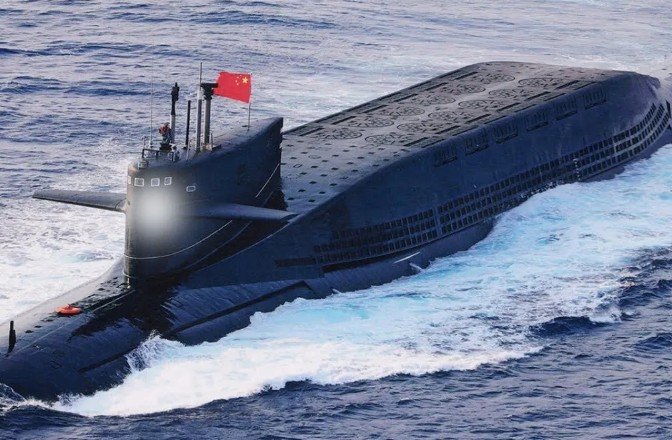
Bangkok/Beijing, July 7: China’s test launch of a long-range ballistic missile from a nuclear-powered submarine in the South Pacific has triggered sharp concern across the region, with Pacific governments and strategic observers treating the move as a significant escalation in military signalling in one of the world’s most contested geopolitical theatres.
According to official Chinese statements cited in international media reports, the missile was launched on Monday during what Beijing described as routine annual training. The weapon reportedly carried a dummy warhead and was not aimed at any country or specific target, Chinese authorities said, while maintaining that the exercise complied with international law and standard military practice. But the explanation did little to calm regional unease, especially because the launch took place in the South Pacific an area where strategic competition among China, the United States, Australia and their partners has intensified sharply in recent years.
The test was notable not merely because of the missile itself, but because it was launched from a nuclear-powered submarine, underlining the operational maturity and growing reach of China’s sea-based nuclear deterrent. Ballistic missile submarines are among the most sensitive components of any major power’s strategic arsenal because they provide a survivable second-strike capability. A launch from such a platform sends a message that goes well beyond routine training: it showcases readiness, reach and credibility in the nuclear domain, even when the test uses a dummy warhead.
For Pacific island nations, the launch revived long-standing anxieties about great-power militarisation in their maritime neighbourhood. Several governments in the region have repeatedly said they do not want the Pacific to become a theatre for strategic rivalry, arms signalling or coercive diplomacy. The missile test, conducted in waters linked symbolically and politically to the future of Pacific security, therefore landed in an already sensitive environment.
Reports following the launch indicated that Australia and New Zealand were among the countries voicing concern. Regional criticism centred on the destabilising implications of introducing such a visible demonstration of strategic force into the Pacific, where island states are often trying to balance security partnerships, development needs, climate diplomacy and relations with competing external powers. Even if the launch was technically legal, critics argue that legality alone does not address the political consequences of military signalling in a fragile region.
China’s defence narrative was straightforward: the launch was part of normal annual military training, involved a dummy warhead and did not target any state. This framing is consistent with Beijing’s broader effort to present its military modernisation as legitimate, defensive and proportionate to its global interests. Chinese officials have frequently accused Western countries of portraying its military activity in alarmist terms while ignoring the scale of US and allied deployments across the Indo-Pacific.
Yet the strategic context makes this launch impossible to read in isolation. The South Pacific has become a focal point of diplomatic and security competition as China expands its footprint through infrastructure, aid, policing agreements, economic engagement and high-level political outreach. Australia, New Zealand and the United States, meanwhile, have intensified their own efforts to rebuild influence, strengthen security ties and reassure Pacific island partners that they will remain engaged in the region.
That contest is not only about military power. It is also about port access, undersea cables, fisheries, climate finance, policing cooperation, development lending and diplomatic recognition. But security remains the sharpest edge of the rivalry, especially after China’s security pact with the Solomon Islands and the growing debate over whether Beijing seeks military access or dual use facilities in Pacific states. Against that backdrop, a ballistic missile test from a Chinese submarine in the South Pacific inevitably carries symbolic weight.
Strategic analysts say the launch serves several possible purposes at once. It demonstrates technical capability and confidence in China’s sea-based deterrent. It reminds rivals that Beijing can operate beyond its immediate coastal periphery. It sends a message to domestic audiences about national strength and military modernisation. And it signals to regional states that China intends to be treated not merely as a commercial or diplomatic player in the Pacific, but as a power with hard-security presence and reach.
The timing of the test added another layer of significance. It came as China and Russia began their annual “Joint Sea-2026” naval exercises off the Chinese coast, a reminder that Beijing is simultaneously projecting maritime coordination in East Asia while expanding the visibility of its strategic reach deeper into the Pacific. While the submarine launch and the naval drills are distinct events, taken together they contribute to the broader impression of a military power willing to demonstrate capability across multiple theatres at once.
For Australia, the launch is likely to reinforce existing concerns about the changing strategic balance in the Indo-Pacific. Canberra has spent the past several years warning that the region faces its most challenging security environment in decades. It has deepened defence cooperation with the United States and the United Kingdom under AUKUS, expanded regional diplomacy and invested in long-range strike, missile defence and maritime surveillance. A Chinese ballistic missile test in the South Pacific will only sharpen arguments inside Australia for faster defence preparedness and stronger regional engagement.
New Zealand’s reaction also matters because Wellington has traditionally taken a somewhat more measured tone on China than some of its allies, while still voicing concern on security issues that affect Pacific stability. If New Zealand sees the launch as undermining peace and stability in the Pacific, that signals that regional discomfort is not limited to hard line strategic circles. Pacific security is a core foreign policy concern for Wellington, and missile signalling in the region is likely to be treated as politically sensitive.
For the Pacific island states themselves, the test underscores a recurring dilemma: they are being courted by larger powers, but they do not want their region defined solely by external military competition. Many island leaders have repeatedly said climate change, debt sustainability, health resilience, fisheries protection and development financing are their principal priorities. Strategic competition, in their view, often arrives on terms set by outsiders. A ballistic missile test in Pacific waters reinforces fears that the region’s security discourse is being shaped less by island needs than by great-power rivalry.
China, for its part, has invested heavily in portraying itself as a respectful development partner for Pacific countries, emphasising infrastructure, South-South cooperation, disaster support and diplomatic equality. But critics argue that these softer narratives are undercut when Beijing conducts military demonstrations that regional governments have little influence over and must then publicly respond to. In that sense, the submarine launch may complicate China’s effort to balance strategic ambition with political reassurance.
The test also feeds into wider debates over nuclear deterrence in Asia. China has long maintained a smaller nuclear arsenal than the United States or Russia, but it is modernising rapidly. Western assessments have pointed to the expansion of Chinese missile silos, advances in delivery systems and a more robust triad involving land-based missiles, air delivery and sea-based deterrence. A submarine-launched ballistic missile test in the Pacific fits squarely into that modernisation story, suggesting growing confidence in the operational credibility of China’s undersea nuclear forces.
Sea-based deterrence is especially important because submarines are harder to track and can remain hidden for long periods, making them central to the logic of second-strike capability. If an adversary cannot confidently eliminate a country’s nuclear forces in a first strike, deterrence becomes stronger. Demonstrating that capability even through a test with a dummy warhead has strategic meaning. It tells rivals that China’s deterrent is not merely theoretical.
Still, the political cost of such signalling depends heavily on where and how it is conducted. The Pacific is not an empty strategic canvas. It carries the memory of colonialism, nuclear testing and external militarisation. For many island societies, security is inseparable from historical trauma. That history makes any new display of strategic weapons in the region especially sensitive. Governments may not always respond with dramatic rhetoric, but the unease runs deeper than the language of standard diplomatic protest.
Another issue is transparency. Regional actors are often frustrated when major military powers provide only limited information about activities that affect Pacific waters and airspace. Even if a launch is lawful and pre-notified through military channels, broader political transparency matters. Pacific governments want reassurance that their region will not become a site for unpredictable strategic demonstrations without meaningful consultation or sensitivity to local concerns.
The launch could also influence the diplomatic balance in the Pacific. Australia and the United States are likely to use it as evidence that their warnings about militarisation were justified, strengthening their case for deeper defence cooperation with island partners. China, meanwhile, may argue that criticism reflects double standards and that Western militaries conduct their own operations across the Indo-Pacific without similar scrutiny. In practice, the episode may harden strategic narratives on both sides rather than create space for de-escalation.
The United States will be watching closely for another reason: undersea deterrence and missile defence are central to the future of Indo-Pacific security competition. Washington has long monitored China’s progress in submarine stealth, missile range, command-and-control and patrol capability. A visible test in the South Pacific may not reveal everything about those systems, but it still offers a signal about confidence, readiness and intent.
At a broader level, the episode highlights how the geography of strategic competition is expanding. For years, the focus of Indo-Pacific tensions centred on the Taiwan Strait, the South China Sea, the East China Sea and the Korean Peninsula. Increasingly, however, the Pacific islands region is being drawn into the strategic map—not only through diplomacy and development competition, but through harder forms of military signalling. That shift has profound implications because it pulls smaller island states into a contest whose stakes are set by nuclear powers and alliance systems.
The challenge for regional diplomacy now is whether concern over the missile test can be translated into a stronger Pacific voice on militarisation. Pacific governments have often insisted that they do not want to choose sides, but rather want all external partners to respect regional priorities and sovereignty. If they see this launch as part of a broader pattern of strategic disregard, it may strengthen calls for clearer regional norms against escalatory military demonstrations.
For China, the task will be to prevent the episode from undermining years of careful diplomatic investment in the Pacific. Beijing can insist that the launch was routine and lawful, but it will still have to manage the political fallout if Pacific governments view the act as insensitive or destabilising. Strategic capability may impress rivals, but diplomacy in the Pacific depends just as much on trust, predictability and the perception of respect.
The South Pacific missile test therefore matters for more than one day’s headlines. It is a window into the changing architecture of power in the Indo-Pacific: a region where military capability, diplomatic influence and historical memory increasingly collide. It shows that China’s rise is not being expressed only through trade, investment and diplomacy, but also through visible demonstrations of strategic reach. And it reminds Pacific nations that even as they seek to prioritise climate resilience and development, they remain caught in the expanding shadow of great-power rivalry.
In the days ahead, governments across the region will likely seek more clarity on the circumstances of the launch, the message Beijing intended to send and the implications for regional stability. But one conclusion is already hard to avoid: the South Pacific is no longer peripheral to the global strategic contest. It is becoming one of its most sensitive frontiers.

