


US Launches Fresh Strikes on Iran After Hormuz Tanker Attacks Escalate Tensions
Washington carries out a new round of strikes on Iranian targets and tightens oil sanctions after attacks on ships in the Strait of Hormuz rattled the fragile regional truce.
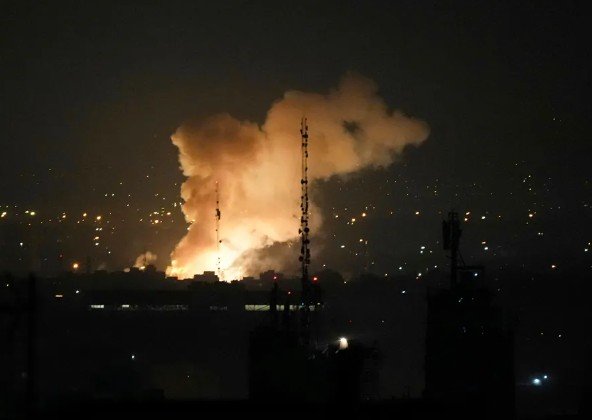
US, July 08 : The United States launched a fresh wave of military strikes on Iran on July 8 after a series of attacks on commercial vessels in the Strait of Hormuz sharply escalated tensions in the Gulf and threatened a fragile ceasefire in the region.
According to reports, US Central Command said American forces struck more than 80 targets in Iran, including air defence systems, command and control facilities, coastal radar sites, anti-ship missile capabilities and vessels linked to the Islamic Revolutionary Guard Corps. The strikes came after at least three ships were reportedly hit near the strategic waterway, raising fears over the safety of one of the world’s most critical energy transit routes.
The latest escalation followed reports that a Qatari liquefied natural gas tanker and a Saudi crude tanker were among vessels damaged near the Strait of Hormuz. Maritime security agencies said one tanker caught fire after being struck by a projectile off the coast of Oman, while the crew was evacuated safely. Qatar blamed Iran for one of the attacks, an allegation Tehran rejected as unacceptable.
Alongside the military action, Washington also revoked a licence that had allowed Iran to sell oil, signalling a renewed economic squeeze on Tehran. The US move is being seen as an attempt to increase pressure on Iran at a time when regional diplomacy remains under strain and mistrust between the two sides is deepening.
The developments unfolded as Iran continued mourning ceremonies for Supreme Leader Ayatollah Ali Khamenei, whose funeral processions drew large crowds across the country. Iranian officials warned that there would be no return to peace talks unless US President Donald Trump halted threats of renewed war. Tehran also accused Washington of violating understandings aimed at preventing further conflict in the Gulf.
The Strait of Hormuz, through which a significant share of global oil and gas supplies passes, has once again emerged as a flashpoint with global implications. Any prolonged disruption in the area could unsettle energy markets, increase shipping risks and further destabilise an already volatile West Asian region.

