


Action Underway Against Accused, Don’t Defame Entire Trust Over Ram Temple Donation Theft: CM Yogi
Chief Minister Yogi Adityanath says the Ram temple donation theft investigation points to a small group of accused, and warns against using the case to discredit the Shri Ram Janmabhoomi Teerth Kshetra Trust, Ayodhya and the larger legacy of Lord Ram.
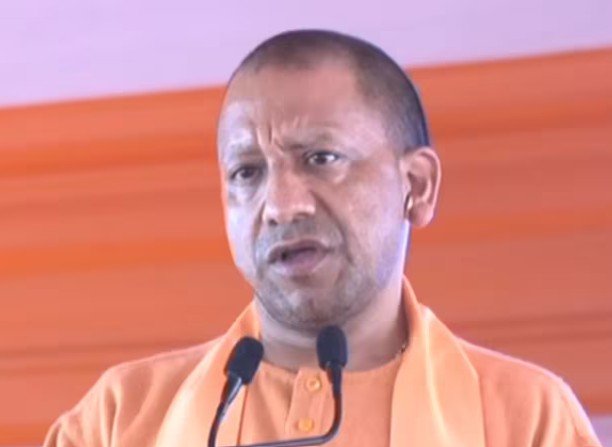
UP, July 09 : Uttar Pradesh Chief Minister Yogi Adityanath on Wednesday mounted a strong defence of the Shri Ram Janmabhoomi Teerth Kshetra Trust in the controversy surrounding alleged theft of donations at the Ram temple in Ayodhya, asserting that the investigation had so far identified only a handful of accused and that attempts to malign the entire trust were unjustified.
Addressing a public event in Chitrakoot, where he inaugurated and laid the foundation stone for development projects worth more than Rs 950 crore, Adityanath said the findings of the Special Investigation Team (SIT) did not support broad allegations against the trust or Ayodhya as a whole. He maintained that while action must be taken against those found guilty, it was wrong to use the episode to cast suspicion on every person associated with the temple’s operations.
The chief minister said the controversy was being amplified for political reasons by opposition parties, particularly the Congress and the Samajwadi Party, which, according to him, were trying to turn a criminal investigation into a larger campaign against Ayodhya and the Ram temple movement. He alleged that the issue was being used to weaken public faith and to target a religious institution that carries deep emotional significance for millions of devotees.
Adityanath explained that the SIT probe was not initiated under external pressure but on the recommendation of the temple trust itself. According to him, the trust had informed the state government after receiving inputs regarding possible irregularities in the counting of offerings and sought a high-level inquiry into the matter. He said the government accepted the request and constituted the SIT to ensure a transparent investigation.
Sharing details of the findings, the chief minister said that around 150 individuals are involved in the process of counting donations and offerings at the temple, but evidence had emerged against only a limited number of people. He said the probe found direct evidence of theft against six persons, while two others were identified as having played a role in the alleged conspiracy. Based on the SIT’s recommendations, an FIR was subsequently registered and further legal action was initiated.
He said the narrow scope of the findings should have made it clear that the wrongdoing was not institutional in nature. Instead, he argued, some political voices had tried to create the impression that the entire trust was compromised. Adityanath said this was not only unfair to the trust but also an attempt to tarnish the image of Ayodhya, which has become a powerful symbol of religious and cultural identity.
“When the investigation has identified specific accused and action has begun against them, there is no basis for attacking the entire trust,” he said, adding that a few people facing allegations should not become the basis for discrediting an organisation associated with the construction and management of one of the country’s most significant temples.
The chief minister also framed the issue as part of a wider political pattern. He accused the Congress and the Samajwadi Party of historically opposing Ayodhya and now trying to seize upon the donation theft case to regain political ground. According to him, those criticising the trust were not motivated by concern for accountability but by a desire to target a faith-based institution and create confusion among devotees.
From the stage in Chitrakoot, Adityanath appealed to people to remain alert to what he described as deliberate attempts to undermine symbols of faith. He said institutions connected with religion and culture often become easy targets in public discourse, especially when opposition parties see an opportunity to stir controversy. In such situations, he said, the public must distinguish between genuine wrongdoing by individuals and politically motivated attacks on larger institutions.
The chief minister used the occasion to sharpen his criticism of the Congress by revisiting the party’s past position in the Ram Setu matter. He said the Congress-led government at the Centre had once taken a stand in court that hurt the sentiments of people who revere Lord Ram. Referring to the affidavit filed during that period, he said the party had attempted to question the historical and spiritual significance of Lord Ram and associated traditions, and therefore had little moral standing to now speak in the name of faith or Ayodhya.
Adityanath said the present controversy should not be viewed in isolation from the broader political history surrounding Ayodhya. He argued that the same parties now trying to raise questions over the temple trust had, in the past, either challenged or dismissed matters linked to Hindu belief and sacred geography. He said places such as Ayodhya, Chitrakoot, Mathura, Vrindavan, Govardhan and Barsana are not merely locations on a map but living centres of devotion and civilisation, and political commentary that treats them casually or dismissively hurts public sentiment.
The chief minister also invoked the Ram Janmabhoomi movement and the events associated with it to attack the Samajwadi Party. He alleged that those who were now trying to speak on Ayodhya had, during earlier periods, presided over crackdowns on kar sevaks and devotees associated with the temple movement. In that context, he questioned the legitimacy of their criticism and said those who had once acted against Ram devotees could not now claim to be defenders of Ayodhya’s dignity.
Expanding the political attack further, Adityanath linked the present debate to what he called the development priorities of previous governments in Uttar Pradesh. He said that under earlier administrations, resources that could have been used for the development of places of religious and cultural significance were not deployed in that direction. He cited Chitrakoot and the Mandakini riverfront as examples of places that deserved focused investment and beautification, suggesting that such priorities had been neglected in the past.
The chief minister also brought up the issue of Waqf properties during his speech and accused the opposition of maintaining double standards on land-related matters. He claimed that vast stretches of government, religious and private land had been encroached upon in the name of Waqf over the years and alleged that the Congress and the Samajwadi Party had resisted legal and legislative efforts aimed at correcting such distortions. Though this issue was separate from the Ram temple donation case, Adityanath used it to reinforce his larger argument that opposition parties adopt selective positions depending on political convenience.
In his remarks, the chief minister sought to place the donation theft case within a framework of accountability rather than scandal. He stressed that the very fact that the trust itself approached the government for a probe should be seen as evidence of its intent to maintain transparency. By recommending an SIT and cooperating with the process, he said, the trust had demonstrated that it wanted any wrongdoing to be exposed and punished rather than concealed.
That distinction, he argued, was being deliberately ignored by political critics. Instead of acknowledging that the inquiry began with the trust’s own complaint, opposition parties were trying to create the perception that the entire institution was under a cloud. Adityanath said this approach was dishonest and harmful because it blurred the line between alleged criminal conduct by a few individuals and the functioning of a trust responsible for overseeing a temple of national significance.
The chief minister’s intervention is significant because the Ram temple in Ayodhya occupies a central place in the political, religious and cultural discourse of Uttar Pradesh and the country. Any allegation involving temple finances or administration carries the potential to trigger intense public reaction, making the state government’s response especially sensitive. By publicly backing the trust while endorsing action against the accused, Adityanath attempted to strike a balance between defending the institution and reaffirming that the law would take its course.
The remarks also reflect the BJP’s effort to shield the Ram temple project from political fallout at a time when Ayodhya remains deeply tied to the party’s ideological identity. For the ruling dispensation, the temple is not only a religious monument but also a symbol of a long political and social movement. That makes allegations surrounding the trust particularly consequential, and helps explain the chief minister’s sharp response to attempts, in his view, to turn the case into a broader indictment of the temple establishment.
At the same time, the chief minister’s comments underline the challenge of separating institutional credibility from individual misconduct in high-profile religious bodies. Even limited allegations can have a wider impact on public trust, particularly when they involve donations offered by devotees. By emphasising that only eight people have come under the scanner out of roughly 150 involved in the counting process, Adityanath sought to reassure the public that the problem was specific and containable, not systemic.
His message to devotees was clear: those found guilty should face strict action, but the reputation of the Ram temple trust, the sanctity of Ayodhya and the legacy associated with Lord Ram should not be undermined on the basis of allegations against a few. The state, he said, has already acted on the evidence before it, and the legal process is underway.
With the controversy now acquiring a political edge, the coming days are likely to see sharper exchanges between the ruling BJP and opposition parties over accountability, faith and the handling of the investigation. For now, the Uttar Pradesh government’s position is that the probe has identified specific individuals, legal action has been initiated, and there is no justification for converting a criminal case into a sweeping attack on the trust or on Ayodhya itself.

