


Sensex Tumbles 1,700 Points as Trump’s Threat Triggers Market Jitters
Rising tensions in the Strait of Hormuz send crude prices soaring, rattle global investors, and wipe out over ₹5.8 lakh crore from Indian market wealth in a brutal sell-off
Mumbai, July 9: Indian equity markets suffered a punishing sell-off on Wednesday as escalating geopolitical tensions in West Asia sparked a wave of panic across global financial markets, dragging benchmark indices sharply lower and erasing lakhs of crores in investor wealth.
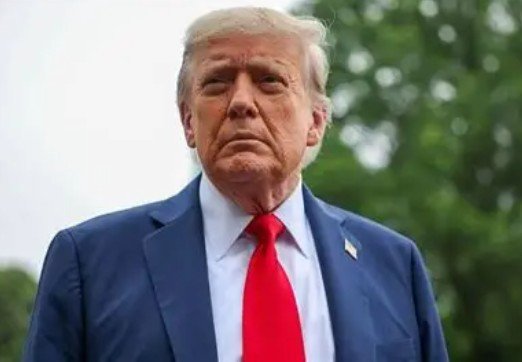
The sell-off on Dalal Street gathered momentum after former US President Donald Trump declared that the interim understanding with Iran was “finished,” a remark that came amid renewed attacks on commercial shipping vessels in the Strait of Hormuz. The statement intensified fears of a broader regional conflict and sent crude oil prices sharply higher, reviving worries over inflation, import costs and pressure on oil dependent economies such as India.
The benchmark BSE Sensex plunged 1,677 points, or 2.2 per cent, to settle at 76,504, recording its steepest single-day decline in more than two months. During intraday trade, the 30-share index had fallen as much as 1,922 points to touch 76,259, reflecting the scale of the panic that gripped investors through the afternoon session. The NSE Nifty 50 also ended deep in the red, sliding 517 points, or 2.1 per cent, to close at 23,882.
The sharp fall in stock prices wiped out more than ₹5.8 lakh crore in market capitalisation in a single day, dealing a significant blow to investor sentiment and underlining the vulnerability of domestic equities to global geopolitical shocks.
Oil shock sparks broad based panic
The trigger for the market rout was a sudden spike in crude prices after tensions flared in one of the world’s most strategically important energy corridors. Brent crude surged nearly 7 per cent to around $79.1 per barrel as traders priced in the possibility of disruptions to oil shipments through the Strait of Hormuz, a narrow sea route that handles a large portion of global crude exports.
For India, which imports the bulk of its crude oil requirement, any sharp rise in global energy prices has immediate implications for inflation, the current account deficit, fuel prices and corporate margins. These concerns translated into heavy selling across sectors, with investors rushing to cut exposure to risk assets amid uncertainty over how the geopolitical situation could evolve.
Market participants said the sell-off intensified after 2 pm, when Trump’s remarks gained wider attention and fears mounted that the crisis could deepen further. The resulting spike in volatility pushed traders into defensive mode, with selling spreading rapidly across large-cap, mid-cap and small-cap counters.
All Sensex stocks close in the red
The day’s carnage was visible across the board, with every Sensex constituent ending lower. Stocks from aviation, automobiles, financials and consumer goods were among the worst hit as concerns over higher input costs, weaker demand and market volatility triggered aggressive profit-booking.
InterGlobe Aviation, the parent of IndiGo, came under pressure as rising crude prices directly threaten airline profitability through higher aviation turbine fuel costs. Auto majors such as Maruti Suzuki and Mahindra & Mahindra also witnessed heavy selling, as cost pressures and a potentially weaker consumption environment weighed on investor confidence.
Financial heavyweights including Bajaj Finance and Kotak Mahindra Bank declined sharply, mirroring the broad-based risk aversion in banking and financial services stocks. Hindustan Unilever too featured among the major laggards, reflecting the weakness in the FMCG pack as rising crude prices rekindled inflation fears that could dent consumption and margins.
The market breadth on the BSE remained decisively negative, underscoring the depth of the sell-off. A total of 3,211 stocks declined, while only 1,070 managed to advance, showing that the weakness was not limited to index heavyweights but extended across the broader market.
Midcaps and smallcaps also buckle under pressure
The sell-off was not confined to frontline stocks. Mid-cap and small-cap segments, which had shown resilience in recent weeks, also came under pressure as investors turned cautious and moved away from riskier pockets of the market.
The BSE MidCap index dropped 2.1 per cent, while the SmallCap index slipped 1.6 per cent, reflecting broad weakness in domestic equities. Traders said the correction in broader markets was partly driven by a reassessment of valuations amid heightened uncertainty, as well as concerns that foreign institutional investors could trim exposure to emerging markets if global risk sentiment worsens further.
Sectoral damage deepens as no pocket of the market is spared
Sector-wise, the damage was widespread, with every major index finishing lower. The services index emerged as the biggest loser, falling 3.2 per cent, while PSU banks dropped 2.8 per cent. FMCG and financial services stocks also saw steep losses of around 2.5 per cent each.
The decline in financial stocks was especially significant because banks and NBFCs often set the tone for the broader market. Selling in this space reflected a combination of risk aversion, concerns about foreign outflows and uncertainty over the inflation outlook if crude remains elevated for an extended period.
Consumer-oriented sectors such as FMCG also faced pressure because a sustained rise in oil prices tends to lift logistics and packaging costs, while also reducing disposable income for households through higher fuel expenses. This combination can hurt demand and compress profit margins, prompting investors to turn cautious on defensives as well.
Global markets reel from geopolitical shock
The tremors were felt far beyond Indian shores. Equity markets across Asia and Europe traded sharply lower as investors digested the implications of fresh tensions in West Asia. South Korea’s Kospi was among the biggest casualties, plunging 5.4 per cent, while Japan’s Nikkei 225 dropped 2.1 per cent.
European markets also remained under pressure during trading hours, reflecting the global nature of the sell-off. In the United States, futures and early market indicators pointed to a weak opening, with the Dow Jones index trading over 1 per cent lower. Hong Kong’s Hang Seng, however, bucked the trend with a 3 per cent rise, though analysts said this was more reflective of local factors and bargain hunting than a sign of broader resilience.
The global risk-off mood was driven by fears that a prolonged disruption in the Strait of Hormuz could affect energy supplies, push up freight and insurance costs, and trigger a fresh inflationary cycle at a time when central banks are still grappling with uneven growth and price stability concerns.
Volatility spikes as investors seek safety
A key indicator of investor anxiety was the sharp jump in the India VIX, often referred to as the fear gauge. The volatility index surged nearly 30 per cent to a three-week high, signalling a rapid rise in uncertainty and hedging activity in the derivatives market.
Analysts said the spike in VIX reflected the market’s concern that geopolitical tensions could remain elevated in the near term, making price action highly sensitive to news flow from the Middle East and Washington. A sustained rise in volatility often results in sharp swings in both directions, increasing the risk for short-term traders and prompting long-term investors to remain cautious until clarity emerges.
Brokerage commentary suggested that markets may continue to witness turbulence as long as there is no concrete sign of de-escalation. Investors are likely to monitor developments in the Strait of Hormuz, diplomatic messaging from the US and Iran, and the movement of crude oil prices for clues on the next market direction.
Analysts warn of near term fragility
Market experts said the sudden deterioration in the geopolitical backdrop has significantly altered near-term sentiment and could keep Indian equities under pressure despite relatively stable domestic fundamentals.
According to Siddhartha Khemka, Head of Research at Motilal Oswal Financial Services, the flare-up has intensified uncertainty at a time when markets were already navigating multiple global variables. He noted that the surge in the India VIX and the rise in Brent crude above $79 a barrel point to a fragile environment in which investors may remain defensive until the geopolitical situation becomes clearer.
Nandish Shah of HDFC Securities said selling accelerated sharply in the second half of the session once Trump’s comments hit the market, leading to a swift deterioration in sentiment and pushing benchmark indices towards the day’s lows.
Technical analysts also cautioned that key support levels will be crucial in determining whether the latest fall remains a temporary correction or develops into a deeper short-term downtrend. Rupak De of LKP Securities said the market is approaching an important support zone and that a decisive breach could open the door to further downside. At the same time, he suggested that if the market manages to hold above those levels, a rebound cannot be ruled out once panic subsides.
Why crude matters so much for India
The market’s sharp reaction also highlights the structural challenge India faces whenever crude oil prices spike abruptly. As one of the world’s largest importers of oil, India remains highly sensitive to disruptions in global energy markets. Higher crude prices not only increase the country’s import bill but also raise the risk of imported inflation, weaken the rupee and put pressure on fiscal calculations if fuel prices are not passed on fully to consumers.
For equity markets, the implications are broad. Oil sensitive sectors such as aviation, paints, chemicals, logistics and autos often face margin pressure when crude rises sharply. Banks and financials can also be affected if inflationary pressure leads to tighter monetary conditions or weaker consumption demand. In addition, foreign portfolio investors tend to turn cautious on emerging markets when global uncertainty spikes and energy prices surge simultaneously.
What investors will watch next
Going ahead, the direction of the market is likely to hinge on three key factors: the trajectory of crude oil prices, the evolution of the US-Iran standoff, and the response of global central banks and investors to the renewed geopolitical risk.
If tensions ease and crude retreats from current highs, some stability could return to equities, especially after the sharp one day correction. However, if attacks in the Strait of Hormuz continue or diplomatic rhetoric hardens further, markets could remain volatile and vulnerable to more selling pressure.
Investors will also watch the rupee, bond yields and foreign fund flows for signals on whether Wednesday’s decline was a one off panic reaction or the start of a broader risk off phase for Indian assets.
For now, Dalal Street remains on edge. Wednesday’s crash served as a reminder that even when domestic fundamentals appear stable, global geopolitical shocks can quickly overwhelm sentiment and trigger steep corrections. With oil prices climbing, volatility spiking and investors rushing for safety, the near-term outlook for equities has turned distinctly cautious.

