


Rajesh Sharma Hospitalised After Suspected Insect Bite on Prabhas Film Set, Health Scare Jolts Shoot Schedule
Veteran actor Rajesh Sharma was rushed to hospital after a suspected insect bite during the shooting of a Prabhas starrer, prompting concern across the industry and raising questions about on set safety during outdoor productions.
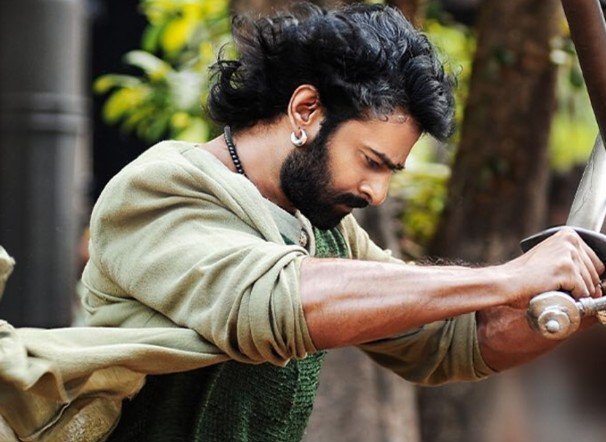
Mumbai, July 09 : A sudden health scare involving veteran actor Rajesh Sharma has triggered concern across the film industry after reports emerged that he was hospitalised following a suspected insect bite while shooting for an upcoming film starring Prabhas. The incident, which unfolded during an active production schedule, has drawn attention not only because of Sharma’s stature as a respected character actor but also because it highlights the unpredictable health and safety challenges that film crews face during large-scale outdoor shoots.
According to reports circulating in the entertainment media on July 8, Sharma was admitted to hospital after his condition worsened following what is believed to have been an insect bite on set. Initial updates suggested that the actor was under medical observation and that his condition had caused alarm among members of the production unit. While the exact nature of the bite and the resulting complications have not been publicly detailed in full, the seriousness of the episode was enough to halt work and shift immediate focus from production logistics to the actor’s recovery.
The development quickly became one of the most talked-about entertainment stories of the day because Rajesh Sharma occupies a unique place in Indian cinema. He is not a headline chasing superstar, but he is one of the industry’s most dependable and recognisable performers an actor whose presence adds depth, realism and credibility to both mainstream and content driven films. Whether in Hindi cinema, Bengali films or web projects, Sharma has built a reputation for delivering memorable performances in roles that often sit outside the glamorous spotlight but remain central to the emotional and dramatic texture of a film.
That is part of the reason the news resonated so widely. When an actor of Sharma’s experience is suddenly hospitalised during a shoot, it sends ripples through the production ecosystem. Unlike a routine scheduling delay or a minor on-set injury, a health emergency involving a senior actor forces immediate reassessment of the shooting plan, cast coordination, scene continuity and insurance-related logistics. It also serves as a reminder that even highly organised productions remain vulnerable to unforeseen disruptions especially when filming in outdoor environments where weather, insects, terrain and long work hours can combine to create risk.
The reported incident occurred on the set of a Prabhas film, a detail that naturally amplified public attention. Any project featuring Prabhas tends to draw intense interest because of the actor’s pan-Indian star status and the scale at which his films are mounted. Large productions often involve sprawling locations, dense shooting schedules, action setups and extensive crew movement, all of which increase operational complexity. When a medical emergency occurs within such an environment, the story instantly extends beyond the health of one actor and becomes part of a larger conversation about how modern film productions manage safety and contingency planning.
Although entertainment reporting around the incident focused primarily on Sharma’s condition, the episode also raises important questions about on-set preparedness. Film sets, particularly those operating outdoors or in remote locations, are not controlled studio environments in the strictest sense. They may involve exposure to insects, fluctuating temperatures, difficult terrain, dust, artificial lighting heat, stunt equipment and physically demanding schedules. For actors and crew members working long hours under such conditions, even a seemingly minor issue — such as an insect bite — can escalate quickly if it triggers an allergic reaction, infection or other complication.
The Indian film industry has long normalised the idea that shooting schedules are inherently chaotic and physically exhausting. Actors often work across cities, climate zones and back-to-back commitments, while crew members manage logistics under immense pressure to stay on budget and on time. In that ecosystem, health risks can sometimes be treated as unavoidable occupational hazards rather than areas requiring systematic planning. Incidents like Sharma’s serve as a stark reminder that preventive medical preparedness is not a luxury but a necessity, particularly on large productions involving senior artists and extensive outdoor work.
For Rajesh Sharma himself, the concern is especially acute because he remains one of the busiest supporting actors in the industry. His filmography spans comedy, crime dramas, social dramas, thrillers and political narratives, and he is often cast precisely because of his ability to bring authority and nuance to scenes without overpowering them. In an era when character actors increasingly shape the credibility of mainstream cinema, Sharma has emerged as one of those performers whose casting can quietly elevate a project. News of his hospitalisation therefore immediately generated anxiety among colleagues, fans and industry watchers familiar with his contribution to Indian screen culture.
The incident also underscores how dependent big-ticket productions are on ensemble casts rather than just their lead stars. While public marketing may revolve around marquee names such as Prabhas, the actual machinery of a film relies heavily on supporting actors, technicians, assistant directors, stunt coordinators, makeup teams and countless others whose work keeps the production moving. A disruption involving one key performer can affect scene restructuring, shooting continuity, dubbing timelines and post-production planning. In films mounted at a large scale, even a short pause can have cascading consequences.
From a production standpoint, the immediate priority in such situations is usually straightforward: stabilise the affected person’s health, reassess the schedule and determine whether scenes can be rearranged to avoid major delays. But beyond the immediate operational response lies a more difficult question — whether the industry has done enough to update its safety culture for contemporary filmmaking realities. Indian productions today are bigger, more mobile and more physically demanding than ever. They travel across forests, deserts, coastal belts, abandoned industrial zones and high-altitude terrains to achieve visual scale. Yet the public conversation around set safety still tends to focus narrowly on stunt injuries or major accidents, not everyday medical risks that can escalate rapidly.
In Sharma’s case, the phrase “suspected insect bite” may sound minor at first glance, but that framing can be misleading. Insect bites can trigger severe allergic reactions, bacterial infections, swelling, breathing complications or systemic illness, depending on the species involved and the individual’s medical vulnerability. For an actor in the middle of a demanding shoot, such a reaction can become dangerous if treatment is delayed or if the production location is far from advanced medical care. That is why the incident has prompted so much concern: it reveals how fragile the line can be between a manageable inconvenience and a genuine emergency.
The wider entertainment industry has faced similar reminders in the past. Outdoor shoots have been interrupted by heatstroke, dehydration, food poisoning, weather-related injuries and allergic reactions, but these episodes rarely receive sustained attention unless a major star is involved. In reality, the risk extends to everyone on set from actors to light technicians and often affects those with the least visibility and bargaining power. When a known figure like Rajesh Sharma is hospitalised, the incident briefly makes those hidden vulnerabilities visible.
At the same time, the response from fans and colleagues has reflected the affection Sharma commands within the industry. Social media conversations around the news have been marked less by gossip and more by genuine concern, with many users expressing hope for his swift recovery and acknowledging his immense body of work. That reaction is telling. Sharma’s career has been built not on celebrity spectacle but on trust — the trust of directors who know he will deliver, of audiences who recognise him instantly, and of co-actors who value his consistency. A health scare involving such a figure naturally feels personal to people who have watched him inhabit dozens of memorable roles across genres.
The fact that the incident took place on a Prabhas film set also adds a layer of scrutiny because of the intense commercial pressure surrounding star-driven productions. Films mounted around actors of Prabhas’s scale often carry huge budgets, elaborate release plans and high expectations from multiple language markets. Any disruption becomes part of a larger financial and scheduling equation. Yet the episode is also a reminder that no production, however expensive or carefully planned, is immune to basic human vulnerability. Behind the spectacle of pan-Indian cinema are individuals working long hours in physically taxing conditions, and one unexpected medical emergency can instantly shift priorities.
It is too early to say whether Sharma’s hospitalisation will have a significant long-term impact on the film’s schedule, but the incident has already achieved something else: it has forced a brief but necessary pause in the industry’s constant race toward scale and speed. In an environment where films are often discussed in terms of box office, budgets, release windows and star value, a story like this re-centres the conversation on the people who make the movies possible.
That may ultimately be the larger significance of the episode. Rajesh Sharma’s hospitalisation is, first and foremost, a personal health concern, and the immediate hope across the industry is that he recovers fully and quickly. But it is also a moment that exposes the everyday fragility of film production — the way a single bite, a sudden reaction or an overlooked safety risk can derail a carefully constructed machine. In that sense, the story is not just about one actor or one film set. It is about the conditions under which Indian entertainment is produced, and the growing need to treat health preparedness as a core part of filmmaking rather than an afterthought.
As the industry awaits further updates on Sharma’s condition, the tone of the conversation remains one of concern and respect. Fans want reassurance, colleagues want recovery, and producers will no doubt be hoping for a swift return to stability. But even if the incident passes without long-term consequences, it has already left behind a question that the film industry cannot afford to ignore: in the pursuit of ever larger cinematic ambition, is enough being done to protect the people at the heart of the production process?
For now, the focus remains where it should on Rajesh Sharma’s health. Yet the ripple effects of the incident are likely to continue, not only in terms of the Prabhas film’s schedule but also in the wider discussion about working conditions, emergency preparedness and on set responsibility in Indian cinema. In an industry built on illusion and spectacle, moments like this cut through the glamour with uncomfortable clarity. They remind everyone that behind every frame is a workforce navigating real physical risks, and that sometimes the most urgent story on a film set has nothing to do with the film at all.

