


Huma Qureshi Says ‘Baby Do Die Do’ Breaks Stereotypes With a ‘Regular-Looking’ Assassin
The actor says her latest thriller, centred on a deaf and mute contract killer, pushes back against glamorised stereotypes and opens space for more layered female characters in Hindi cinema.
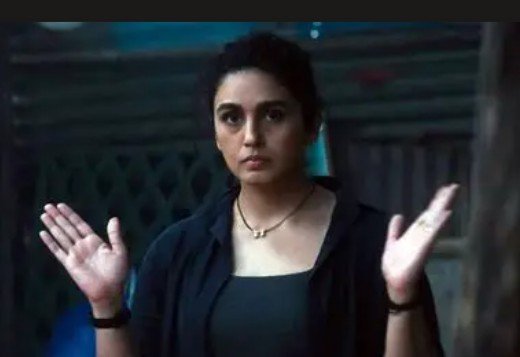
Mumbai, July 09 : Actor Huma Qureshi believes Hindi cinema is slowly opening up to more layered and unconventional female characters, and she hopes her latest film Baby Do Die Do helps push that shift further. The thriller, in which she plays a deaf and mute contract killer named Baby Karmarkar, is designed to break away from the familiar image of the glamorous, hyper-stylised female assassin and instead present a protagonist who feels rooted in everyday life.
Speaking about the film, Qureshi said one of the most compelling aspects of Baby is that she does not stand out in a crowd. Rather than being introduced as an exaggerated femme fatale, the character is built as someone ordinary enough to pass unnoticed in the middle of a bustling Mumbai local train. That contrast a woman who looks entirely unremarkable but is also a highly skilled killer is what drew the actor so strongly to the role.
According to Qureshi, that ordinariness is the very source of the film’s intrigue. Baby is not dressed up as a fantasy figure or projected through the lens of spectacle. Instead, she is imagined as a woman one could easily encounter in daily life and forget moments later, which makes her secret profession all the more unsettling and fascinating. For the actor, that realism is what gives the film its personality and sets it apart from more formulaic portrayals of women in action driven stories.
Qureshi, who has built a career around characters that resist traditional definitions of the Hindi film heroine, said she sees projects like Baby Do Die Do as signs of progress in the way women are being written on screen. While she acknowledged that much more change is still needed, she described the film as a move in the right direction one that could encourage filmmakers to imagine richer, stranger and more adventurous parts for women beyond the usual romantic or decorative arcs.
The actor also addressed the way women in action cinema are often packaged as seductive, heavily stylised figures rather than fully realised people. In her view, the tendency to present female assassins and fighters through a sexualised visual framework reflects a deeply patriarchal way of seeing women on screen. She argued that the expectation that such characters must be dressed in tight clothing and framed through glamour rather than complexity is less about storytelling and more about a male gaze that continues to shape mainstream representation.
That perspective lies at the heart of what Baby Do Die Do is trying to challenge. Directed by Nachiket Samant, the film follows Baby Karmarkar, a hitwoman who communicates through sign language and navigates the world without speech or hearing. Instead of treating her disability as a limitation, the story uses it to build a character whose silence, observation and stillness become strengths. Qureshi said that was one of the most exciting dimensions of the role: Baby is not defined by helplessness or victimhood, but by agency, danger and precision.
The film, released on July 3, also features Sikandar Kher, Chunky Panday, Seema Pahwa and Rachit Singh in key roles. It has been produced by Qureshi along with her brother, actor Saqib Saleem, under their banner Saleem Siblings, in collaboration with director Nachiket Samant. For Qureshi, producing the film became a necessity after she first read the script several years ago and realised she wanted to be part of it at any cost.
She recalled that she had encountered the screenplay four years earlier and was immediately convinced that it was a role worth pursuing. When a suitable producer did not come on board, she and her brother decided to back the project themselves. That decision allowed the film to retain its unusual tone and creative identity rather than being reshaped into something more conventional. Qureshi has described the project as a mix of pulp, thriller, comedy and music, with a style that deliberately refuses to sit inside one predictable genre box.
For her, the film’s appeal lies in that tonal unpredictability. It is not simply an action thriller, nor is it interested in presenting its central character in a straightforward heroic mould. Instead, it blends dark humour, stylised violence and an offbeat emotional texture to create a world that feels slightly eccentric and deliberately distinctive. Qureshi has credited Samant for bringing a voice and sensibility that feel personal to the film, helping shape Baby Karmarkar into a character who is both bizarrely specific and emotionally accessible.
Even the title, she explained, carries a playful connection to the protagonist. Do Die Do is linked to the translation of Baby’s surname, turning the film’s name into an extension of the character’s identity. It is the kind of quirky detail that reflects the movie’s broader sensibility part noir, part pulp comic, part absurd thriller and underlines the fact that the film is not trying to fit into a standard action template.
Preparing to play Baby required Qureshi to approach performance from a very different physical and emotional place than usual. Because the character is deaf and mute, spoken dialogue and conventional verbal reactions were no longer available as tools. To prepare, the actor worked with a coach on sign language, while also trying to understand how to communicate emotion, intention and danger through body language, stillness and facial control rather than speech.
Qureshi said she spent time learning sign language in a form that could be broadly understood while also visiting schools for children with special needs to better understand the experiences of those who cannot hear or speak. That process, she said, was both educational and emotionally grounding. It helped her recognise that silence on screen is not simply the absence of words; it requires a different kind of awareness, particularly in terms of how a person processes the world around them without reacting to sound in the way most people instinctively do.
One of the biggest challenges, she explained, was not the inability to speak but the inability to respond to sound. In everyday life, people constantly react to voices, noises, footsteps, movement and environmental cues without even noticing it. Stripping those reflexes away required discipline and concentration. Qureshi described it as a role that demanded stillness, control and a very precise physical understanding of how the character occupies space. Rather than finding the process restrictive, she said she enjoyed the challenge of discovering a new performance language.
That attention to physical detail also connects to the film’s larger treatment of disability. Qureshi said she was especially drawn to the idea that Baby’s disability is not framed as a weakness but as one of her greatest advantages. In mainstream storytelling, women with disabilities are often shown as vulnerable, dependent or in need of rescue. Baby Do Die Do, she argued, attempts to flip that perspective. Baby is dangerous, self-sufficient and capable of extraordinary violence; her disability is part of who she is, but it does not diminish her power. If anything, it sharpens the way she moves through the world.
This inversion of expectation is central to how Qureshi understands the character. Baby is a contract killer — someone who takes assignments, eliminates targets and operates with lethal efficiency. That, the actor pointed out, is not a role Indian cinema has often handed to women. Female characters have certainly been shown as spies, criminals or psychologically disturbed figures, but the image of a professional hitwoman taking contracts and carrying out killings as a trade remains comparatively rare in mainstream Hindi storytelling.
Qureshi has described Baby as the “first desi hitwoman” in that sense: not merely a woman who commits violence, but a woman whose identity and profession are built around contract killing. The distinction matters because it changes the moral and cinematic framework of the character. She is not an accidental criminal, not a victim pushed into revenge and not a decorative side character in a male gangster narrative. She is the centre of the film’s action, a woman with a dangerous profession, a distinctive inner life and a disability that the film refuses to reduce to tragedy.
That approach also fits neatly within Qureshi’s broader body of work. Over the years, she has repeatedly gravitated towards roles that carry an edge of unpredictability, whether in the world of gangland dramas, political thrillers or female-led streaming series. From Gangs of Wasseypur to Maharani, she has often chosen parts that resist passivity and push against conventional femininity in Hindi entertainment. Baby Do Die Do appears to extend that pattern, but with a more stylised and genre driven energy.
At the same time, the project also marks another important step in Qureshi’s journey as a producer. By backing the film through Saleem Siblings, she is not only acting in unconventional material but helping create the conditions for such material to exist in the first place. In an industry where many unusual scripts struggle to find financial support unless they fit established commercial formulas, actor producers can play a significant role in widening the range of stories that get made. In this case, Qureshi’s decision to produce the film seems inseparable from her belief in the character and in the possibility of doing something different with the female action lead.
Whether Baby Do Die Do becomes a turning point for women led genre cinema in Hindi film remains to be seen, but Qureshi’s comments suggest she hopes it can at least expand the conversation. Her larger point is not simply that women deserve more screen time, but that they deserve more imaginative possibilities characters who can be flawed, strange, violent, funny, quiet, dangerous or morally complicated without being forced into a narrow visual mould.
For audiences, that may be one of the most interesting promises of the film: a central figure who does not arrive pre packaged as an object of fantasy, but as an unsettlingly ordinary woman whose invisibility becomes her greatest weapon. In a cinematic culture that often rewards spectacle over subtlety, that is a striking proposition.
Qureshi, meanwhile, is already moving to another major project. She will next be seen in Toxic, the much anticipated film starring Yash and directed by Geetu Mohandas, where she plays a character named Elizabeth. That film is slated for release on August 26 and is expected to place her in a very different cinematic universe from the eccentric, pulpy world of Baby Do Die Do.
Yet for now, it is Baby Do Die Do that offers perhaps the clearest insight into where Qureshi wants to position herself in contemporary Hindi cinema: at the intersection of risk, reinvention and roles that challenge what women are allowed to be on screen. With Baby Karmarkar, she is not just playing another action protagonist. She is making a case for a different kind of heroine altogether one who does not need glamour to command attention, and whose silence can be more unsettling than any monologue.

