


CJP Protest Enters Day 25: Sonam Wangchuk Continues Fast, Demands Government Dialogue
Activist's fast enters its 17th day while the CJP protest completes 25 days; opposition leaders express concern as preparations for the July 20 Parliament march gather momentum.
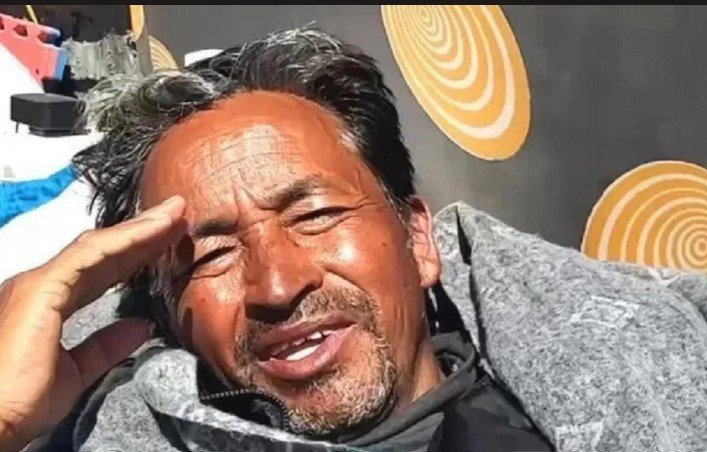
New Delhi, July 14: The ongoing agitation led by the Cockroach Janta Party (CJP) entered a significant phase on Tuesday as activist Sonam Wangchuk’s hunger strike reached its 17th day, while the broader protest completed 25 consecutive days. Despite growing concerns about his deteriorating health, Wangchuk has remained firm in his decision to continue the indefinite fast, reiterating that he will not end the protest until the Union government agrees to hold meaningful discussions on the group’s demands.
The movement, which began on June 20, has evolved into a nationwide campaign highlighting alleged irregularities in competitive examinations and seeking accountability from the Union Education Ministry. Wangchuk joined the protest on June 28, lending greater public visibility to the campaign through his indefinite fast.
Health Condition Raises Fresh Concern
According to the latest medical bulletin released by the organisers, Wangchuk has experienced a noticeable decline in his physical condition since the beginning of his fast. Doctors monitoring his health reported that he has lost approximately 8.5 kilograms, while his blood pressure was recorded at 109/70 mm Hg.
The CJP leadership stated that prolonged fasting has resulted in muscle loss and increasing physical discomfort. Despite repeated appeals from supporters and colleagues to discontinue the fast, Wangchuk has reportedly maintained that the responsibility now lies with the government to initiate dialogue rather than expecting him to abandon the protest.
Party founder Abhijeet Dipke said Wangchuk remains mentally determined despite visible physical weakness. According to him, the activist believes constructive discussions between the government and protesters are the only path toward resolving the issue.
Appeal for Government Dialogue
CJP leaders emphasized that the protest is intended to encourage democratic engagement rather than confrontation. They argued that the government should respond to public concerns through negotiations instead of remaining silent.
Dipke shared that when urged to end the hunger strike due to health risks, Wangchuk responded that the appeal should instead be directed toward the authorities, asking why discussions had not yet been initiated.
The organisation continues to insist that dialogue is essential for restoring confidence among students and families affected by the alleged examination irregularities.
Political Leaders Express Concern
The protest has attracted attention from several political figures across party lines.
According to Dipke, Aam Aadmi Party national convenor Arvind Kejriwal contacted him to inquire about Wangchuk’s health and conveyed concern regarding his medical condition. He also expressed support for efforts aimed at ensuring democratic dialogue over the issues raised during the protest.
Dipke thanked Kejriwal for extending solidarity with the movement and backing the proposed “Chalo Sansad” march scheduled for July 20, coinciding with the commencement of Parliament’s Monsoon Session.
Separately, Shiv Sena chief Uddhav Thackeray also reached out to CJP representatives and reportedly urged Wangchuk to prioritize his health while assuring moral support for the campaign.
According to party leaders, Thackeray appealed to Wangchuk to end the fast because of his worsening physical condition but also supported the demand for greater engagement with student-related concerns.
Student Activists Continue Parallel Fast
Alongside Wangchuk’s protest, members of the All India Students’ Association (AISA) continue their own indefinite hunger strike at a separate stage near the demonstration site.
One of the activists, Deepak, was admitted to Ram Manohar Lohia Hospital after his health deteriorated during the fast. Medical examinations were conducted after doctors observed fluctuations in his heartbeat.
Following evaluation, doctors reported that his ECG findings were normal and that his pulse rate had stabilized. Deepak was discharged on Tuesday morning after receiving medical supervision.
Meanwhile, fellow AISA activists Neha, Manish and Aameen have continued their hunger strike, stating that they remain committed to the campaign’s objectives despite growing health concerns.
Demands Remain Unchanged
The CJP continues to press the Union government on several demands linked to alleged irregularities in competitive examinations.
Among its principal demands are:
Resignation of Union Education Minister Dharmendra Pradhan.
Compensation of ₹1 crore for families of students who allegedly died by suicide following examination-related controversies.
Greater transparency and accountability in the conduct of national competitive examinations.
Institutional reforms aimed at restoring confidence in recruitment and entrance examination systems.
The organisation maintains that these demands reflect broader concerns among students and parents regarding fairness and credibility within the examination process.
Preparations for ‘Chalo Sansad’ Intensify
As the agitation enters its fourth week, organisers have shifted focus toward mobilising supporters for the proposed “Chalo Sansad” march planned for July 20.
The march is expected to coincide with the opening day of Parliament’s Monsoon Session, where the organisation hopes to draw national attention to its demands.
To encourage participation, CJP has launched a nationwide registration campaign through a missed-call initiative, inviting students, youth organisations and citizens to join the demonstration in New Delhi.
Party leaders said logistical arrangements for the march are being expanded as participation requests continue to increase from multiple states.
Growing National Attention
The prolonged hunger strike has generated widespread public discussion about student welfare, examination transparency and accountability in educational institutions.
Civil society groups, student organisations and several political leaders have voiced concern over Wangchuk’s health while simultaneously urging authorities to engage with protesters through dialogue.
Medical experts continue to caution that extended fasting significantly increases the risk of complications, particularly when accompanied by rapid weight loss and muscle depletion.
Despite mounting pressure to discontinue the protest, Wangchuk has reiterated that meaningful negotiations remain the only acceptable path toward resolving the impasse.
Outlook
With the protest entering another critical phase, attention is likely to remain focused on whether the government initiates discussions before the planned Parliament march. The coming days could prove decisive for both the health of the fasting activists and the future direction of the movement.
As preparations for July 20 continue, organisers have reiterated that their campaign will remain peaceful while urging authorities to address their concerns through democratic engagement rather than prolonged silence.

