


Iran Launches Drone Strikes on US Military Assets in Bahrain Following Washington’s Attacks on Civilian Infrastructure
Tehran claims retaliation for US strikes on civilian infrastructure, while Washington says its latest operations are aimed at reducing Iranian military capabilities and safeguarding maritime security in the Strait of Hormuz.
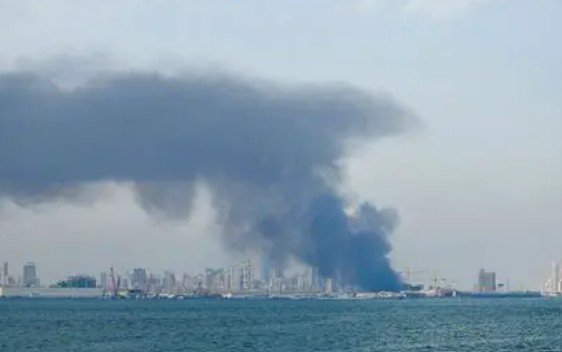
Tehran: The military confrontation between Iran and the United States entered a dangerous new phase on Thursday after Tehran announced that it had carried out drone strikes against American military assets in Bahrain. Iranian authorities described the operation as a direct response to recent US airstrikes that allegedly targeted civilian infrastructure inside Iran, resulting in casualties and widespread damage.
The latest developments highlight the rapidly intensifying conflict in the Gulf region, where both nations have exchanged military actions over the past several days. While Iran has portrayed its latest strike as a defensive response, the United States maintains that its ongoing operations are intended to weaken Iran’s military capabilities and protect international shipping routes through the strategically vital Strait of Hormuz.
Iran Announces New Phase of Military Operation
Iran’s Army confirmed that the attack formed part of the 11th phase of “Operation Lightning,” an ongoing military campaign launched in response to what Tehran describes as repeated American aggression.
According to a statement released by the Army’s Public Relations Department and broadcast through Iranian state television, unmanned aerial vehicles known as Arash drones were deployed against the Sakhir military base in Bahrain, where American helicopters and maritime surveillance aircraft are reportedly stationed.
Iranian officials stated that the operation specifically targeted facilities associated with US military aviation, claiming the attack was designed to demonstrate the country’s ability to respond to foreign military actions beyond its borders.
The statement asserted that the operation was carried out after recent attacks on Iranian civilian infrastructure and warned that similar responses would continue if military pressure from Washington persisted.
Warning Issued to Washington
Alongside announcing the drone offensive, Iranian military officials issued a stern warning to the United States regarding any future military escalation.
The statement emphasized that any attempt to underestimate Iran’s military preparedness or the operational capabilities of both the Iranian Army and the Islamic Revolutionary Guard Corps (IRGC) would carry significant consequences.
Officials stressed that the country’s armed forces remained prepared to respond decisively to future attacks and insisted that military operations would continue whenever national security was threatened.
The remarks underline Tehran’s determination to project strength during one of the most serious confrontations between the two countries in recent years.
Civilian Infrastructure Reportedly Hit in Southern Iran
Iranian authorities said the drone strike followed overnight US attacks that struck several civilian locations across Hormozgan Province, situated along Iran’s southern coastline.
Officials reported that multiple sites suffered damage during what they described as the sixth consecutive night of American military operations.
Among the locations reportedly affected were two important bridges near Kohourestan village and the Shor River in Bandar Khamir County. Provincial authorities stated that the structures are essential transport links connecting communities and supporting commercial movement across the region.
Damage to transportation infrastructure has raised concerns about disruptions to local economic activity and emergency response capabilities.
Casualties Reported in Bandar Abbas
Iranian officials also confirmed casualties following strikes near Bandar Abbas, one of the country’s most significant port cities.
Authorities said a residential neighborhood known as Tappe Allah Akbar was among the areas affected.
Medical officials reported that one civilian lost their life while eight others suffered injuries during the incident.
According to local health authorities, several victims experienced injuries caused by blast waves, while another sustained fractures requiring hospital treatment.
Officials expressed condolences to the family of the deceased and described the victim as having lost their life during the attack.
Emergency medical teams continued treating those injured as local authorities assessed the full extent of the damage.
Railway Infrastructure Also Damaged
Separate reports indicated that another strike targeted the Bandar Abbas railway junction, an important transportation hub connecting passenger and freight services to Shahid Rajaee Port.
The railway station plays a significant role in cargo movement across southern Iran and serves as one of the country’s busiest transportation corridors.
Iranian officials said two people were injured during the attack on the railway facility.
While railway operations experienced temporary disruptions, authorities have not yet provided a detailed assessment of infrastructure damage or announced when full services may resume.
Bridges Suffer Heavy Damage
Provincial officials stated that in addition to the Kohourestan Bridge, the Giriveh Bridge, another major transportation route in Hormozgan Province, also sustained damage during the strikes.
Authorities reported that two individuals were killed while four others suffered injuries during attacks on bridge infrastructure in Khamir County.
Engineers have reportedly begun evaluating the condition of the damaged structures, while emergency crews continue restoration efforts in affected areas.
Officials warned that repairs could take considerable time depending on the extent of structural damage.
United States Continues Military Campaign
Meanwhile, the United States confirmed that it had launched another round of military operations against Iranian targets on Thursday.
According to US Central Command (CENTCOM), the strikes marked the sixth consecutive night of operations aimed at reducing Iran’s military capabilities.
American military officials stated that the objective remains preventing threats to commercial shipping and maintaining freedom of navigation through the Strait of Hormuz, one of the world’s most strategically important maritime trade routes.
The waterway carries a substantial share of global crude oil exports, making stability in the region critical for international energy markets.
Washington Cites Maritime Security Concerns
US officials argued that the latest military operations were necessary because Iran continues to pose security risks to commercial vessels operating in Gulf waters.
CENTCOM stated that ongoing operations are intended to reduce Iran’s ability to threaten international maritime traffic and military personnel stationed across the Middle East.
Although American officials have focused on military objectives, Iranian authorities insist that recent strikes have increasingly affected civilian infrastructure, escalating humanitarian concerns inside the country.
The differing narratives continue to deepen diplomatic divisions between the two governments.
Regional Stability Faces Growing Risks
Security analysts believe the latest exchange significantly increases the possibility of a broader regional confrontation.
Bahrain hosts important American military facilities, including the headquarters of the US Navy’s Fifth Fleet, making any attack involving the country particularly sensitive from a strategic perspective.
The use of drones against military installations outside Iran also signals Tehran’s willingness to expand the geographical scope of the conflict if hostilities continue.
Neighboring Gulf states are closely monitoring developments amid fears that further escalation could threaten regional security and international trade.
Global Markets Watching Developments Closely
Financial markets are also closely tracking the confrontation due to the strategic importance of the Gulf region.
Any disruption to shipping through the Strait of Hormuz could affect global energy supplies and influence international oil prices.
Governments across Europe, Asia, and the Middle East have repeatedly called for restraint, warning that continued military escalation could have significant economic and humanitarian consequences.
Diplomatic efforts aimed at reducing tensions remain uncertain as both Washington and Tehran continue to exchange military actions and increasingly strong public statements.
Outlook
With both sides maintaining firm positions, prospects for immediate de-escalation remain limited. Iran has pledged additional responses if American military operations continue, while the United States has indicated that its campaign will persist until it believes threats to regional security have been sufficiently reduced.
The coming days are expected to be critical in determining whether diplomatic channels can prevent a wider regional conflict or whether the cycle of retaliation will continue to intensify across the Middle East.

