


UN Calls for Probe Into Protest Deaths Amid Rising Unrest in Pakistan-Occupied Kashmir
The UN human rights chief calls for impartial investigations into protest-related fatalities, while India blames Pakistan's governance and rights record for the escalating tensions in Pakistan occupied Kashmir.
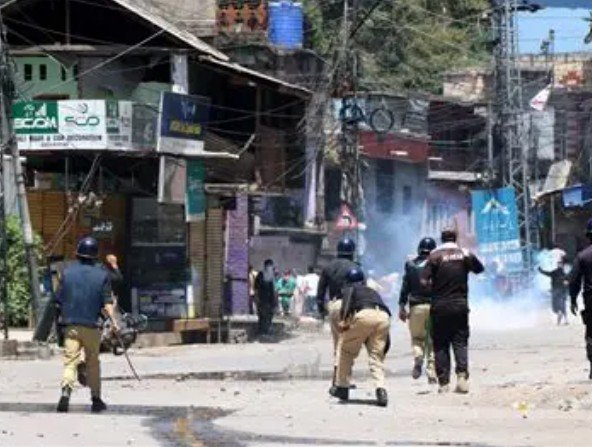
GENEVA, July 18: The United Nations has expressed deep concern over the deteriorating security and human rights situation in Pakistan-occupied Kashmir (PoK), calling on authorities to launch independent and impartial investigations into the deaths of protesters and security personnel as political tensions rise ahead of the region’s legislative assembly elections scheduled for July 27.
The appeal came from UN High Commissioner for Human Rights Volker Türk, who urged restraint from all sides and emphasized the importance of protecting fundamental freedoms during a politically sensitive period. The statement highlighted reports indicating that dozens of people including a significant number of demonstrators and several members of law enforcement agencies have lost their lives since protests intensified in June.
UN Calls for Independent Accountability
The UN human rights office stressed that every death linked to the unrest must be investigated through prompt, transparent and impartial legal processes. According to the statement, establishing accountability is essential for restoring public confidence and preventing further violence in the region.
Volker Türk urged the authorities to ensure that investigations meet international standards of fairness and independence, adding that any excessive use of force or unlawful actions should be examined thoroughly.
The UN also appealed to all stakeholders to avoid further escalation and prioritize peaceful engagement over confrontation.
Concerns Over Action Against Protest Movement
The human rights office voiced particular concern over Pakistan’s decision to ban the Joint Awami Action Committee (JAAC), a civil society organization that has been at the forefront of the ongoing protest movement.
Authorities invoked anti-terrorism legislation while alleging that the organization posed a threat to public order and national security. Following the ban, several leaders associated with the movement were taken into custody.
The UN warned that criminalizing a civil society organization and restricting peaceful political activity could undermine internationally recognized rights, including freedom of expression, peaceful assembly and association.
Appeal for Legal Rights of Detainees
The UN statement further emphasized that individuals detained during the crackdown should receive full legal protections.
It urged the authorities to provide arrested JAAC leaders with immediate access to legal representation, allow communication with family members and ensure that all judicial proceedings comply with due process requirements.
Human rights experts have repeatedly maintained that safeguarding legal rights during periods of political unrest remains essential for maintaining public trust in democratic institutions.
Internet Restrictions Draw International Attention
Another issue highlighted by the UN was the reported limitation of internet services in parts of Pakistan-occupied Kashmir.
The rights office said uninterrupted internet access plays a critical role in ensuring freedom of information, communication and transparency, particularly during periods of heightened political activity.
Calling for the restoration of full digital connectivity, the UN noted that internet shutdowns can affect not only freedom of expression but also access to education, healthcare, emergency services and economic activity.
Need for Political Dialogue
Beyond addressing the immediate security situation, Volker Türk encouraged authorities to pursue meaningful and inclusive political dialogue with local communities.
According to the UN, sustainable peace can only be achieved by addressing long-standing public grievances through democratic engagement rather than relying solely on security measures.
The statement emphasized that constructive dialogue remains the most effective way to reduce tensions and promote long-term stability in the region.
India Attributes Protests to Pakistan’s Governance
India has strongly reacted to the developments, asserting that the unrest reflects years of governance failures and the denial of fundamental rights under Pakistan’s administration.
Speaking during a media briefing earlier this week, Ministry of External Affairs spokesperson Randhir Jaiswal stated that the demonstrations were a direct consequence of what India described as Pakistan’s prolonged exploitation and administrative mismanagement in territories under its control.
According to India’s position, public dissatisfaction has intensified because legitimate concerns raised by local residents have not been adequately addressed.
MEA Criticises Security Response
The Ministry of External Affairs also criticized Pakistan’s handling of the protests, alleging that authorities responded to peaceful public demonstrations with excessive force instead of engaging with local communities.
India argued that the international community should closely examine the reported human rights situation and encourage accountability where violations are established.
New Delhi reiterated its longstanding view that protecting civil liberties and democratic freedoms should remain a priority in all regions experiencing political unrest.
India Reaffirms Its Position on Jammu and Kashmir
India once again maintained its consistent constitutional position that the entire region of Jammu and Kashmir, including areas currently under Pakistan’s control, is an integral part of India.
The government has repeatedly accused Pakistan of suppressing political freedoms and limiting the rights of people living in Pakistan-occupied Jammu and Kashmir.
Officials also stated that lasting peace requires respect for democratic principles, transparency and protection of basic human rights.
Political Climate Ahead of Elections
The current unrest comes at a particularly sensitive time as preparations continue for the legislative assembly elections scheduled later this month.
Political analysts note that elections conducted during periods of instability often attract increased international attention, particularly regarding electoral transparency, freedom of political participation and public security.
The UN’s appeal reflects broader concerns that maintaining public confidence in democratic institutions requires both peaceful conditions and respect for civil liberties.
Growing International Scrutiny
The developments have placed Pakistan-occupied Kashmir under increasing international observation, with human rights organizations closely monitoring the treatment of protesters, restrictions on public gatherings and the overall security environment.
Observers believe the coming days will be crucial in determining whether authorities pursue dialogue alongside security measures to reduce tensions before polling day.

