


Calcutta HC Directs Private Bank to Reveal Corpus in TMC-Linked Accounts
Court asks private bank to reveal funds lying in three Trinamool Congress accounts as Mamata Banerjee-led faction challenges debit freeze and seeks interim relief.
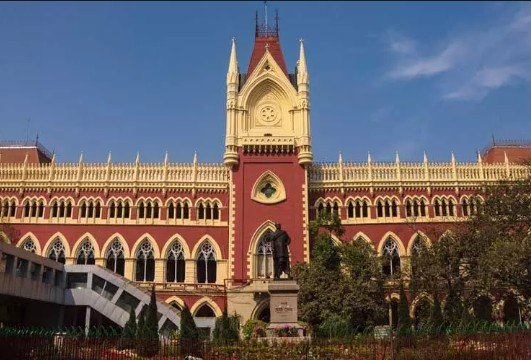
Calcutta, July 03 : The Calcutta High Court on Thursday directed a private bank to place before it details of the total corpus lying in three bank accounts linked to the Trinamool Congress, as it heard a petition filed by the Mamata Banerjee-led faction challenging the freezing of those accounts. The court’s intervention came amid a sharp legal battle over the control and operation of the party’s funds, with rival claims over authority and allegations of financial irregularities surfacing during the proceedings.
Justice Saugata Bhattacharyya, while hearing the matter, instructed the bank concerned to disclose by July 7 the amount currently lying in the three TMC accounts under dispute. The matter has been listed for further hearing on July 8. The court also permitted the Bidhannagar Police to place on record documents related to the complaint and the investigation that led to the registration of an FIR and the subsequent freezing of the accounts.
The petition before the court has been filed by the Mamata Banerjee led faction of the Trinamool Congress, which has challenged the decision to freeze debit operations in the party’s bank accounts. The faction argued that the move had effectively paralysed the functioning of a recognised political party by preventing access to funds required for its day-to-day operations. The issue has now acquired both political and legal significance, as it touches upon the authority to operate party accounts and the legality of state action in freezing those funds.
During the hearing, Solicitor General Tushar Mehta, appearing for the Bidhannagar Police, urged the court not to pass any interim order immediately and sought a few days’ time to place the investigation materials before the bench. He told the court that the police had already conducted a probe and claimed that there were serious allegations suggesting that money was being siphoned off. According to Mehta, the issue before the court was not merely whether the accounts should remain frozen, but also which of the rival factions within the Trinamool Congress was legally entitled to operate them.
Justice Bhattacharyya indicated that the court was examining possible interim arrangements while the petition remains pending. One of the options under consideration, the court observed, was whether the three disputed accounts could be operated under the supervision of joint special officers, potentially retired judges of the Calcutta High Court, until the legal questions are finally decided. The suggestion reflected the court’s effort to ensure that party funds are neither misused nor rendered inaccessible if legitimate operational requirements exist.
The court took note of the timeline presented before it, observing that the FIR in the case had been registered on June 18 at around 6 pm and that the private bank had informed the Mamata Banerjee-led faction the very next day that debit operations in the accounts had been frozen. Justice Bhattacharyya questioned the speed with which the action had been taken and sought clarity on what prima facie material was available with the investigating agency to justify such a prompt step.
In response, Mehta maintained that the police action was not arbitrary and said that the materials collected during the investigation would be placed before the court. He asserted that the records would reveal facts serious enough to “shock the conscience of the court,” signalling that the state intended to justify the freeze on the basis of substantive allegations rather than mere suspicion. The court is now expected to examine whether those materials support the coercive action taken against the party accounts.
Senior advocate Abhishek Manu Singhvi, appearing for the petitioning faction of the Trinamool Congress, mounted a strong challenge to the freezing of the accounts and the circumstances in which the FIR had been registered. He argued that the state’s action had the effect of crippling the financial functioning of an active political party and raised serious constitutional concerns. Singhvi contended that the complaint on the basis of which the FIR had been lodged was vague and lacked factual particulars sufficient to justify police intervention of such magnitude.
According to Singhvi, the immediate freezing of the party’s bank accounts after registration of the FIR demonstrated an excessive and disproportionate use of state power. He questioned whether a political organisation could be effectively shut out from its own resources without a clear and tested legal basis. He submitted before the court that preventing a party from using its funds, particularly when the matter concerns internal organisational disputes and allegations yet to be established, amounted to a grave interference with democratic functioning.
Singhvi also framed the issue in terms of fundamental rights, arguing that the freezing of the accounts had raised questions of constitutional violation. He submitted that a running political party cannot be brought to a standstill by blocking access to its financial resources, especially in the absence of clear and compelling evidence. The inability to access funds, he suggested, creates an uneven political field and affects the organisational autonomy of the party.
In a significant political acknowledgment before the court, Singhvi stated that the Mamata Banerjee-led Trinamool Congress had indeed lost the Assembly elections and had also suffered depletion in its ranks. However, he argued that electoral defeat or internal defections cannot become grounds to use state machinery in a way that weakens or immobilises a political organisation. A losing party, he submitted, remains entitled to legal protections and cannot be “paralysed” by freezing its accounts without due process.
Seeking urgent relief, Singhvi asked the court to pass an interim order permitting debit operations in the accounts so that the party could continue meeting its essential financial obligations. His argument was that even if the court wished to examine the larger dispute over control of the accounts, it could still permit regulated operation of funds in the meantime rather than allowing a blanket freeze to continue. That plea for interim relief is now likely to be central when the matter comes up again next week.
On the other side, senior advocate Neeraj Kishan Kaul, appearing for the complainant, challenged the maintainability of the petition itself. Kaul argued that the Mamata Banerjee-led faction had no right to claim access to the disputed accounts because a new national committee of the party had already been constituted. According to this line of argument, the petitioning group lacked the legal authority to seek control over or operation of the bank accounts, making its plea untenable in law.
This contention points to a larger dispute over organisational legitimacy within the Trinamool Congress and lies at the heart of the case. If the court accepts that there are competing claims to the party’s official structure and control over financial resources, it may have to first determine who lawfully represents the party for the purpose of operating the accounts. That question could shape not only the interim arrangements but also the eventual outcome of the petition.
The legal contest has therefore unfolded on two parallel tracks. The first concerns the legality of the police action and the bank’s decision to freeze debit operations immediately after the FIR. The second concerns the internal political and organisational dispute over which faction is entitled to act on behalf of the Trinamool Congress. Both issues are deeply intertwined, because the answer to one may influence the court’s approach to the other.
The court’s observations on the timing of the FIR and the subsequent bank freeze suggest that it is closely scrutinising whether due process was followed and whether the investigating agency acted on sufficient material. At the same time, the possibility of appointing special officers to oversee the accounts indicates that the bench is also conscious of the practical implications of leaving a political party entirely without access to funds while litigation continues.
For the Mamata Banerjee-led faction, the case is not merely about financial access but about political legitimacy and operational survival. Political parties require regular access to funds for salaries, office expenses, legal work, communication, travel, and organisational activities. A prolonged freeze on bank accounts can severely disrupt these functions, particularly at a time when a party is trying to reorganise itself after electoral setbacks.
For the complainant and the state, however, the case appears to involve concerns over alleged financial misconduct and the need to prevent possible diversion or misuse of funds. By signalling that investigation materials would reveal shocking facts, the state has sought to justify the freeze as a protective measure pending inquiry. Whether those allegations are supported by evidence, and whether they legally warrant a complete debit freeze, will now be assessed by the court.
The July 8 hearing is expected to be crucial. By then, the private bank is to disclose the corpus lying in the three disputed accounts, while the Bidhannagar Police are expected to place before the court the records connected to the complaint, FIR and investigation. Those documents may help the bench decide whether the freeze should continue, whether limited operation should be permitted, or whether an independent supervisory mechanism should be introduced.
The outcome of the case could have wider implications beyond the immediate dispute. It may clarify the standards that must be met before the accounts of a political party can be frozen during an investigation, and the safeguards required when state action affects the functioning of an active political organisation. It may also offer judicial guidance on how courts should deal with rival factional claims over party finances when leadership disputes spill into legal proceedings.
For now, the High Court has stopped short of granting interim relief but has set in motion a process to gather crucial facts before deciding the next step. The bank’s disclosure of the account corpus, the police records on the alleged siphoning of funds, and the competing claims over party control are all set to come under sharper judicial scrutiny in the days ahead.
As the legal and political battle intensifies, all eyes will now be on the July 8 hearing, where the Calcutta High Court may determine not only the immediate fate of the frozen accounts but also the balance between criminal investigation, party autonomy and the rights of political organisations to access their own resources while disputes remain unresolved.

