


India Enters Geothermal Era
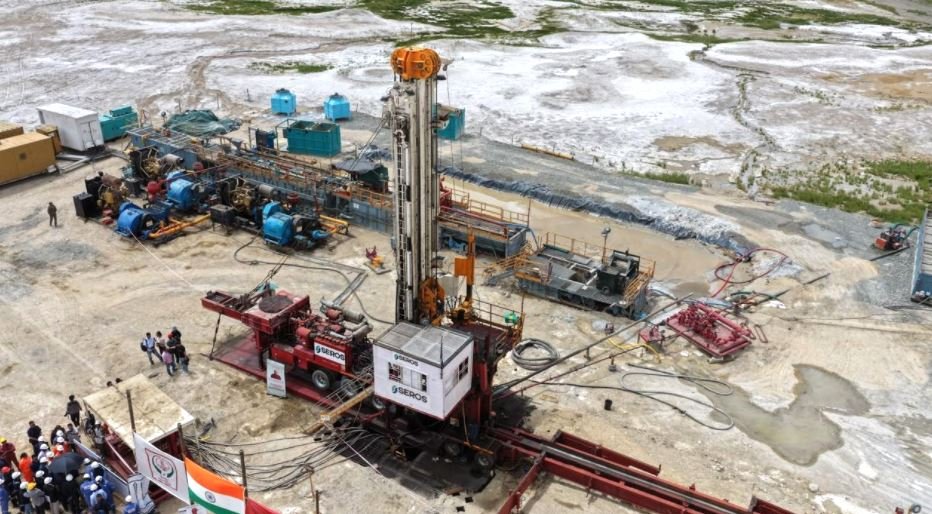
The commissioning of India’s first two geothermal wells at Puga Valley is more than a technical accomplishment. It is a bold statement that even the country’s most difficult terrain can become a centre of clean energy innovation when science, administrative resolve and human determination work together. For Ladakh, this development opens a promising path towards energy security, environmental responsibility and long-term economic growth.
Drilled to a depth of 1,000 metres at an altitude exceeding 14,000 feet, the wells bring India closer to establishing its first demonstration-scale geothermal power plant. The achievement deserves recognition because it was delivered in a region known for extreme cold, low oxygen, rugged terrain and a sharply limited working season. Completing such complex work under these conditions reflects the skill and perseverance of the engineers, technicians and workers associated with the project. Geothermal energy can offer Ladakh something it urgently needs: a dependable local source of power. Unlike solar and wind energy, which depend on weather and daylight, geothermal energy can operate continuously. In a remote region where electricity affects heating, healthcare, education, communication and economic activity, uninterrupted clean power can produce changes far beyond the energy sector. The proposed one-megawatt pilot plant may be small in capacity, but it is large in strategic importance. Every major energy transition begins with careful experimentation. These wells will help experts evaluate the geothermal reservoir, study temperature and pressure conditions, and determine whether Puga can support sustained electricity generation and wider commercial development. The recording of temperatures of around 135 degrees Celsius at a depth of nearly 400 metres is encouraging. Yet optimism must not replace scientific caution. Detailed testing must establish the long-term strength of the resource before larger investments are made. Public enthusiasm should be supported by transparent data, proper environmental assessment and realistic economic planning. The project also exposes an uncomfortable truth about infrastructure governance. Earlier progress was disrupted when the tripartite agreement between the Ladakh Administration, the Ladakh Autonomous Hill Development Council Leh and the ONGC Energy Centre expired. A strategically important project should not lose precious working months because of avoidable administrative delays. The eventual renewal of the agreement revived the work, but future clean energy projects must be protected from such lapses. Institutional continuity is as important as engineering capability. Clear responsibilities, timely approvals and stable partnerships are essential if India wishes to move from pilot projects to a mature geothermal energy programme. Announcements may create excitement, but only sustained coordination can create power. The real value of this project will be determined by its impact on the people of Ladakh. Reliable energy can support greenhouse farming, cold storage, food processing, tourism facilities, digital services and small industries. It can reduce operating costs, create skilled employment and give remote communities better access to modern services. Local youth should therefore be trained and meaningfully involved as the project expands. Environmental protection must remain non-negotiable. Puga Valley is ecologically fragile, and clean energy cannot be pursued through careless development. Geothermal fluids, groundwater, land stability and biodiversity must be monitored continuously. Any commercial expansion should proceed only after safeguards are firmly established and local concerns are addressed. India’s renewable future cannot depend on a single source of energy. Solar, wind, hydropower and geothermal energy must complement one another according to regional conditions. Puga Valley can help geothermal power find its rightful place in that national mix.
This achievement should be celebrated, but celebration must now give way to disciplined execution. The wells are only the beginning. If the pilot plant succeeds and the project remains scientifically sound, environmentally careful and locally beneficial, Ladakh can emerge as a genuine clean energy hub. Puga Valley has shown what is possible. The responsibility now is to turn that promise into lasting power, opportunity and progress. Moreover, Puga’s geothermal breakthrough represents a strategic advance in India’s renewable energy architecture. Its future expansion should be guided by reservoir modelling, continuous thermal monitoring, environmental safeguards and grid integration studies. With disciplined investment, indigenous engineering and transparent regulation, geothermal power can strengthen base load capacity, reduce fossil-fuel dependence and support India’s long-term energy security and net-zero objectives.

