


India, New Zealand Unveil Strategic Partnership Roadmap 2030, Target NZ$7 Billion in Bilateral Trade
The two nations elevate ties to a Strategic Partnership, outlining a comprehensive roadmap focused on trade, innovation, agriculture, connectivity and people to people engagement while aiming to double bilateral trade by 2030.
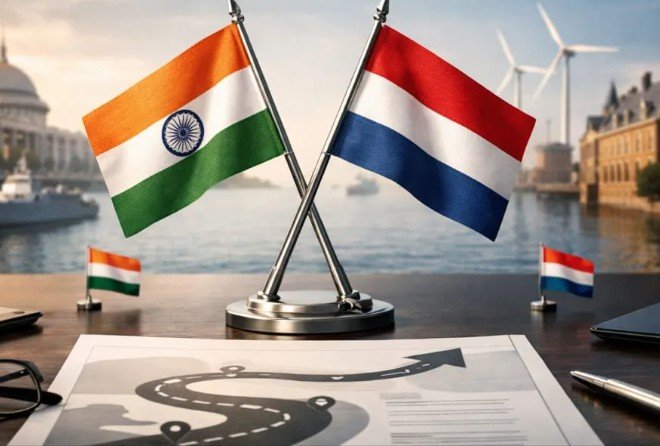
WELLINGTON: India and New Zealand have entered a new phase in their bilateral relationship by announcing a Strategic Partnership and adopting an ambitious roadmap that will guide cooperation until 2030. The agreement reflects the shared vision of both countries to expand collaboration across trade, agriculture, innovation, security, education, tourism and sustainable development while strengthening their engagement on regional and global platforms.
The landmark decision was announced following wide ranging discussions between Prime Minister Narendra Modi and New Zealand Prime Minister Christopher Luxon during Modi’s two-day official visit to the island nation. The visit marks a historic milestone as it is the first by an Indian Prime Minister to New Zealand in four decades, underscoring renewed momentum in diplomatic and economic relations.
The newly adopted India-New Zealand Strategic Partnership: Roadmap to 2030 establishes a long-term framework for bilateral engagement and identifies concrete areas where both governments will work together to deliver measurable outcomes over the coming years. The roadmap is designed to strengthen existing institutional mechanisms while creating opportunities for cooperation in emerging sectors that are increasingly shaping the global economy.
Strategic ties enter a new era
Both Prime Ministers agreed that elevating bilateral relations to the level of a Strategic Partnership reflects the growing trust and shared interests between India and New Zealand. The roadmap aims to deepen collaboration not only through government-to-government initiatives but also by encouraging stronger links between businesses, research institutions, educational organisations and civil society.
Officials from both countries said the agreement provides a clear direction for future cooperation while reinforcing their commitment to maintaining a stable, prosperous and rules based Indo-Pacific region.
The two leaders also reaffirmed support for greater collaboration in multilateral institutions and international forums, highlighting the importance of working together to address global challenges ranging from climate change to sustainable development and resilient supply chains.
Ambitious trade target for 2030
A major highlight of the roadmap is the commitment to significantly increase bilateral trade. India and New Zealand have set an ambitious objective of doubling two-way trade in goods and services to NZ$7 billion by 2030, creating fresh opportunities for exporters, investors and businesses in both countries.
The target is expected to be driven by stronger commercial partnerships, improved market access and enhanced economic cooperation across multiple sectors.
Business leaders from both countries have welcomed the announcement, saying the roadmap provides long-term certainty for investors while encouraging greater private sector participation in bilateral projects.
Early implementation of Free Trade Agreement
Both Prime Ministers also reaffirmed their commitment to ensuring the swift implementation of the India-New Zealand Free Trade Agreement. The leaders described the agreement as balanced, comprehensive and mutually beneficial, with the potential to unlock substantial economic opportunities for businesses and consumers.
The FTA is expected to reduce trade barriers, improve market access and strengthen investment flows between the two economies. It will also facilitate greater cooperation in manufacturing, services, technology and value-chain integration.
The agreement is viewed as a key instrument for expanding commercial engagement while supporting economic growth in both countries.
Supporting India’s long-term development vision
New Zealand expressed its willingness to contribute to India’s Viksit Bharat 2047 vision by expanding cooperation in sectors that are critical to long-term economic development.
Areas identified for enhanced collaboration include clean energy, digital innovation, advanced manufacturing, skill development, agricultural technology, education, sports and research partnerships.
The roadmap recognises that combining India’s large market and technological capabilities with New Zealand’s expertise in agriculture, food processing and innovation can generate mutually beneficial outcomes.
Customs and logistics cooperation
To improve trade efficiency, the two countries agreed to operationalise the Authorised Economic Operators Mutual Recognition Arrangement (AEO-MRA) under the Customs Cooperation Arrangement.
The initiative is expected to simplify customs procedures for trusted traders, reduce processing time at ports and improve supply-chain efficiency.
Trade experts believe the arrangement will lower transaction costs and encourage greater participation by exporters and importers in both countries.
Tourism and air connectivity
Recognising tourism as an important pillar of bilateral relations, India and New Zealand welcomed the signing of a new Memorandum of Arrangement on Tourism.
The leaders also encouraged airlines to explore the launch of direct non-stop flights between the two countries. Improved air connectivity is expected to boost tourism, business travel, educational exchanges and investment opportunities.
Industry observers believe direct flights would significantly reduce travel time and strengthen commercial as well as cultural links between India and New Zealand.
Expanding agricultural collaboration
Agriculture emerged as another major area of cooperation under the Strategic Partnership. Both governments agreed to expand collaboration in horticulture, forestry, animal husbandry and dairy development.
The roadmap includes initiatives aimed at improving agricultural productivity through technology sharing, scientific research and best farming practices.
New Zealand will continue supporting productivity improvement programmes for crops such as kiwifruit, apples and honey while assisting in establishing Centres of Excellence for kiwifruit cultivation in India.
The two countries also welcomed the signing of a Memorandum of Cooperation in Animal Husbandry and Dairying, which is expected to facilitate knowledge exchange, improve livestock productivity and strengthen veterinary cooperation.
Maritime cooperation to deepen
India and New Zealand also agreed to strengthen maritime cooperation through continued engagement between India’s Directorate General of Shipping and Maritime New Zealand.
Both sides will work towards expanding recognition of seafarer competency certificates, making it easier for qualified maritime professionals to access employment opportunities while enhancing cooperation between maritime authorities.
The initiative is expected to support global shipping standards and improve workforce mobility within the maritime sector.
Strengthening people-to-people connections
Beyond economic and strategic cooperation, the roadmap places considerable emphasis on enhancing educational exchanges, cultural partnerships, tourism and community engagement.
With a vibrant Indian diaspora contributing significantly to New Zealand’s multicultural society, both governments reaffirmed their commitment to promoting stronger people-to-people ties through academic collaboration, youth exchanges, sports partnerships and cultural initiatives.
Officials believe these exchanges will create lasting relationships that complement growing political and economic cooperation.
Looking ahead
The Strategic Partnership Roadmap 2030 represents one of the most comprehensive bilateral frameworks agreed upon by India and New Zealand in recent decades. By combining ambitious trade goals with cooperation in agriculture, innovation, connectivity, customs, tourism and maritime affairs, the two countries have laid the foundation for a broader and more resilient partnership.
As both governments move towards implementing the roadmap, the emphasis will remain on translating policy commitments into tangible outcomes that benefit businesses, institutions and citizens while strengthening the overall India-New Zealand relationship for the decade ahead.

