


Karnataka Plans to Link 1,000 Government Schools With Private Institutions in First Phase
Chief Minister DK Shivakumar urges private school managements and corporate organisations to support rural education through teachers, technology, laboratory facilities and CSR funding.
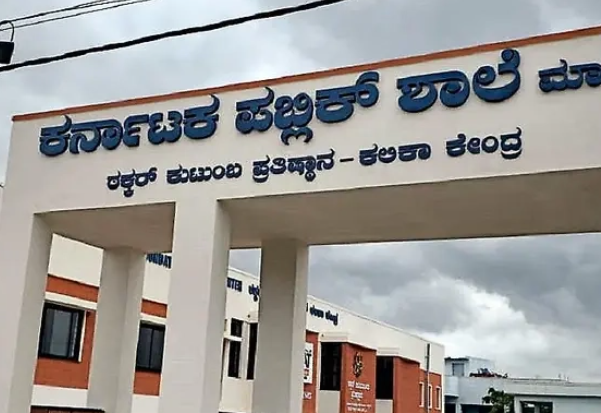
BENGALURU, Nov 5: The Karnataka government has announced plans to strengthen rural education by bringing private educational institutions and corporate organisations into a partnership with government schools, with 1,000 institutions set to be covered under the first phase of the initiative.
Chief Minister DK Shivakumar has appealed to private school managements across the state to adopt government schools and contribute towards improving educational infrastructure, teaching standards and learning opportunities for children in rural areas.
The initiative, titled ‘Namma Shaale Namma Javabdari’ (Our School, Our Responsibility), aims to establish partnerships between private institutions and government-run schools to address gaps in educational facilities and provide students with better academic support.
Addressing representatives of private school managements and corporate social responsibility (CSR) organisations in Bengaluru, Shivakumar said improving the quality of government education required collective participation from different sections of society.
He stated that private institutions could contribute their expertise, financial resources and available facilities to support schools that require additional assistance.
Under the initial phase, the government intends to connect 1,000 government schools with private institutions. The programme has an eventual target of covering 2,000 schools across Karnataka.
The state government has categorised approximately 6,000 gram panchayats into three groups to facilitate the implementation of the initiative. This approach is expected to help identify schools requiring support and establish partnerships according to local requirements.
Shivakumar expressed confidence that the programme would produce measurable improvements over the next four to five years.
Explaining the nature of the proposed partnerships, the Chief Minister said private institutions would not necessarily have to undertake expensive construction projects or make substantial financial commitments to participate.
Instead, they could support government schools by providing qualified teachers, computers, laboratory equipment, school buses and other essential resources.
He encouraged private school managements to identify institutions they could support based on their financial capacity and convenience.
The Chief Minister also suggested that private schools could send experienced teachers to government institutions and bear their salaries, allowing students in rural areas to benefit from additional academic guidance.
He emphasised that even relatively modest contributions could make a meaningful difference in improving the educational environment of government schools.
The programme is intended to create a structured mechanism through which private institutions can contribute to public education without necessarily taking over the administration of government schools.
One of the major components of the initiative is the mobilisation of corporate social responsibility funding. Karnataka has an estimated annual CSR pool of around Rs 8,800 crore, and Shivakumar urged companies operating in the state to direct a greater share of their contributions towards rural primary education.
He said corporate participation could help address infrastructure shortages and improve the availability of educational resources in areas where schools face financial and logistical constraints.
As part of the initiative, the state has already taken steps to secure financial commitments from private organisations.
A total of 15 Memoranda of Understanding (MoUs) worth Rs 206.10 crore were signed for the development of 56 government schools.
Earlier in 2026, the government had entered into another 18 agreements worth Rs 85 crore for upgrading 33 schools.
Additionally, 12 agreements involving investments of Rs 64 crore and covering 23 schools were in the final stages of signing.
These partnerships are expected to support the development of school infrastructure and improve facilities available to students.
The proposed improvements include better classroom facilities, modern teaching resources, technological equipment and other infrastructure required for effective learning.
The Chief Minister also referred to CSR-supported projects already underway in Bengaluru South district, where development work has commenced in 30 government schools.
He highlighted the contribution of Toyota towards the construction of 23 schools in Ramanagara district, with investments ranging between Rs 10 crore and Rs 15 crore for each institution.
According to Shivakumar, such collaborations demonstrate how private-sector participation can contribute to strengthening public education and improving facilities in underserved areas.
The government has also introduced an incentive for organisations supporting schools under the programme. Participating institutions may be allowed to include their names in the names of the adopted schools.
Citing an example, Shivakumar referred to Hegganur Government School near the Tamil Nadu border, which has been permitted to use the name Hegganur Government Toyota School.
The initiative also aims to address a broader challenge faced by rural communities, where families frequently move to urban centres in search of better educational facilities for their children.
Shivakumar said improving the standard of government schools in villages could reduce the need for families to relocate to cities, particularly Bengaluru, for educational purposes.
Migration towards urban centres has placed additional pressure on housing, transport and other public infrastructure. Strengthening educational institutions closer to rural communities could help families access better schooling without leaving their native areas.
The Chief Minister stressed that children should have access to quality education irrespective of whether they live in cities or villages.
He also referred to the Karnataka government’s decision to secure a Rs 2,000-crore loan from the World Bank for infrastructure development in Karnataka Public Schools.
The funding is expected to contribute towards improving facilities in selected institutions and strengthening the state’s school education infrastructure.
However, Shivakumar acknowledged that infrastructure development alone would not be sufficient to address all the challenges facing government schools.
He pointed out that government school teachers receive salaries ranging from Rs 70,000 to Rs 1.5 lakh, but stressed that further improvements in educational quality were necessary.
His remarks highlighted the need to focus not only on physical facilities but also on classroom teaching, academic support and the overall learning environment.
The adoption programme is expected to create opportunities for private institutions to contribute to these areas through their experience and available resources.
For instance, schools with established science laboratories could help government institutions introduce practical learning activities. Similarly, private institutions with stronger digital infrastructure could assist in providing computers and technology-based educational resources.
The availability of experienced teachers could also help government schools strengthen subject-specific instruction and provide additional academic guidance to students.
Corporate participation may further help institutions address infrastructure requirements that cannot always be met through regular budgetary allocations.
At the same time, the success of the initiative will depend on effective coordination between government authorities, private school managements and participating organisations.
The identification of schools, assessment of their requirements and monitoring of contributions will be important aspects of implementation.
The government will also need to ensure that assistance reaches institutions where it is most needed and that partnerships deliver sustained improvements rather than remaining limited to one-time financial contributions.
The proposed expansion from 1,000 schools in the first phase to 2,000 institutions eventually reflects the state’s intention to make the programme a wider mechanism for improving public education.
The involvement of private schools and companies is expected to bring additional resources and expertise into the government education system while retaining the responsibility of providing public schooling with the state.
The initiative comes amid growing attention towards improving learning outcomes, reducing disparities between rural and urban educational institutions and ensuring that students have access to modern teaching facilities.
By encouraging private organisations to participate in school development, Karnataka is seeking to create a collaborative approach to addressing longstanding challenges in rural education.
The coming years will be crucial in assessing how effectively the programme improves school facilities, strengthens teaching support and creates better learning opportunities for children across the state.

