


No Indian University in QS Asia Top 50 for Second Consecutive Year
QS Asia University Rankings 2027 show a decline among leading Indian institutions, with 71 per cent of ranked universities slipping despite the country's growing representation.
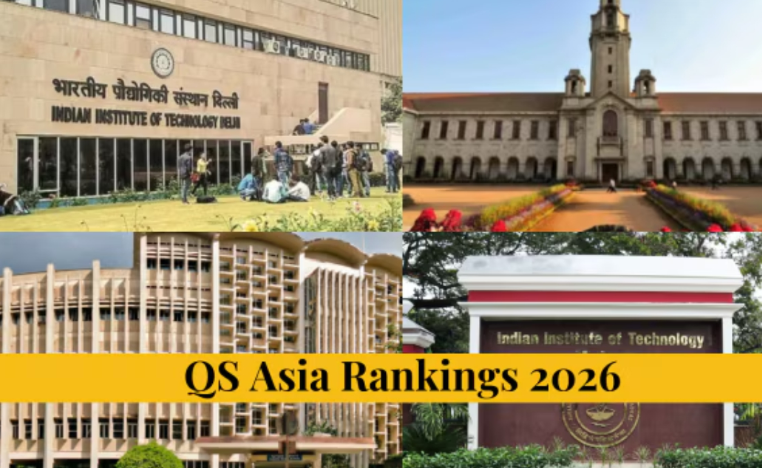
NEW DELHI, Nov 5: Indian universities have failed to secure a place among the top 50 institutions in the QS World University Rankings: Asia 2027 for the second consecutive year, with several of the country’s leading institutions recording further declines in their positions.
The latest rankings, released by global higher education analysts QS, highlight the growing challenges faced by Indian universities in strengthening their international academic reputation, research performance and global presence.
Despite the decline in individual positions, India’s representation in the regional rankings has increased considerably. A total of 325 Indian institutions featured in the 2027 edition, compared with 294 in the previous year. This makes India the second most represented higher education system in Asia, behind mainland China, which recorded 448 institutions against 395 previously.
However, the increased number of participating institutions has not translated into improved rankings for most Indian universities.
According to the findings, approximately 71 per cent of Indian universities included in the rankings experienced a decline in their positions. Around 18 per cent improved their standing, while 11 per cent maintained their previous rankings.
The performance of the country’s leading institutions has also raised concerns, as all six of India’s highest-ranked universities recorded a fall in the latest edition.
The Indian Institute of Technology (IIT) Delhi continued to remain the country’s highest-ranked institution in Asia, although it dropped seven places to 66th position from 59th in the previous edition.
The Indian Institute of Science (IISc), Bengaluru, experienced a decline of 15 positions, moving from 64th to 79th. IIT Bombay slipped 12 places to 83rd from 71st, while IIT Madras dropped from 70th to 85th.
IIT Kharagpur also witnessed a decline, falling from 77th to 90th position. IIT Kanpur recorded a similar setback, moving from 77th to 97th.
These results indicate that even some of India’s most established institutions are facing difficulties in maintaining their competitiveness against leading universities elsewhere in Asia.
The absence of Indian universities from the top 50 is particularly significant given the country’s expanding higher education network and growing contribution to scientific research, engineering and technological development.
While India has increased the number of institutions participating in international rankings, the latest results suggest that improvements in overall representation need to be accompanied by stronger academic performance and international engagement.
The rankings also reveal differences in performance among Indian institutions, with several private and public universities registering improvements despite the broader decline.
Chandigarh University emerged among the notable performers, improving its position from 109th to 104th. The institution achieved its highest ranking in the regional list so far.
Lovely Professional University recorded a substantial improvement, climbing from 187th to 154th position. Symbiosis International University also moved up from 200th to 175th.
Among government institutions, IIT Hyderabad improved from 270th to 251st, while IIT (BHU) Varanasi advanced from 237th to 219th.
IIT (ISM) Dhanbad recorded an improvement of 51 places, reaching 373rd position. Dr B R Ambedkar National Institute of Technology Jalandhar registered an even larger rise, climbing 180 places to secure the 486th position.
Delhi Technological University also improved its standing, moving up 116 places to 584th.
Among central universities, Jawaharlal Nehru University advanced from 130th to 128th position. Jamia Millia Islamia improved from 197th to 183rd, while Aligarh Muslim University moved from 278th to 268th.
These improvements demonstrate that the overall decline has not affected every institution equally. Some universities have managed to strengthen their regional standing, indicating differences in institutional performance, research activities and academic development.
Private universities also featured prominently among the institutions recording significant gains.
GLA University climbed nearly 300 places to reach 491st position. Jain University improved by 221 places to secure 374th rank, while Woxsen University advanced 195 places to reach 499th.
However, several institutions experienced considerable setbacks.
Mahatma Gandhi University in Kottayam recorded one of the steepest declines among Indian institutions, falling from 495th to 697th position, a drop of 202 places.
Osmania University also experienced a major setback, moving from 470th to 650th, while Madurai Kamaraj University slipped from 458th to 631st position.
Within the top 200, IIT Kanpur and UPES each dropped 20 places. IIT Kanpur moved from 77th to 97th, while UPES declined from 163rd to 183rd. Shoolini University also experienced a fall, moving from 159th to 177th.
The contrasting performance of Indian institutions has brought renewed attention to the factors that influence international university rankings.
Academic reputation, research output, citations, faculty strength, employer perception and international collaboration are among the areas that determine how institutions perform in global and regional assessments.
QS rankings assess universities through a range of indicators designed to evaluate their academic environment, research contribution, employability and international outlook.
For Indian institutions, improving their standing will require sustained efforts across these areas rather than relying solely on an increase in student enrolment or the number of participating universities.
Research quality remains particularly important in determining the international competitiveness of higher education institutions. Universities must strengthen their research infrastructure, encourage collaboration between departments and create opportunities for faculty members and students to participate in advanced research projects.
Greater international engagement is another area that could influence future performance. Partnerships with overseas universities, student exchange programmes, joint research projects and international faculty participation can help institutions expand their academic networks.
The latest rankings also underline the importance of developing a stronger research environment within universities. Institutions need to encourage original research, improve access to academic resources and establish stronger connections with industries and scientific organisations.
India has a large and diverse higher education system, with institutions operating across different academic disciplines and regions. The increase in its representation in the QS Asia rankings indicates the growing scale of the country’s university network.
However, the latest performance suggests that expanding the number of institutions alone may not be sufficient to improve India’s position in the regional academic landscape.
Universities will need to focus on improving teaching standards, strengthening research capabilities and creating an environment that attracts talented students and faculty members from India and abroad.
The performance of institutions such as IIT Delhi, IISc and IIT Bombay also highlights the need for established universities to continuously improve their academic and research activities to remain competitive.
At the same time, the gains recorded by Chandigarh University, Lovely Professional University, Symbiosis International and several other institutions indicate that progress is possible when universities improve their academic positioning and institutional performance.
The rankings have therefore presented a mixed picture of Indian higher education. While the country has expanded its representation and several institutions have made notable progress, the decline among leading universities remains a concern.
The challenge ahead will be to convert India’s growing educational capacity into stronger international recognition through improvements in research, teaching, innovation and global academic cooperation.
For students considering higher education options, the rankings also offer an indication of how institutions compare regionally. However, university selection should not depend entirely on rankings, as course quality, faculty expertise, infrastructure, placement opportunities and individual academic interests remain important considerations.
The latest edition serves as a reminder that international recognition requires continuous institutional development. India’s universities have expanded their presence in Asia, but improving their position among the region’s leading institutions will require sustained academic investment and stronger research outcomes.

