


Lakhpati Didis Lead Change
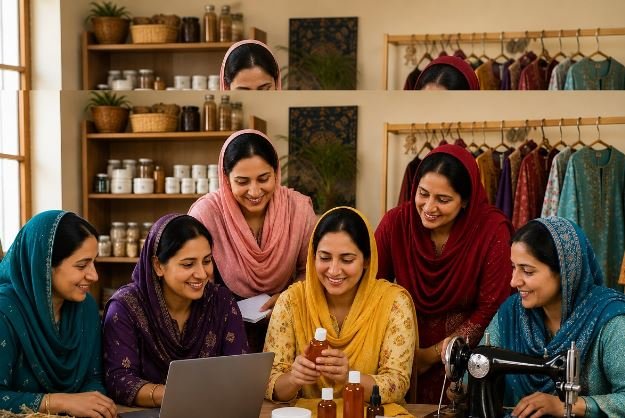
The Lakhpati Didi Initiative is emerging as a powerful step towards changing the economic position of rural women in Jammu and Kashmir. Its purpose goes far beyond helping Self-Help Group members cross an annual income of ₹1 lakh. At its heart, the programme seeks to give women greater control over household finances, a stronger voice in family decisions and the confidence to build enterprises of their own.
The progress so far is encouraging as per government data released. Nearly 2.40 lakh women have already achieved Lakhpati Didi status, while the target has been fixed at 3.64 lakh by 2029. This means another 1.24 lakh women must be brought into sustainable income-generating activities over the next few years. The goal is ambitious, but it is achievable if government departments move beyond routine meetings and work together at the village level. Women do not need scattered schemes operating in separate offices. They need a connected support system. A woman starting a dairy unit may require livestock, veterinary care, credit, insurance, fodder support, training and access to buyers. Another entering food processing may need equipment, packaging guidance, quality certification and market linkages. Unless departments coordinate these services, even a promising enterprise can struggle to survive. Household-level planning must therefore become the foundation of the initiative. Every village has different resources and every woman has different skills, responsibilities and opportunities. Dairy farming may work well in one area, while beekeeping, mushroom cultivation, tailoring, handicrafts, vegetable farming, fisheries or digital services may be more viable elsewhere. Enterprises should be selected on the basis of local demand and earning potential, not merely because a scheme offers a subsidy. Access to finance will remain critical. The proposed ₹1,200 crore credit target under the SHG Bank Linkage Programme can provide a major boost to women entrepreneurs. The Lal Ded Stree Shakti Scheme, under which 4,200 women are expected to receive micro-loans worth ₹42 crore, is another welcome intervention. Yet the mere sanction of a loan should not be celebrated as success. Credit released late, without business planning or market support, can create debt instead of prosperity. Banks must simplify procedures, reduce delays and treat women borrowers as serious entrepreneurs rather than passive beneficiaries. At the same time, loans must be accompanied by financial literacy, bookkeeping support and realistic repayment planning. Women should know the true cost of borrowing and the risks involved before they invest. Skill development also needs a complete change in approach. Short classroom sessions and certificates will not create sustainable businesses. Women need practical training in production, quality control, pricing, packaging, branding, digital payments and customer management. Training must be linked to actual market demand, with continued mentoring after the course ends. The effort to connect women-led units with apparel brands and manufacturers deserves serious attention. Similar partnerships should be pursued in handloom, handicrafts, dairy products, honey, mushrooms, spices, fruits and processed foods. Rural enterprises cannot depend forever on local fairs and occasional exhibitions. They need regular buyers, reliable supply chains and fair prices. Technology can support this effort through the Digital Aajeevika Register and the Enterprise Planning Digital Tool. These platforms can help identify households, prepare customised business plans and track income growth. But officials must ensure that portal entries match the situation on the ground. Inflated figures may look impressive in reviews, but they do nothing for a woman whose business has failed or income remains unstable.The network of 372 Bank Mitras and 710 Banking Correspondents can bring financial services closer to remote communities. Their role should include helping women access savings, insurance, pensions and social security, not merely processing loans.
The Lakhpati Didi Initiative deserves strong appreciation because it recognises rural women as producers, business owners and leaders. But the programme cannot be reduced to targets and photographs. Its success will be measured by enterprises that survive, incomes that remain stable and women who gain lasting economic independence. Jammu and Kashmir now needs firm coordination, timely credit and honest field support to turn this promise into a durable rural transformation.

