


US Launches Strikes on Iran After Trump Blames Tehran for Downing Army Helicopter
Tehran vows retaliation as military escalation threatens fragile ceasefire and deepens regional tensions
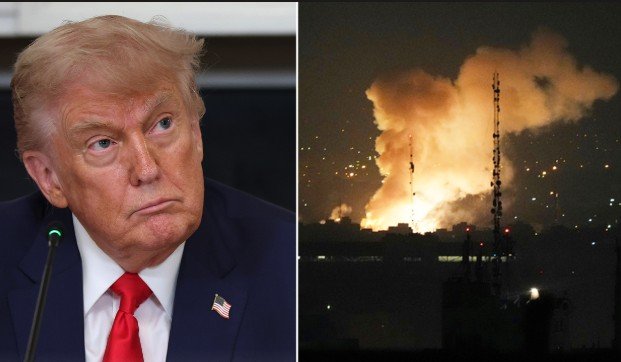
DUBAI, Jun 10: The United States carried out airstrikes on Iranian military facilities on Wednesday after an Army helicopter crashed near the strategically vital Strait of Hormuz, an incident President Donald Trump attributed to Iran.
The strikes marked a sharp escalation in tensions between Washington and Tehran, raising fresh concerns over the future of a fragile ceasefire and the stability of one of the world’s most important energy corridors.
According to the US Central Command, fighter aircraft from the Air Force and Navy targeted air-defence installations, command centres and radar systems. The military described the operation as a measured response aimed at protecting American personnel and safeguarding international shipping routes in regional waters.
Iran confirmed attacks in the Bandar Abbas and Qeshm Island areas but did not immediately disclose the extent of the damage. Iranian authorities condemned the action and warned that any aggression against the country would be met with a firm response.
President Trump stated that the helicopter had been brought down while conducting a patrol mission near the Strait of Hormuz, asserting that the United States was compelled to act. Iranian Foreign Minister Abbas Araghchi rejected the American position and warned foreign military forces operating close to Iranian territory that they faced significant risks.
The latest confrontation has placed additional strain on a two-month-old truce that was already under pressure. Just a day earlier, Iran and Israel exchanged fire for the first time since the ceasefire took effect, highlighting the volatility of the region.
Iranian state media reported that recent Israeli strikes killed at least two members of the country’s air-defence forces. The renewed hostilities have complicated diplomatic efforts aimed at securing a lasting settlement to the conflict.
Since fighting erupted earlier this year, the conflict has disrupted global markets, pushed up energy prices and increased economic uncertainty worldwide. The situation remains particularly sensitive as negotiations to transform the temporary ceasefire into a permanent agreement have yet to produce a breakthrough, while military activity across the region continues unabated.

