


US Sanctions Top Iranian Financier Following Fresh Strait of Hormuz Attacks
Washington freezes assets linked to Dubai based financier Ali Ansari, alleging he managed overseas wealth for Iran's ruling elite as maritime security concerns intensify.
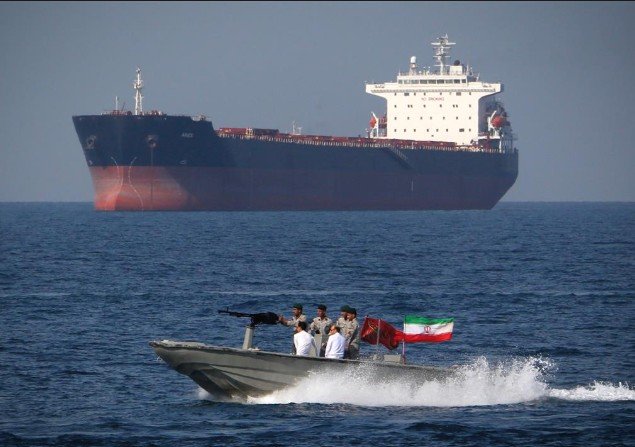
US, July 11 : The United States has announced a new round of sanctions against a prominent Iranian financial figure, intensifying its economic pressure campaign after Iran allegedly resumed attacks on international shipping in the strategically important Strait of Hormuz. The action targets Dubai-based businessman Ali Ansari, whom Washington accuses of managing a vast international financial network benefiting influential members of Iran’s leadership.
In a statement issued on Friday, the US Department of the Treasury’s Office of Foreign Assets Control (OFAC) said the sanctions were introduced in response to renewed threats to commercial vessels passing through the Strait of Hormuz, one of the world’s most critical maritime trade corridors. The move is part of Washington’s broader strategy to curb the financial resources available to senior Iranian officials and organisations linked to the country’s security establishment.
According to the Treasury Department, Ali Ansari played a central role in overseeing an extensive portfolio of overseas assets that allegedly served the interests of Mojtaba Khamenei, son of Iran’s Supreme Leader, as well as other influential figures within the Iranian government. US officials claim the businessman developed a sophisticated network of real estate investments, commercial enterprises and financial holdings spread across multiple countries.
The Treasury alleged that Ansari systematically diverted public wealth into privately controlled international assets, enriching himself while providing financial support to senior members of Iran’s ruling establishment. American authorities further accused him of exploiting his close relationships with powerful officials to expand his global business empire and shield valuable assets from international scrutiny.
US officials described the network as an example of large-scale corruption operating within the Iranian political system. They claimed that funds intended for public use were instead channelled into overseas investments that benefited regime insiders and organisations associated with the Islamic Revolutionary Guard Corps (IRGC), which remains under extensive US sanctions.
The latest sanctions seek to block property and financial interests linked to Ansari that fall under US jurisdiction. Individuals and businesses dealing with sanctioned entities also risk facing secondary restrictions, a measure Washington frequently employs to discourage international financial institutions from engaging with designated persons.
The announcement came amid renewed tensions in the Gulf region following reports of attacks targeting international shipping in the Strait of Hormuz. The narrow waterway connects the Persian Gulf with the Gulf of Oman and carries a significant share of global crude oil and liquefied natural gas exports. Any disruption in the region has the potential to affect global energy markets and international trade.
The United States has repeatedly accused Iran of threatening maritime security in the Gulf, while Tehran has consistently denied involvement in several previous incidents involving commercial vessels. The latest sanctions indicate that Washington intends to respond not only through military and diplomatic channels but also by expanding financial restrictions against individuals it believes support Iran’s leadership.
US Treasury Secretary Scott Bessent defended the sanctions, saying the American government would continue using financial measures to isolate Iran’s ruling elite from the international banking system. He asserted that assets connected to senior Iranian officials should ultimately benefit the Iranian people rather than individuals holding positions of power.
The Treasury Department also reiterated that its sanctions programme aims to increase pressure on those it accuses of corruption and financial misconduct while limiting their ability to move money through global markets. Officials said investigations into networks supporting sanctioned Iranian figures would continue.
Analysts believe the latest measures form part of Washington’s broader effort to tighten enforcement against financial intermediaries operating outside Iran, particularly those based in regional commercial hubs such as Dubai. Such networks have often been identified by US authorities as critical channels for facilitating international transactions despite existing sanctions.
The sanctions are expected to further complicate Iran’s access to global financial systems at a time of heightened geopolitical tensions in the Middle East. They also reinforce the Biden administration’s continued reliance on targeted economic measures as a key component of its strategy towards Iran, particularly following renewed security concerns in one of the world’s busiest maritime routes.
With tensions in the Strait of Hormuz once again drawing international attention, the latest US action underscores Washington’s commitment to using financial sanctions as a primary tool to counter what it describes as destabilising activities by Iranian-linked individuals and organisations.

