


PM Modi Urges States To Resolve Water Disputes Through Cooperation
Ken-Betwa Project Highlighted As Template For Future Water Management Initiatives
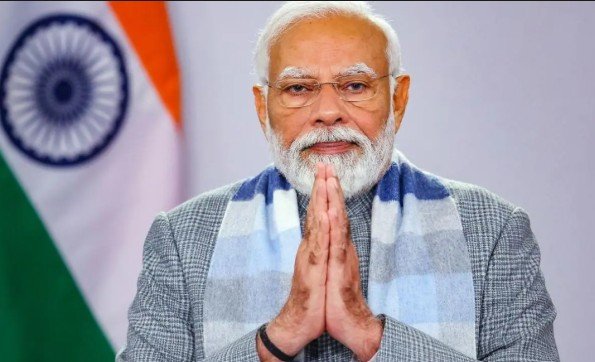
NEW DELHI, May 28: Prime Minister Narendra Modi on Wednesday urged states to adopt a cooperative and technology driven approach to resolve inter-state water disputes, asserting that the Ken Betwa river linking project should become a model for future water management initiatives across the country.
Chairing the 51st meeting of PRAGATI, the Centre’s ICT-enabled platform for monitoring governance and infrastructure execution, the Prime Minister reviewed seven major infrastructure projects linked to railways, power and road sectors involving investments of nearly Rs 30,000 crore across nine states.
During the review meeting, Modi stressed that delays in public infrastructure projects not only increase financial burden but also deny citizens timely access to important facilities and services. He called for faster decision-making, stronger coordination between agencies and timely resolution of pending issues.
Focusing on the Ken-Betwa river linking project, the Prime Minister said the initiative demonstrates how states can settle inter-state water concerns through cooperation, quicker approvals, technology based supervision and mission-mode implementation.
He encouraged states to identify similar opportunities for integrated river-linking, water conservation, groundwater recharge and modern irrigation systems to strengthen long-term water security and agricultural sustainability.
The PRAGATI platform brings together central ministries and state governments to improve project monitoring and ensure time-bound implementation of development schemes.
Apart from water management initiatives, the meeting reviewed projects considered vital for economic growth, public welfare and infrastructure expansion. Discussions centred on maintaining timelines, enhancing inter-departmental coordination and removing execution bottlenecks.
Reviewing developments in the power sector, Modi emphasised the urgent need to accelerate rooftop solar adoption in urban centres, residential areas and public institutions. He said rooftop solar systems should be promoted in mission mode to reduce electricity expenses, improve energy security and encourage wider use of clean energy.
The Prime Minister also proposed innovative use of canal infrastructure by installing solar panels along and above canals. According to him, such measures can optimise land utilisation, reduce water evaporation, generate renewable power and create additional economic value from existing water resources.
While reviewing road and port connectivity projects, Modi directed that the Vadhavan Port project be developed as a model for integrated multi-modal connectivity. He said the project should evolve into a major national logistics gateway connected through coastal shipping, inland waterways, freight corridors, rail links, highways and airport connectivity.
The meeting also reviewed the implementation status of Swachh Bharat Mission-Urban 2.0. Modi underlined that the mission must focus not only on creating infrastructure but also on achieving measurable outcomes through citizen participation, continuous monitoring and better coordination among stakeholders.
He instructed states to speed up construction of solid waste management facilities, including waste processing units and GOBARdhan plants, aimed at improving urban sanitation and sustainable waste disposal systems.
Highlighting the broader impact of delays, the Prime Minister observed that stalled projects directly affect regional growth, public welfare and effective utilisation of national resources. He called upon ministries, departments and state administrations to adopt a more proactive and accountable approach to project execution.
At the beginning of the meeting, Cabinet Secretary TV Somanathan informed that, following the Prime Minister’s directions, a monthly review system for social sector schemes has now been introduced at the state level.
The mechanism is intended to ensure regular monitoring, quicker resolution of implementation challenges and greater accountability at district and state levels. As part of the initiative, the Swachh Bharat Mission has been selected for the first phase of state-level review.

