


US Micro-Reactor Breakthrough Signals New Nuclear Race, India Emerges as Key Growth Market
Antares Nuclear achieves a critical milestone ahead of schedule as Washington accelerates advanced reactor exports and India expands its clean energy ambitions.
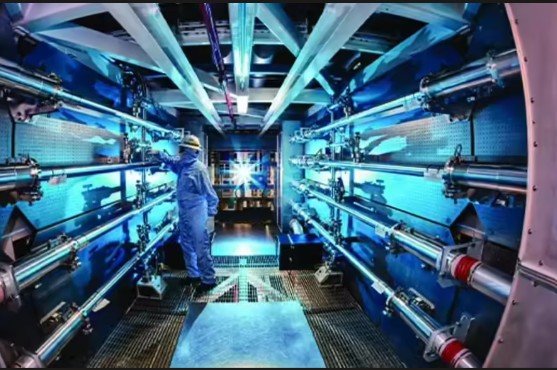
India, June 08 : The global nuclear energy industry entered a new phase this week after a privately developed American micro-reactor achieved first criticality, a milestone widely regarded as the beginning of a fresh wave of nuclear innovation. The achievement has drawn attention from policymakers, investors and energy planners worldwide, particularly in India, which is pursuing one of the world’s most ambitious nuclear expansion programmes.
The Mark-0 demonstration reactor, developed by Antares Nuclear, successfully initiated a self-sustaining nuclear chain reaction on June 4. The development came ahead of schedule and has been hailed by industry leaders as evidence that advanced reactor technologies are moving from concept to reality.
For the United States, the achievement represents a significant step in its effort to reclaim leadership in next-generation nuclear technology. For India, it offers a glimpse into technologies that could complement domestic efforts to meet rising electricity demand while reducing dependence on fossil fuels.
Energy experts say the significance of the milestone goes far beyond a single reactor project. The success of compact nuclear systems could reshape the economics of power generation, particularly in regions where large nuclear plants are difficult to build due to high capital costs, land constraints or infrastructure limitations.
Unlike conventional nuclear power stations that generate thousands of megawatts of electricity, micro-reactors are designed to produce power on a much smaller scale. Their modular nature allows components to be manufactured in factories and assembled at project sites, reducing construction timelines and potentially lowering costs.
The United States sees such technologies as a major export opportunity. Industry representatives have indicated that countries seeking reliable low-carbon energy sources could become key markets for advanced reactors. India, with its rapidly expanding economy and long-term energy requirements, is expected to be among the most important destinations.
The timing is significant. India’s electricity demand continues to rise due to industrial growth, urbanisation and increasing adoption of electric technologies. Policymakers have repeatedly stressed the need for a diversified energy mix that includes renewable energy, conventional fuels and nuclear power.
India currently operates a relatively modest nuclear fleet compared with its overall energy requirements. However, the government has set an ambitious target of significantly increasing nuclear generation capacity by 2047. Achieving that objective will require a combination of large reactors, indigenous technologies and smaller modular systems.
The emergence of advanced American designs could provide additional options for Indian energy planners. Industry executives argue that compact reactors can support industrial clusters, mining operations, remote communities and strategic infrastructure projects where traditional power generation may be impractical.
Another factor driving interest in advanced reactors is energy security. Geopolitical tensions and fuel-price volatility have highlighted the importance of reliable domestic power generation. Nuclear energy offers stable baseload electricity generation that is not dependent on weather conditions or imported fuel supplies in the same way as some alternatives.
Supporters of micro-reactors believe the technology could also play a role in decarbonising industries that are difficult to electrify. High-temperature heat generated by advanced reactors can be used in manufacturing processes, chemical production and hydrogen generation.
Hydrogen production has emerged as a particularly important opportunity. Governments worldwide are investing heavily in hydrogen technologies as they seek cleaner alternatives for industrial operations and transportation. Advanced nuclear systems could provide the continuous energy required for large-scale hydrogen production.
The United States has accelerated efforts to commercialise such technologies through policy reforms aimed at reducing regulatory hurdles. Officials argue that lengthy approval processes have slowed innovation in the nuclear sector for decades. Recent reforms are intended to speed development while maintaining safety standards.
Investors are also taking notice. Capital flows into advanced nuclear companies have increased as governments seek reliable low-carbon energy solutions. Venture capital firms, infrastructure funds and strategic investors are increasingly viewing nuclear technology as a long-term growth sector.
India’s private sector could benefit from this trend. Recent policy reforms have opened new opportunities for private participation in the country’s nuclear ecosystem. Companies involved in engineering, manufacturing, construction and fuel-cycle services could find opportunities as new projects move forward.
Domestic reactor development remains a central component of India’s strategy. Scientists and engineers are working on several indigenous designs, including the Bharat Small Modular Reactor and specialised systems aimed at hydrogen production.
The coexistence of domestic innovation and international collaboration could accelerate deployment timelines while strengthening India’s technological capabilities. Industry experts believe that partnerships between Indian and foreign companies could create new supply chains and manufacturing opportunities.
Financial markets are increasingly viewing nuclear energy as an investment theme linked to artificial intelligence, data centres and industrial electrification. As electricity consumption grows, demand for dependable power sources is expected to increase significantly.
For India, the challenge will be balancing affordability, energy security and environmental objectives. Advanced reactors alone will not solve every energy challenge, but they could become an important component of a broader strategy that includes solar, wind, hydroelectric and conventional generation.
The successful demonstration of the Antares reactor has therefore attracted attention far beyond the United States. It represents not only a technological achievement but also a potential shift in the global energy landscape.
As governments and businesses search for reliable pathways toward economic growth and cleaner energy systems, compact nuclear technologies are emerging as a serious contender. Whether these systems achieve large-scale commercial success remains to be seen, but the latest breakthrough suggests the nuclear industry is entering one of its most dynamic periods in decades.

