


117 Eminent Indians and Pakistanis Urge PMs to Resume Dialogue, Say ‘War Benefits No One’
In a joint open letter to the Prime Ministers of India and Pakistan, civil society members from both countries urge immediate steps to restore communication, reduce mistrust and prevent further deterioration in relations between the nuclear-armed neighbours.
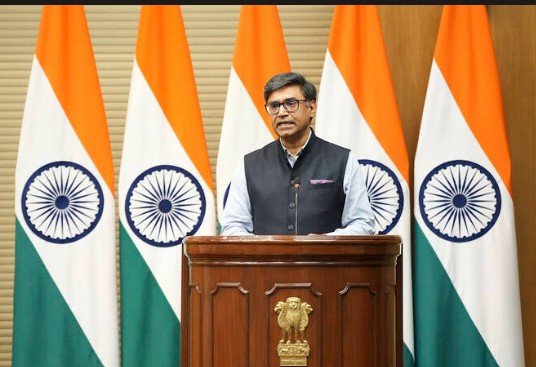
New Delhi: In a significant cross border civil society initiative aimed at easing tensions between India and Pakistan, a group of 117 prominent citizens from the two countries has jointly appealed to the Prime Ministers of both nations to revive dialogue, restore normal bilateral engagement and reopen channels of communication that have remained frozen for years. The signatories, comprising 61 Indians and 56 Pakistanis, have issued an open letter urging New Delhi and Islamabad to move beyond hostility and mistrust and instead take concrete steps towards peace, trade and sustained diplomatic contact.
The initiative comes at a time when relations between India and Pakistan remain marked by deep suspicion, minimal official engagement and a prolonged diplomatic chill that has affected trade, people-to-people contact and regional stability. Those behind the appeal say the current impasse is not only politically unproductive but also socially and economically damaging for ordinary people on both sides of the border. Their intervention seeks to push the conversation away from confrontation and towards a recognition that dialogue, however difficult, remains the only viable path to managing differences between two nuclear armed neighbours.
Among the leading voices behind the initiative is social activist Om Prakash Shah, one of the core signatories of the letter, who said the appeal is driven by a sense of urgency over the growing trust deficit between India and Pakistan. Speaking about the effort, Shah said the group had consciously brought together citizens from both sides to send a united message that prolonged silence and disengagement cannot resolve the complex disputes that have weighed on the relationship for decades.
According to Shah, the letter’s central demand is straightforward: the Prime Ministers of India and Pakistan should speak directly, resume meaningful discussions and work towards normalising relations in a way that benefits both societies. He argued that dialogue at the highest political level is essential not only for addressing immediate tensions but also for gradually rebuilding confidence between the two countries.
The signatories have framed the appeal not as a denial of the serious disputes that divide India and Pakistan, but as an argument that those disputes can only be managed through communication rather than confrontation. In their view, refusing to talk does not eliminate mistrust; it deepens it. They believe that without regular diplomatic contact, the risk of misunderstanding, escalation and hardening public attitudes increases, leaving both governments with fewer tools to defuse crises when they arise.
The open letter lays out a broad roadmap for restoring a more stable bilateral relationship. At its core is the call to reopen political and diplomatic channels so that the two sides can engage consistently instead of only in moments of emergency. The signatories also advocate reviving trade links, arguing that economic exchange can serve as both a practical confidence-building measure and a source of direct benefit for local businesses, border communities and broader markets in the region. In addition, they stress the need to improve communication between the two countries so that mistrust does not continue to define every interaction.
The appeal repeatedly returns to the idea that war or military escalation offers no meaningful solution to the problems between the two neighbours. Shah, articulating the spirit of the letter, said the time had come to acknowledge that conflict benefits no one and that the human, economic and civilisational costs of war far outweigh any short-term political gain. The message is especially pointed given the shared history of military confrontation between India and Pakistan and the fact that both countries possess nuclear weapons, making any uncontrolled escalation particularly dangerous.
Shah also sought to frame the call for peace in moral and civilisational terms, drawing on references from Indian epics to underline the value of dialogue even at moments of confrontation. He invoked the examples of Lord Rama and Lord Krishna as figures who pursued negotiation and peace efforts before war, suggesting that even in situations of deep grievance, the instinct to talk and seek a settlement was regarded as both wise and necessary. By invoking those stories, Shah appeared to situate the letter’s appeal within a broader ethical argument: that responsible leadership requires exhausting the possibilities of dialogue before allowing hostility to harden into conflict.
The signatories’ emphasis on nuclear risk adds a further layer of urgency to their appeal. India and Pakistan are not simply neighbours with unresolved disputes; they are neighbours whose tensions carry the potential for catastrophic consequences if mismanaged. In that context, the letter argues that maintaining poor relations is not merely a diplomatic inconvenience but a strategic danger. Regular communication, it suggests, is not a favour either side does to the other; it is a matter of self-interest and regional stability.
The economic dimension of the appeal is equally significant. Trade between India and Pakistan has repeatedly suffered as political relations deteriorated, depriving businesses and consumers on both sides of opportunities that might otherwise have softened the harsher edges of the rivalry. The signatories argue that reviving commercial ties would not solve political disputes on its own, but it could create constituencies for stability and offer tangible gains to ordinary citizens. Better trade, in their view, would mean more than improved numbers on an economic chart; it would represent a step towards making the relationship less hostage to crisis and confrontation.
The appeal also reflects a broader frustration within sections of civil society over the narrowing space for people-to-people contact between the two countries. Cultural exchanges, academic collaboration, travel, public dialogue and professional engagement have all suffered under the weight of deteriorating official relations. The signatories appear to believe that the damage from this estrangement goes beyond diplomacy and economics. It affects how Indians and Pakistanis imagine one another, how younger generations understand the shared history of the subcontinent and how easily fear and suspicion can replace familiarity.
That concern about psychological distance is central to the initiative. Shah has described the present challenge not only as a political stalemate but also as a breakdown in trust and imagination. Once communication stops, he suggests, the relationship becomes defined entirely by accusation, memory of conflict and mutual fear. Reopening dialogue is therefore not just about solving specific disputes; it is about interrupting the cycle through which silence itself becomes a source of hostility.
In many ways, the letter is as much a symbolic intervention as a political one. The signatories know that an open appeal from civil society does not by itself alter state policy or erase the strategic calculations that shape India-Pakistan relations. But symbolism matters in conflicts defined by entrenched narratives. By bringing together Indians and Pakistanis in a joint appeal, the initiative seeks to demonstrate that the desire for peace and communication still exists across the border, even if official ties remain cold. It is an attempt to keep alive the idea that dialogue is not weakness, but a necessary instrument of responsible statecraft.
The challenge, however, is that India-Pakistan diplomacy has long been hostage to cycles of crisis and breakdown. Over the years, attempts at engagement have repeatedly been derailed by terror attacks, military flare ups, political mistrust and domestic pressures within both countries. Each new setback has made future dialogue harder, not only because of the substantive disputes involved but because of the erosion of confidence that either side is prepared to sustain engagement when conditions become politically difficult.
That history explains why the letter’s emphasis on persistence matters. The signatories are not simply asking for a one-off conversation or symbolic handshake. They are urging a return to structured, meaningful engagement that can survive disagreements rather than collapse at the first sign of strain. In other words, they are calling for dialogue to be treated not as a reward for good behaviour but as a mechanism for managing bad moments before they become worse.
Whether the appeal will find a response from either government remains uncertain. Official relations between India and Pakistan have remained constrained by long-standing disputes, especially over terrorism, Kashmir and security concerns, and neither side has shown much political appetite in recent years for a bold diplomatic reset. Domestic politics also complicates any effort at rapprochement, as leaders in both countries must navigate nationalist sentiment, security establishments and the risk of appearing conciliatory without reciprocal concessions.
Yet even if the letter does not produce an immediate breakthrough, it serves as a reminder that public discourse on India-Pakistan relations is not entirely monopolised by strategic rivalry and hostility. There remains a constituency small perhaps, but persistent that continues to argue for dialogue, trade, communication and peace as matters of common sense as well as moral responsibility. In a region where every diplomatic silence carries risks, that message retains its relevance.
The letter’s broader significance lies in its insistence that the current freeze is not normal and should not be accepted as permanent. For the signatories, the absence of dialogue is itself a dangerous condition one that increases the possibility of miscalculation, damages economic opportunity and deepens the emotional and political distance between two societies with a long and entangled history. Their appeal is, in essence, an argument against fatalism. It rejects the idea that India and Pakistan are destined to remain trapped in hostility with no room for communication or change.
By invoking history, economics, strategic stability and shared civilisational memory, the signatories have tried to construct a case for peace that is broader than sentiment alone. They are asking the political leadership of both countries to act not merely out of goodwill but out of realism—to recognise that dialogue is in the national interest of both sides, that trade and communication can serve practical ends, and that nuclear-armed neighbours cannot afford the luxury of endless estrangement.
For now, the open letter stands as a carefully worded but unmistakable plea from civil society to political power: restart the conversation before silence hardens into something more dangerous. Whether New Delhi and Islamabad choose to heed that message remains to be seen. But the appeal by 117 citizens from both countries has once again brought into public view a difficult truth that often gets buried beneath rhetoric and mistrust that however deep the differences may be, the alternative to dialogue is not resolution, but the continued accumulation of fear, distance and risk.
In that sense, the significance of the initiative may extend beyond the immediate moment. It is not simply a letter to two Prime Ministers; it is also a reminder to two publics that peace requires voices willing to speak across the divide, even when official diplomacy has fallen silent. And in a relationship as fraught and consequential as that between India and Pakistan, such voices however limited their immediate influence remain essential to keeping alive the possibility that another future is still imaginable.

