


Amarnath Yatra 2026 Begins Amid Tight Security Grid, Over 3 Lakh Pilgrims Expected This Season
With multi layer security, drone surveillance, and real-time monitoring systems in place, the annual Amarnath Yatra commenced across Jammu and Kashmir, marking one of the largest pilgrimage movements in the Himalayan region this year.
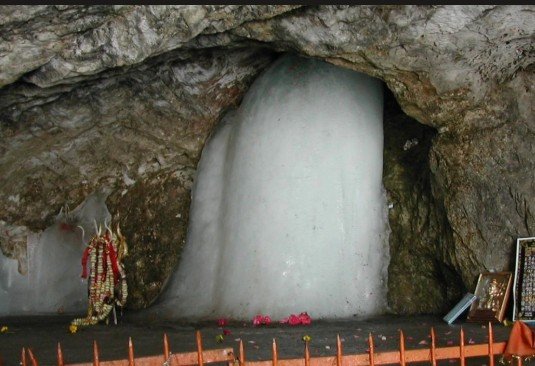
Srinagar, July 2: The annual Amarnath Yatra 2026 officially began on Thursday across Jammu and Kashmir amid unprecedented security arrangements, administrative coordination, and heightened surveillance measures aimed at ensuring the safe passage of pilgrims to the holy cave shrine located in the South Kashmir Himalayas. Authorities have projected that over three lakh devotees are expected to undertake the pilgrimage this year, making it one of the largest spiritual gatherings in the Union Territory in recent times.
The Yatra, which holds immense religious significance for devotees of Lord Shiva, commenced simultaneously from both the traditional Pahalgam route in Anantnag district and the shorter Baltal route in Ganderbal district. The first batches of pilgrims were flagged off under strict security supervision, with multiple layers of deployment from the Central Armed Police Forces (CAPFs), Jammu and Kashmir Police, and specialized mountain rescue units.
Officials said the security grid this year has been significantly upgraded in view of past threats and evolving terrain-related risks. The deployment includes anti-sabotage teams, quick reaction units, drone based aerial monitoring, and satellite-linked communication systems to ensure uninterrupted coordination between base camps and high-altitude checkpoints. The entire route has been declared a high-security zone, with restricted civilian movement in sensitive stretches.
Lieutenant Governor Manoj Sinha, who formally flagged off the pilgrimage, reiterated the administration’s commitment to ensuring a peaceful and safe Yatra. He said that elaborate arrangements had been made not only for security but also for medical assistance, weather monitoring, disaster response, and logistical support. According to officials, hundreds of medical camps, oxygen stations, and emergency evacuation points have been established along both routes.
The Amarnath Yatra, which typically lasts over six weeks, is considered one of the most challenging pilgrimages in India due to its high-altitude terrain, unpredictable weather conditions, and narrow mountain paths. The shrine, located at an altitude of approximately 3,888 metres, houses a naturally formed ice stalagmite believed by devotees to represent Lord Shiva.
Security agencies have particularly focused on preventing infiltration attempts and ensuring the safety of pilgrims in vulnerable stretches. Intelligence inputs have historically flagged the possibility of sporadic threats in the region, prompting authorities to maintain round the clock vigilance. This year, additional emphasis has been placed on technology driven monitoring, including AI-assisted surveillance feeds and integrated command control systems that allow real time tracking of movement convoys.
The administration has also regulated convoy timings for pilgrim vehicles moving from Jammu to the base camps in Kashmir. Strict scheduling has been introduced to avoid congestion and ensure security escorts can maintain control over movement patterns. RFID-based tracking systems have been deployed for registration and monitoring of pilgrims, allowing authorities to identify each registered devotee throughout their journey.
Pilgrims arriving from different parts of the country expressed both devotion and appreciation for the arrangements. Many said that despite the heavy security presence, the system appeared well organized and reassuring. For first-time visitors, the experience of seeing such large-scale coordination in a difficult terrain added to the emotional intensity of the pilgrimage.
The economic dimension of the Yatra is also significant for Jammu and Kashmir. Local businesses, including pony operators, hoteliers, transport providers, and small traders, rely heavily on the seasonal influx of pilgrims. Officials estimate that the Yatra generates substantial economic activity in both Jammu and Kashmir regions, particularly in districts along the route such as Anantnag, Ganderbal, and Jammu city.
However, authorities have also issued repeated advisories urging pilgrims to follow weather updates and avoid unnecessary movement during adverse conditions. The Himalayan region is prone to sudden rainfall, landslides, and snowfall even during summer months. Disaster management teams have been placed on high alert, with helicopters and rescue teams kept on standby for emergency evacuation.
Environmental concerns have also been raised regarding the increasing footfall and its impact on fragile mountain ecosystems. Authorities have introduced stricter waste management protocols this year, including plastic bans in designated zones and mandatory waste collection systems at base camps. Officials said that maintaining ecological balance is a key priority alongside ensuring pilgrimage safety.
The Yatra is not only a religious event but also a major logistical exercise that brings together multiple arms of governance. Civil administration, police forces, health departments, disaster response agencies, and local governance bodies are all engaged in coordinated operations. Weekly reviews are being conducted to assess security preparedness and infrastructure readiness along the entire route.
Over the years, the Amarnath Yatra has also evolved into a symbol of resilience and continuity in Jammu and Kashmir, reflecting both spiritual tradition and administrative capability in managing large-scale events in challenging environments. Despite occasional disruptions due to weather or security concerns, the pilgrimage has consistently resumed with renewed arrangements, underscoring its importance in the cultural and religious landscape of India.
As the 2026 Yatra progresses, authorities remain focused on maintaining a balance between devotion and safety. With thousands of pilgrims already en route and more expected in the coming weeks, the coming phase will test both infrastructure resilience and coordination efficiency in one of the most demanding pilgrimage operations in the country.
The administration has assured that every possible measure is in place to ensure that devotees can complete their spiritual journey safely and return with a sense of fulfillment. For now, the mountains of Kashmir once again echo with chants of “Bam Bam Bhole” as the sacred journey to the Amarnath cave unfolds under a tightly secured and carefully managed framework.

