


India to Help Indonesia Develop Country-Specific EVMs in Major Electoral Technology Partnership
New Delhi and Jakarta move beyond traditional diplomacy as India agrees to support Indonesia in building customised electronic voting machines, expanding cooperation in election management, technology and democratic institutions.
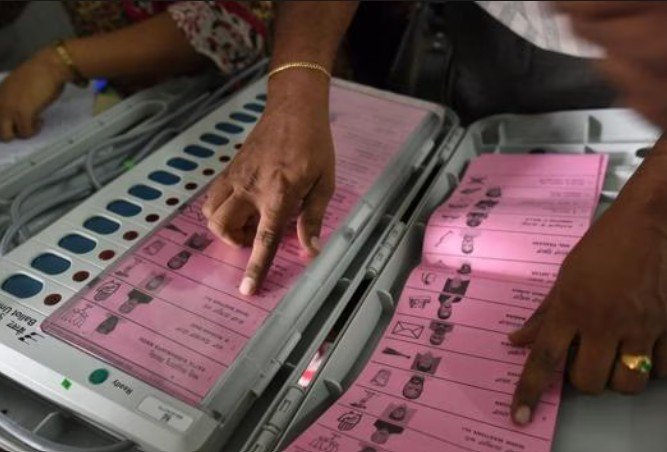
India, July 08 : India is set to support Indonesia in developing country-specific electronic voting machines, opening a new chapter in bilateral cooperation that places electoral technology and democratic institution-building alongside defence, trade and maritime collaboration. The decision, which emerged as one of the notable outcomes of Prime Minister Narendra Modi’s visit to Indonesia, signals growing international confidence in India’s election management expertise and adds a fresh institutional dimension to New Delhi’s expanding partnership with Jakarta.
The proposed collaboration is significant not only because it involves the transfer of technical know-how in a highly sensitive area of democratic governance, but also because it shows how India is increasingly positioning itself as a partner in public systems, digital governance and institutional capacity-building. For Indonesia, which is exploring ways to strengthen and modernise its electoral infrastructure, India’s experience with large-scale voting systems offers a tested model that can be adapted to local needs.
Sources indicated that the plan is not about exporting India’s voting system in a one-size-fits-all form. Instead, the emphasis is on helping Indonesia develop EVMs tailored to its own legal framework, administrative requirements and electoral conditions. That distinction is important because it reflects a collaborative rather than prescriptive approach. It also suggests that the partnership could extend beyond hardware to include technical consultation, election management processes, operational design and broader institutional cooperation between relevant authorities in both countries.
The development has drawn attention because India’s election management system has long been regarded as one of the most complex and extensive in the world. Conducting elections across a vast electorate, difficult terrain and enormous social diversity has required decades of institutional adaptation, technological refinement and logistical innovation. By agreeing to assist Indonesia in this field, India is effectively extending one of its most distinctive governance capabilities into the international arena.
The electoral technology initiative is unfolding within the larger framework of the India-Indonesia Comprehensive Strategic Partnership, which has acquired visible momentum in recent years. During Prime Minister Modi’s visit, the two sides discussed a wide-ranging agenda covering defence, maritime security, critical minerals, healthcare, digital connectivity, education, agriculture and emerging technologies. The EVM partnership stands out because it broadens the relationship from traditional strategic sectors into the sphere of democratic systems and governance infrastructure.
India’s support for Indonesia’s customised EVMs can also be read as part of a larger trend in New Delhi’s diplomacy. Over the past decade, India has sought to project not only economic and strategic influence but also governance solutions that have been developed at scale domestically. Digital public infrastructure, fintech platforms, identity systems, payment interfaces and public service delivery tools have increasingly become part of India’s diplomatic toolkit. The electoral management collaboration with Indonesia fits into this pattern by placing democratic process technology within the ambit of international cooperation.
For Indonesia, the partnership offers practical and political advantages. As one of the world’s largest democracies and a major power in Southeast Asia, Indonesia has a strong interest in improving the efficiency, credibility and resilience of its electoral mechanisms. Working with India gives Jakarta access to a country that has managed repeated large-scale elections using electronic systems under intense public scrutiny. At the same time, the partnership allows Indonesia to retain ownership over the final design of its electoral technology by developing systems specific to its national context.
The political symbolism of the move is also substantial. Election systems are closely tied to questions of sovereignty, trust and legitimacy. A decision to work with another country in this field implies a high degree of confidence in that country’s institutional experience and technical credibility. In India’s case, it amounts to an endorsement of its election management model and of the Election Commission-linked ecosystem that has sustained the use of EVMs over multiple electoral cycles.
The initiative could also open new avenues for institutional dialogue between the two democracies. Cooperation in electoral technology often requires discussions on standards, training, testing, cybersecurity, voter confidence measures, operational protocols and dispute-resolution mechanisms. Even if the immediate project is centred on hardware development and technical assistance, it could eventually lead to a more structured exchange on election administration and democratic governance practices.
That possibility is especially relevant because India and Indonesia have increasingly sought to deepen ties beyond symbolic diplomacy. Both countries are large, plural and strategically located democracies with ambitions to play larger regional and global roles. Their partnership has gathered momentum through defence ties, maritime coordination and economic engagement, but it also carries a civilisational and political dimension rooted in shared support for a rules-based, inclusive and multipolar regional order. Cooperation on electoral systems reinforces that dimension by highlighting democratic capacity as a domain of bilateral engagement.
The timing of the announcement is equally notable. At a moment when global debates around election integrity, digital trust and institutional resilience are intensifying, India’s willingness to share election management expertise gives its diplomacy a distinctive edge. Many countries are trying to modernise public systems without becoming dependent on opaque external technologies or politically loaded models of governance. India can position itself as an alternative partner—one with large-scale operational experience, lower-cost solutions and a democratic institutional framework.
From New Delhi’s perspective, the EVM initiative also carries soft-power value. Defence exports and infrastructure cooperation may dominate headlines, but electoral technology support creates a different kind of influence—one rooted in institutions, process credibility and democratic administration. It reinforces India’s claim that its developmental and governance experiences are relevant not only at home but also to other countries navigating complex state capacity challenges.
This does not mean the partnership will be straightforward. Election technologies are highly sensitive and must be adapted carefully to local constitutional, political and administrative conditions. Indonesia’s electoral requirements differ from India’s in important ways, including the structure of political competition, administrative organisation and legal frameworks. The success of the collaboration will therefore depend on how effectively both sides translate India’s experience into a system that is specifically designed for Indonesian needs rather than merely inspired by Indian practice.
Still, the very fact that such a project is being discussed at the highest political level is telling. It shows that India-Indonesia ties are no longer confined to broad declarations of friendship or sectoral trade agreements. They are now moving into specialised, high-trust domains that require long-term planning and institutional coordination. The EVM initiative is one of the clearest signs of that evolution.
The agreement also complements the other outcomes of Modi’s Indonesia visit, particularly in defence and strategic sectors. India and Indonesia have been discussing cooperation in BrahMos missile systems, Astra missiles, maritime security, Sabang port connectivity and critical minerals. In that context, the EVM collaboration helps round out the bilateral relationship by adding a governance pillar to a partnership that is already expanding in security and economic terms.
For India, the message is clear: it wants to be seen not only as a strategic and economic partner in Southeast Asia, but also as a provider of institutional solutions. For Indonesia, the message is equally important: it is willing to work with India in areas that touch the core of state functioning, not just commerce or diplomacy. That combination gives the EVM initiative weight far beyond the technical subject it addresses.
As details of the partnership emerge, attention will turn to the mechanisms through which the cooperation will be implemented, the institutions involved and the extent of technical collaboration envisaged. But even at this early stage, the political significance is unmistakable. India’s support for Indonesia’s country-specific EVMs marks an expansion of bilateral ties into one of the most sensitive and symbolically powerful areas of democratic governance.
In the larger picture, the move reflects the changing nature of India’s foreign policy. It is increasingly blending strategic partnerships with technology diplomacy, governance outreach and institutional collaboration. The EVM partnership with Indonesia is an example of that broader shift one that sees India exporting not only goods and services, but also public systems, administrative experience and democratic know-how. If implemented effectively, it could become one of the most distinctive and consequential outcomes of India’s growing engagement with Southeast Asia.

