


EU Lawmakers Seek Probe Into FIFA Chief’s Trump Contact Before US-Belgium Clash
A group of European Parliament members has demanded an ethics investigation into FIFA president Gianni Infantino after U.S. forward Folarin Balogun was cleared to play despite a red card ban, fuelling allegations of political interference in the World Cup.
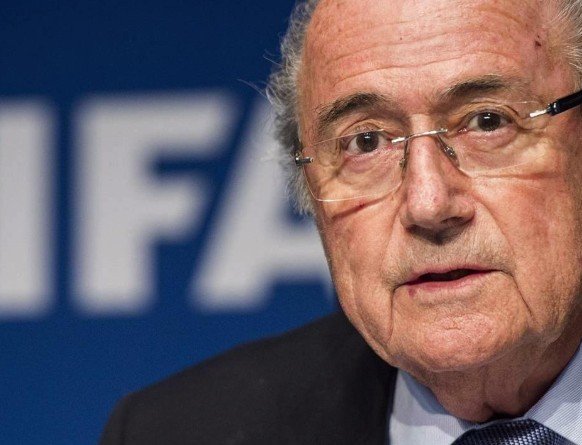
US, July 08 : Dozens of European lawmakers are rallying support for an investigation into FIFA president Gianni Infantino after the governing body allowed United States striker Folarin Balogun to feature in a World Cup match despite a suspension that would ordinarily have ruled him out.
The controversy erupted after Balogun, who was sent off during the United States’ victory over Bosnia-Herzegovina on July 1, was expected to miss the team’s next fixture under standard disciplinary rules. Instead, FIFA lifted the suspension ahead of Monday’s match, a move that triggered immediate criticism and prompted accusations that political pressure had influenced a sporting decision.
The issue has now reached the European Parliament, where lawmakers from multiple countries are pushing for formal scrutiny of Infantino’s role in the matter. In a joint statement, Members of the European Parliament Barry Andrews, Lara Wolters and Niels Fuglsang said FIFA’s handling of the case had undermined confidence in the integrity of the competition.
According to the lawmakers, changing the application of red-card rules in the middle of a tournament damages the credibility of the sport and raises serious questions about fairness and transparency. They argued that football’s legitimacy rests on consistent enforcement of rules, regardless of the player, the team or the political influence surrounding a match.
The MEPs are now urging football associations across European Union member states to press FIFA’s Ethics Committee to open an inquiry into whether Infantino acted improperly or allowed outside influence to shape the decision. Their proposed complaint would examine whether pressure from the Trump administration played any role in Balogun being cleared to play, and whether the episode fits into a wider pattern of political accommodation by FIFA leadership.
The lawmakers also referred to what they described as other possible breaches of political neutrality, including the decision to award U.S. President Donald Trump the FIFA Peace Prize. In their view, the Balogun case cannot be seen in isolation but rather as part of a broader concern over FIFA’s relationship with political power and its willingness to blur the line between governance of the sport and diplomatic favour.
FIFA, for its part, has maintained that the suspension reversal was not a personal decision by Infantino but the outcome of a ruling by its disciplinary committee. However, that explanation has done little to calm criticism, especially after reports that Trump personally intervened with the FIFA chief on behalf of the American striker.
The allegation that a head of state could help secure the availability of a player in the middle of a World Cup has unsettled many observers, particularly in Europe, where political independence in sport remains a highly sensitive issue. Critics argue that if disciplinary sanctions can be altered after direct political contact, it sets a dangerous precedent not only for football but for international sport more broadly.
The statement issued by the three lawmakers said 35 colleagues had already signed on in support of the letter, indicating that concern over the matter is spreading within the European Parliament. Their message was clear: when rules are seen as flexible for powerful countries or politically connected individuals, trust in the competition begins to erode.
At the centre of the dispute is the question of whether FIFA’s governance structure is robust enough to resist pressure from influential governments. The Balogun decision has become more than a disciplinary controversy; it is now a test of FIFA’s credibility at a moment when the organisation is already under close scrutiny for its handling of major political and ethical issues.
The episode has also added another layer of tension to the 2026 World Cup, which has already drawn attention for the intersection of sport, politics and high-profile leadership involvement. With the United States hosting and Trump playing a visible role in the broader narrative around the tournament, the Balogun case has quickly become symbolic of deeper concerns over who truly holds influence inside football’s most powerful institution.
For European lawmakers seeking an investigation, the goal is not only to establish what happened in this particular case but also to protect the principle that sporting rules must apply equally to all participants. They argue that the authority of referees, disciplinary systems and tournament regulations cannot be subject to political bargaining without damaging the foundations of fair competition.
Whether FIFA’s Ethics Committee takes up the matter remains to be seen, but the calls from Brussels ensure the controversy is unlikely to fade quickly. As pressure grows on Infantino to explain how Balogun’s suspension was overturned, the debate is shifting from a single player’s eligibility to the wider question of political influence over global football governance.
The coming days may determine whether the issue remains a temporary tournament dispute or evolves into a full-scale institutional challenge for FIFA. Either way, the Balogun suspension reversal has already sparked a serious debate about transparency, accountability and the independence of sport at the highest level.

