


Bank of Baroda Strikes ₹5,700 Crore Settlement with NMC Health Creditors
The out of court deal with NMC Health administrators ends years of cross border litigation linked to the healthcare group’s 2020 collapse, while investors assess the financial impact on Bank of Baroda.
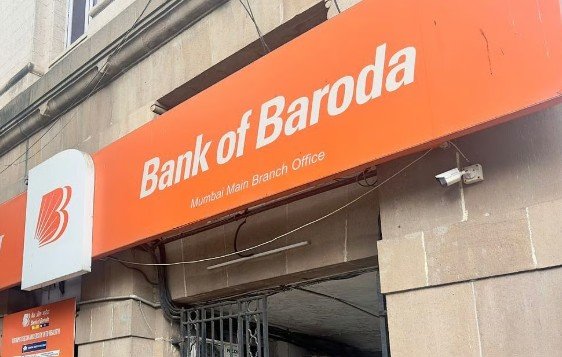
Mumbai: Bank of Baroda has agreed to a $600 million settlement — roughly ₹5,700 crore — with the administrators of collapsed healthcare major NMC Health, bringing an important chapter of one of the most high-profile cross-border insolvency disputes to a close. The settlement, reached outside court, is set to end years of legal proceedings related to the dramatic fall of the West Asia-based hospital operator and the subsequent efforts by creditors to recover billions of dollars.
The agreement resolves claims pursued by the joint administrators of NMC Health against the public sector lender in connection with the group’s financial dealings before its collapse in 2020. Court proceedings in the Abu Dhabi Global Market (ADGM) and the United Kingdom are expected to be discontinued as part of the settlement framework. Importantly, both Bank of Baroda and the administrators have entered into the arrangement without any admission of liability.
The development marks a major turning point in the long-running fallout from the collapse of NMC Health, once one of the Gulf region’s most prominent healthcare companies and a flagship business associated with Indian-origin entrepreneur Dr B.R. Shetty. The company’s downfall sent shockwaves through financial markets and creditor circles after a forensic audit uncovered billions of dollars in previously undisclosed borrowings and suspected financial irregularities.
NMC Health’s collapse in 2020 quickly evolved into a sprawling insolvency battle spread across several jurisdictions. Administrators were tasked with tracing assets, examining lending arrangements, and seeking recoveries from parties they believed may have had a role in enabling the concealment of debt or the continuation of operations despite the group’s worsening financial condition. The estimated hole in NMC’s balance sheet was pegged at around $5 billion to $6 billion, making it one of the most complex corporate failures involving Gulf-based businesses with links to Indian promoters and international lenders.
Bank of Baroda emerged as one of the lenders caught up in that legal web because of its exposure to NMC-linked entities in the UAE and India. According to the claims pursued by administrators, certain financing structures and banking relationships were allegedly used in ways that masked the true extent of NMC’s debt burden. The legal action against the bank was part of a broader recovery effort aimed at enlarging the pool of funds available for distribution to creditors.
With the new settlement in place, those claims will now be fully resolved against Bank of Baroda in exchange for the agreed payment. The amount will be transferred to the NMC estate under the supervision of the joint administrators, who will distribute the proceeds among creditors in line with applicable insolvency rules and the established hierarchy of claims. That creditor pool includes banks, bondholders, trade creditors and other stakeholders who have been waiting for recoveries since the group entered financial distress.
For Bank of Baroda, the agreement closes a difficult legal overhang that had lingered over the lender for years. Although the payout is substantial, market participants largely view it as a one-time exceptional hit rather than a threat to the bank’s long-term financial stability. The bank’s size, capital base and ongoing business momentum are expected to help absorb the impact, though investors will be closely watching how the amount is accounted for in future financial statements.
The market reaction was immediate. Shares of Bank of Baroda ended around 4 per cent lower after news of the settlement became public, reflecting concerns over the near-term cost of the payment and uncertainty over provisioning and profit impact. However, analysts indicated that the sell-off appeared more linked to sentiment and headline shock than to any structural weakness in the lender’s balance sheet.
In a separate regulatory filing, Bank of Baroda also highlighted healthy business growth for the first quarter, underscoring that its core banking operations remain on a strong footing despite the settlement-related setback. The bank said its domestic deposits rose 14.7 per cent year-on-year to ₹14.2 lakh crore, while domestic advances increased 16.1 per cent to ₹11.5 lakh crore. These numbers suggest that retail and corporate lending activity has remained resilient, and that deposit mobilisation continues to support the lender’s growth trajectory.
That operating performance may offer some reassurance to investors concerned about the size of the NMC-related payout. Public sector banks have spent the past several years strengthening their balance sheets, improving asset quality and raising profitability, and Bank of Baroda has been among the institutions seeking to position itself as a stronger and more diversified lender. In that context, the settlement may be viewed as a costly but manageable resolution of a legacy issue rather than the emergence of a new financial stress point.
The background to the NMC case remains one of the most dramatic corporate collapses in recent memory. Founded by B.R. Shetty, NMC Health grew rapidly into a major healthcare provider in the Gulf, operating hospitals, clinics and pharmacies across the UAE and beyond. It also gained visibility in global markets after listing in London, where it attracted international investors and became a symbol of the Gulf’s expanding private healthcare sector.
However, the company’s fortunes changed abruptly when allegations surfaced regarding its debt levels and financial reporting. A forensic review later pointed to significant discrepancies in disclosed liabilities, raising serious questions about corporate governance, transparency and the role of lenders and executives in the company’s expansion. What followed was a cascade of legal, regulatory and insolvency actions that touched multiple entities, financial institutions and former management figures.
Administrators appointed to oversee the NMC estate launched recovery efforts on several fronts, targeting assets and parties they believed could contribute to creditor repayment. In such large insolvency cases, settlements often become a practical route to avoid prolonged litigation, mounting legal costs and uncertain court outcomes across multiple jurisdictions. The Bank of Baroda agreement appears to fit that pattern, offering a negotiated conclusion that gives the NMC estate a significant cash recovery while allowing the bank to draw a line under a contentious legal battle.
The reference to no admission of liability is also significant. In high-value commercial disputes, parties often choose to settle to reduce legal uncertainty and contain reputational and financial risks, even while maintaining that they do not accept the allegations made against them. By structuring the deal in this way, both sides have effectively prioritised closure and recovery over a prolonged courtroom fight.
For creditors of NMC Health, the settlement provides a meaningful addition to the estate’s recovery pool. Every successful recovery helps improve the prospects of distributions to banks, suppliers and other entities left exposed by the healthcare group’s collapse. While the overall losses tied to NMC’s downfall were enormous, recoveries through settlements, asset sales and litigation outcomes can gradually narrow the gap between claims and actual payouts.
For the wider banking sector, the episode serves as another reminder of the risks associated with cross-border lending, especially when corporate structures span multiple countries and rely on aggressive expansion strategies. It also highlights the challenges lenders face in detecting hidden liabilities or off-balance-sheet exposures in large international borrower groups. In recent years, regulators and banks have placed greater emphasis on governance checks, due diligence standards and monitoring of overseas credit exposures precisely because of cases such as NMC.
Bank of Baroda’s involvement in the dispute does not alter the broader narrative that the bank remains operationally stable, but it does underline the reputational and financial consequences that can arise when a borrower’s collapse leads to scrutiny of historic lending relationships. Investors will now focus on whether the bank has already provisioned for part of the exposure, how the final payment will be reflected in earnings, and whether management offers additional clarity on the matter during upcoming financial disclosures.
From a strategic perspective, resolving the NMC matter may even remove an uncertainty that had weighed on the stock and management attention. Litigation of this scale can drag on for years, consume resources and create recurring headline risk. A settlement, though expensive, can sometimes be preferable to an open-ended legal battle with unpredictable outcomes in multiple courts.
The case is also likely to remain relevant in discussions about accountability in cross-border insolvency. NMC’s collapse was not merely a corporate failure; it became a test of how regulators, administrators, lenders and courts across jurisdictions handle alleged financial misconduct, hidden debt and creditor claims in an increasingly interconnected business environment. The Bank of Baroda settlement forms one part of that larger story — a story of how institutions are attempting to untangle the financial and legal aftermath of a corporate implosion that reverberated far beyond the healthcare sector.
As the proceedings in ADGM and UK courts move toward closure, attention will now shift to the practical implications of the settlement: the timing of the payment, its accounting treatment in Bank of Baroda’s books, and the extent to which it improves recoveries for NMC creditors. For the bank, the focus will be on reassuring shareholders that the one-off cost does not undermine business growth or capital strength. For creditors, it represents another step in the long process of recovering value from a collapse that left behind one of the most complicated insolvency trails in recent corporate history.
In immediate terms, the settlement is significant for three reasons. First, it removes a major legal uncertainty for Bank of Baroda. Second, it boosts the NMC estate with a sizeable recovery that can be distributed under insolvency rules. Third, it signals that the clean-up of the NMC Health collapse is still unfolding, with financial institutions and administrators continuing to settle disputes and close outstanding claims years after the original scandal surfaced.
While the ₹5,700 crore payout is large by any measure, the broader market consensus appears to be that Bank of Baroda has the balance sheet strength to absorb the impact. The bank’s recent growth in deposits and advances suggests its core franchise remains intact, even as it deals with the financial consequences of a legacy overseas exposure. The coming quarters will reveal how the settlement affects profitability, but for now the deal stands as a major resolution in one of the banking sector’s most closely watched international legal disputes.

