


China Tightens Oversight of Artificial Intelligence, Moves to Curb Technology Investment Bubbles
New government guidelines seek to strengthen AI safety, expand advanced technology research and prevent reckless investment while supporting industrial innovation and technological self-reliance.
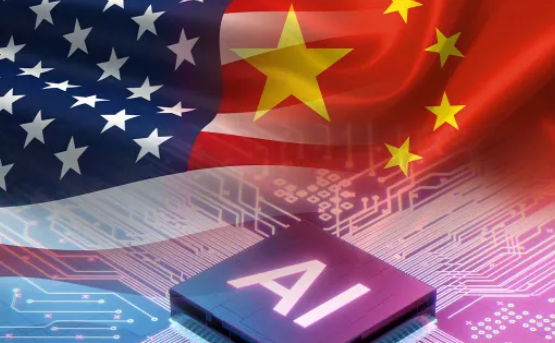
BEIJING, Oct 9: China has announced new policy guidelines to strengthen oversight of its advanced technology sector, with a particular focus on artificial intelligence (AI) safety, investment discipline and the development of strategic industries. The measures reflect Beijing’s efforts to accelerate technological innovation while preventing speculative investment and ensuring that emerging technologies remain safe, reliable and controllable.
The guidelines, issued by China’s ruling Communist Party and the central government, seek to promote what officials describe as “new productive forces”, a policy approach centred on advanced manufacturing, scientific research and technology-driven economic development.
According to reports carried by state-run Xinhua News Agency, the government intends to establish technology monitoring, risk-warning and emergency-response systems to strengthen oversight of artificial intelligence. Authorities also plan to hold individuals accountable for substantial losses resulting from reckless investment in emerging technology sectors.
The policy comes as China intensifies its efforts to strengthen domestic technological capabilities amid strategic competition with the United States. Artificial intelligence, advanced computing, robotics and other frontier technologies have become increasingly important to economic growth, industrial competitiveness and national security.
AI safety becomes a central priority
One of the principal elements of the new guidelines is the development of systems to monitor technological risks and respond to potential emergencies involving artificial intelligence.
As AI applications become more sophisticated and widely deployed, governments and businesses face growing challenges involving reliability, cybersecurity, misuse and the consequences of automated decisions. China’s proposed monitoring and risk-warning arrangements are intended to strengthen the country’s ability to identify potential problems and respond before they cause significant disruption.
The emphasis on keeping AI safe, reliable and controllable suggests that Beijing wants the technology to expand across industries without losing oversight of its development and use.
AI is increasingly being incorporated into manufacturing, logistics, transport, consumer electronics and business operations. While these applications can improve productivity and reduce operating costs, they can also introduce new vulnerabilities when systems operate incorrectly, rely on inadequate data or are deployed without sufficient safeguards.
China’s approach seeks to connect technological development with risk management rather than treating innovation and safety as separate policy objectives.
However, the effectiveness of the proposed measures will depend on how monitoring systems are implemented, how risks are assessed and how responsibilities are distributed among technology developers, industrial users and government agencies.
Government warns against reckless investment
The guidelines also address concerns about excessive investment in emerging industries. Chinese authorities have warned against “blind” investment and uncoordinated expansion into high-technology sectors, where companies may rush to build capacity without sufficient evidence of sustainable demand.
The rapid growth of AI has encouraged businesses to invest in computing infrastructure, specialised hardware, research facilities and new applications. Although such spending can support innovation, it can also create financial risks if investment grows faster than actual commercial use.
Excess capacity can leave companies with expensive infrastructure, weaken returns and place pressure on local governments that provide financial or policy support to industrial projects.
Under the new guidelines, individuals responsible for major losses caused by reckless investment in strategic technology sectors may face accountability measures. The policy signals that government support for innovation will not necessarily protect decision-makers from the consequences of poorly planned expansion.
China’s challenge is to encourage companies to pursue ambitious research while discouraging projects driven primarily by subsidies, imitation or expectations of quick financial returns.
This balance is particularly important in AI, where the cost of developing advanced models and maintaining computing infrastructure can be substantial. Companies must also contend with changing customer requirements, intense competition and uncertainty over how quickly new technologies can generate revenue.
Strengthening domestic technological capabilities
Technological self-reliance remains a major objective of China’s industrial strategy. The new guidelines call for greater support for scientific research, technological breakthroughs and industrial upgrading.
The policy aims to strengthen domestic capabilities in strategically important fields and reduce vulnerabilities associated with dependence on external suppliers. Advanced chips, computing infrastructure, AI systems and industrial equipment are among the areas central to the country’s technology ambitions.
Competition with the United States has increased the importance of developing domestic alternatives and building stronger research and manufacturing ecosystems. Restrictions affecting access to certain advanced technologies have added pressure on Chinese companies to develop their own capabilities.
Government support can help researchers and businesses undertake expensive, long-term projects that might otherwise struggle to attract sufficient funding. It can also encourage closer cooperation between universities, research institutions, technology companies and manufacturers.
The guidelines support the use of coordinated national efforts to accelerate the development of key technologies. Such an approach could help direct resources towards strategic priorities and improve the transfer of research findings into commercial products.
Nevertheless, technological self-reliance is a long-term undertaking. Building competitive products requires not only funding but also skilled workers, reliable supply chains, sustained research and the ability to turn laboratory breakthroughs into commercially viable technologies.
Expanding the ‘AI Plus’ initiative
China also intends to promote the wider integration of artificial intelligence into traditional industries through its “AI Plus” initiative.
The approach focuses on embedding AI into existing economic activities rather than limiting its use to technology companies. Manufacturing facilities, transport networks, consumer electronics businesses and other sectors could use AI to improve production planning, automate routine tasks and analyse large volumes of operational information.
For manufacturers, AI-enabled systems can help detect equipment problems, identify defects and adjust production processes. Businesses may also use predictive tools to manage inventory, forecast demand and reduce unnecessary expenditure.
In consumer markets, the integration of AI into electronic devices could produce more personalised services and improve the way people interact with digital products.
The guidelines also support the development of intelligent products, including connected electric vehicles, AI-powered electronics and humanoid robots. These fields combine software, sensors, computing hardware and automation, creating opportunities for companies working across several technology segments.
Humanoid robots, for example, require advances in machine perception, motion control, battery technology and AI-based decision-making. Their practical deployment will depend on whether manufacturers can make them sufficiently reliable, affordable and safe for real working environments.
Similarly, connected vehicles require dependable communication systems, secure software and robust safety mechanisms. Greater intelligence can improve convenience and automation, but it also increases the importance of protecting vehicles against cyber threats and technical failures.
By encouraging AI adoption across industries, China hopes to increase productivity and improve the competitiveness of its manufacturing base.
Industrial AI pilot projects to support adoption
The guidelines also emphasise support for industrial AI pilot bases, which could help businesses test and develop applications before deploying them on a wider scale.
Pilot projects can provide controlled environments for evaluating new technologies, identifying operational weaknesses and measuring their economic value. They can also help smaller businesses gain access to expertise and infrastructure that would be difficult to develop independently.
Industrial adoption often involves challenges beyond the AI model itself. Companies may need to upgrade legacy equipment, organise fragmented data, train employees and integrate new software with existing production systems.
Testing facilities and demonstration projects can help address these barriers by allowing businesses to evaluate technologies under practical conditions.
The success of such initiatives will depend on whether pilot programmes produce measurable improvements and whether successful applications can be replicated across different companies and industries.
Drones and air taxis included in the technology push
The government guidelines also call for the orderly development of China’s low-altitude economy, which includes civilian drones, air taxis, small aircraft and related services operating at relatively low altitudes.
The sector has attracted attention because it could support applications ranging from industrial inspections and agricultural monitoring to logistics and passenger transport.
Civilian drones can help survey large areas, inspect infrastructure and deliver certain goods. Air taxis and other emerging aircraft concepts could eventually provide new forms of urban or regional transport, although commercial adoption depends on safety, infrastructure, regulation and cost.
The expansion of low-altitude aviation creates specific challenges involving airspace coordination, navigation, communications and emergency management. Uncontrolled growth could increase accident risks or interfere with existing aviation operations.
China’s emphasis on orderly development and safety indicates that authorities want the sector to expand alongside appropriate oversight.
Businesses operating in this field will need to demonstrate that their aircraft and supporting systems meet operational requirements while establishing reliable procedures for maintenance, flight monitoring and incident response.
Implications for global technology competition
China’s new guidelines underline a broader shift in global technology policy. Governments are increasingly treating artificial intelligence and advanced manufacturing as strategic assets that require both investment and oversight.
For China, the objective is to preserve the momentum of technological development while limiting the financial and operational risks associated with rapid expansion.
The policy could influence how technology companies plan investments, develop AI applications and cooperate with industrial partners. It may also encourage businesses to pay closer attention to the commercial viability of projects instead of relying solely on expectations of future growth.
Internationally, China’s strategy highlights the growing connection between AI policy, industrial competitiveness and national security. Countries are seeking to develop advanced technologies while managing concerns about dependence on foreign suppliers, cybersecurity and economic resilience.
At the same time, differences in regulatory approaches may shape the conditions under which companies operate and compete across borders.
For businesses, the immediate challenge will be to understand how the guidelines translate into practical requirements and how new monitoring arrangements affect specific industries. Further implementation measures will be important in determining the policy’s impact on companies, investors and research institutions.
China’s latest move reflects an attempt to pursue technological advancement without allowing speculative investment and unmanaged risks to undermine the sector’s long-term development. Its success will depend on whether the government can encourage genuine innovation, strengthen safety systems and ensure that investment produces sustainable economic value.

