


Fuel price relief may be coming: Puri hints at petrol, diesel rate cut if crude stays low
Oil companies are still refining expensive crude bought during the West Asia crisis, delaying any immediate reduction in retail fuel prices even as global oil rates ease.
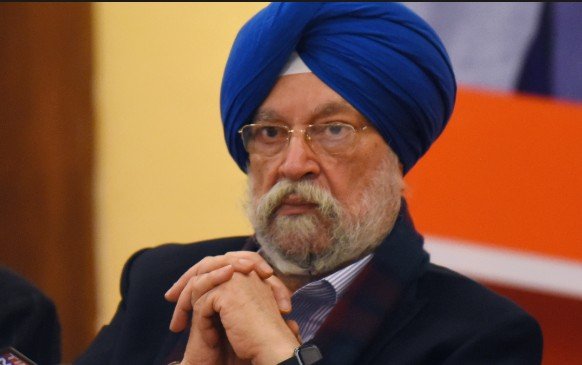
New Delhi, July 3: Union Petroleum and Natural Gas Minister Hardeep Singh Puri on Thursday indicated that petrol and diesel prices may be reduced in the coming weeks if international crude oil prices continue to remain low on a sustained basis. However, he clarified that an immediate cut in retail fuel rates is unlikely because state run oil marketing companies are still processing costlier crude oil purchased during the peak of the West Asia conflict.
Speaking on the possibility of a reduction in fuel prices, Puri said the issue would become relevant only if global crude prices remain soft over a longer period rather than falling briefly for a few days. His remarks come at a time when consumers are expecting relief after crude oil prices slipped below the USD 71 per barrel mark amid easing geopolitical tensions in West Asia.
The minister’s statement offers an explanation for why petrol and diesel prices have not yet been lowered despite the recent decline in global oil prices. According to officials and industry estimates, the fuel currently being sold in the domestic market is still being refined from crude oil imported weeks earlier when international rates were much higher.
Why fuel prices have not fallen yet
The key reason behind the delay in passing on the benefit of lower crude prices to consumers lies in the way oil procurement and refining work. Public sector oil marketing companies usually buy crude oil at least several weeks, and often up to two months, before it is refined and converted into petrol and diesel for retail sale.
This means that the petrol and diesel now reaching fuel stations are based on crude consignments purchased in April and early May, a period when prices had surged sharply due to the West Asia conflict and fears of disruption in global oil supplies. At that time, geopolitical tensions had pushed crude prices upward, increasing the input cost for Indian refiners.
As a result, even though international oil benchmarks have softened in recent days, the benefit has not immediately reflected in domestic pump prices. Puri said oil companies are still working through inventories bought at elevated prices and that any retail price cut would depend on crude remaining low over the next few weeks.
The minister’s remarks underline the lag effect in fuel pricing. Unlike a stock market move that changes instantly, retail petrol and diesel prices are influenced by the cost of earlier imports, refining expenses, transportation, dealer commission and taxes. Therefore, a fall in crude prices does not automatically translate into a same-day reduction in prices at petrol pumps.
Crude falls after easing in West Asia tensions
The latest decline in crude oil prices followed reports of progress in indirect talks involving Iran and the United States. Market sentiment improved after Qatar signalled positive movement in diplomatic efforts, helping ease concerns over further disruption in the region. Oil prices subsequently slipped below USD 71 per barrel, raising hopes that India may eventually see a reduction in petrol and diesel prices if the trend continues.
According to market observers, crude prices had remained elevated for much of the recent period because of concerns surrounding conflict in West Asia, one of the world’s most critical energy-producing regions. Any military escalation in the Gulf has a direct impact on oil prices because the region accounts for a significant share of global crude production and shipping routes.
India, which imports more than 85 per cent of its crude oil requirement, is especially vulnerable to such external shocks. Even moderate volatility in global prices can affect domestic inflation, transport costs, industrial production and household budgets. That is why every movement in Brent crude or other international benchmarks is closely watched by policymakers and consumers alike.
Oil companies absorbed major losses
Puri also highlighted the financial burden borne by oil marketing companies, saying they incurred losses of Rs 74,781 crore by selling petrol, diesel and liquefied petroleum gas below cost up to June 30. He said these losses were a direct result of the mismatch between high international purchase prices and the retail rates at which fuel and LPG were sold in the domestic market.
The minister noted that despite some moderation in global prices now, the burden on oil companies remains substantial because they are still processing crude acquired at the height of the crisis. The cost pressure was not limited to one fuel category alone but extended across petrol, diesel and LPG.
According to figures shared by the minister, the total under-recovery of oil marketing companies, including losses on petrol, diesel and LPG during the previous year’s fourth quarter and the first quarter of the current financial year, stood at around Rs 2.1 lakh crore. This reflects the scale of stress faced by the sector during a period marked by geopolitical instability and elevated import bills.
Under-recovery refers to the gap between the actual cost of supplying fuel and the retail price at which it is sold. When governments or oil companies choose not to fully pass on higher global prices to consumers, the difference accumulates as losses or deferred compensation. In India’s case, this has often been a politically and economically sensitive issue, especially when inflation is high and elections are around the corner.
Sustained low prices key to any decision
While hinting at the possibility of a future cut, Puri stopped short of making any immediate commitment on petrol and diesel rates. His message was clear: the government and oil companies need to see whether the fall in crude prices is durable before taking a call on retail prices.
This cautious approach reflects the uncertainty in global oil markets. Crude prices can move sharply in response to conflict, sanctions, shipping disruptions, OPEC decisions, US inventory data, currency fluctuations and macroeconomic concerns. A brief correction is not enough for policymakers to revise domestic prices if there is a risk that rates may rebound quickly.
By stressing the need for “sustained” low prices, the minister suggested that the government wants to avoid a situation where fuel rates are cut only to face another global spike soon after. Such a reversal could create pricing instability and further strain the finances of public sector oil companies.
Industry experts say that if crude remains below recent highs for several weeks and refining margins improve, there could be room for oil marketing companies to consider a reduction in retail fuel prices. However, the final decision will depend not only on crude rates but also on taxes, exchange rates, freight costs and the companies’ need to recover past losses.
India plans to boost crude storage capacity
Apart from fuel pricing, Puri also used the occasion to underline the importance of strengthening India’s crude oil and fuel storage capacity. He said the recent Gulf crisis had reinforced the need for larger strategic reserves so that the country can better handle external supply shocks and price volatility.
At present, India’s crude stocks held at ports, terminals, refineries and strategic petroleum reserve facilities are sufficient for around 76 to 80 days. While that offers a reasonable cushion, the minister said the country should aim for greater storage capacity, particularly when international prices are low.
The logic behind this strategy is straightforward. When crude prices decline, countries that have sufficient storage can import and stock up larger volumes at lower rates, reducing future vulnerability and potentially improving energy security. In a country like India, which depends heavily on imported oil, expanding reserves can help soften the impact of sudden geopolitical disruptions or supply shortages.
Puri said India has learned important lessons from the recent tensions in West Asia and will work towards increasing storage. This is likely to involve not just strategic petroleum reserve expansion but also stronger coordination with bilateral partners and refiners to ensure supply resilience.
Strategic reserves and energy security
India’s strategic petroleum reserves are designed to act as an emergency buffer during supply disruptions or sudden spikes in prices. These reserves are especially important because India’s energy needs continue to rise with economic growth, urbanisation and expanding transport demand.
The push for larger reserves is part of a broader effort to improve national energy security. In addition to storing more crude, India has been diversifying its oil import sources over the past few years by buying from a wider range of countries. This reduces dependence on any single region and gives refiners greater flexibility in managing supply shocks.
The recent experience in West Asia appears to have strengthened the government’s resolve to build a more resilient oil supply system. If crude prices remain relatively low in the coming months, the government may see an opportunity not only to consider fuel price relief for consumers but also to expand inventories for long-term strategic benefit.
Relief for consumers may take time
For ordinary consumers, the minister’s comments suggest that a petrol and diesel price cut is possible but not immediate. Even though international crude has softened, the lag in refining and distribution means domestic prices often respond with a delay. The recent fall in oil prices is still too fresh to instantly translate into relief at the pump.
Consumers are likely to watch global oil movements closely in the coming weeks, especially if crude remains below the levels seen during the peak of the conflict. If the current trend continues and oil companies begin refining cheaper consignments, pressure will grow for some of the benefit to be passed on to the public.
That said, the government and oil companies are balancing multiple considerations — consumer expectations, inflation management, fiscal implications and the financial health of oil marketing firms. Any decision on reducing petrol and diesel rates will therefore depend on a combination of sustained lower crude prices and improved recovery for oil companies that absorbed significant losses over the past several months.
A wait-and-watch moment for fuel pricing
Puri’s statement effectively signals a wait-and-watch approach. The government is not ruling out a cut in petrol and diesel prices, but it is also not ready to move on the basis of a short-term fall in crude alone. For now, the focus appears to be on monitoring whether the decline in international oil prices is stable enough to justify a change in domestic retail rates.
The minister’s comments also shed light on the larger structure of fuel pricing in India, where global crude trends, refining cycles, public sector losses and strategic energy planning all intersect. In the immediate term, consumers may have to wait a little longer for relief. But if oil prices remain subdued and geopolitical tensions continue to ease, a reduction in petrol and diesel rates could move from possibility to reality.
For the government, the challenge will be to balance public demand for lower fuel prices with the need to restore the financial health of oil companies and strengthen long-term energy security. The coming weeks will therefore be crucial in determining whether the recent drop in crude prices becomes a turning point for India’s fuel pricing outlook.

