


Rebuilding Jammu’s Fire-Hit Markets
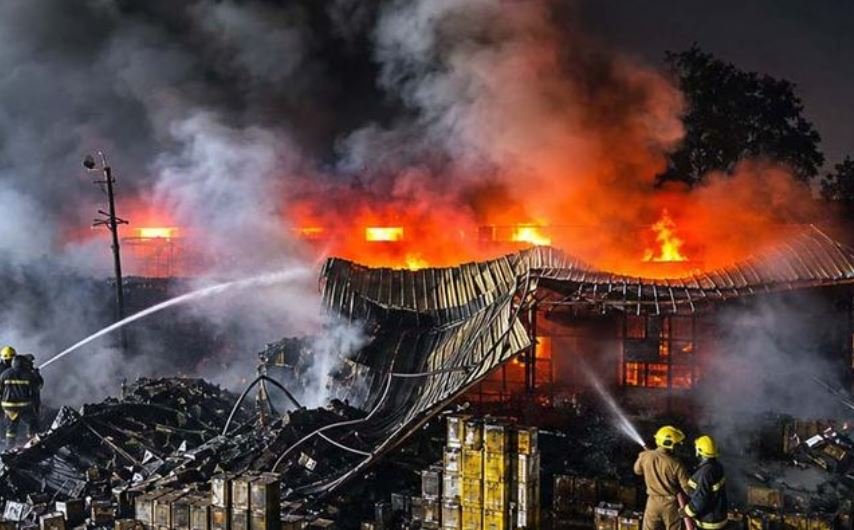
When a shop is destroyed by fire, the loss extends far beyond damaged walls, merchandise and financial investment. For a small trader, it can mean the disappearance of years of hard work, the interruption of a family’s livelihood and uncertainty about rebuilding a business established through personal sacrifice. The recent fire incidents at Jammu’s Nehru Market and Shiv Market have brought these realities into focus. Lieutenant Governor Manoj Sinha’s visit to the affected markets, announcement of immediate financial assistance and assurance of administrative support acknowledge the difficulties confronting the trading community. However, these incidents also present an important opportunity to strengthen commercial safety, improve disaster preparedness and develop a more dependable system of economic rehabilitation across Jammu and Kashmir.
The announcement of Rs 1 lakh in immediate assistance for each affected shopkeeper through the Red Cross Society offers some relief during a difficult period. Financial support amounting to Rs 38 lakh, including Rs 11 lakh for traders at the Warehouse, Nehru Market, and Rs 27 lakh for those at Shiv Market, reflects an initial effort to address their immediate concerns. The Lieutenant Governor’s acknowledgement that such assistance cannot fully compensate for the losses demonstrates an understanding of the financial challenges facing affected businesses. Nevertheless, the restoration of commercial activity requires considerably more than immediate compensation. Shopkeepers must assess damaged inventories, repair premises, replace essential equipment and re-establish relationships with suppliers and customers. For smaller establishments operating with limited savings, the interruption of business can create prolonged financial difficulties. Timely settlement of insurance claims, accessible institutional credit and practical administrative assistance can therefore make a substantial difference in their recovery. Jammu’s traditional markets remain important centres of economic activity, sustaining traders, transporters, employees and countless families whose livelihoods depend upon daily commerce. Their contribution extends beyond individual businesses to the wider economic stability of the city. Protecting these commercial spaces should consequently be recognised as an essential component of urban development and public welfare. The inquiry ordered into the Nehru Market warehouse fire is another significant aspect of the administration’s response. The two-member committee has been directed to examine the circumstances surrounding the incident, identify possible negligence and submit its report within 15 days. An impartial investigation can establish the facts and provide a basis for appropriate accountability. Equally important, its findings should help identify preventive measures that deserve attention across commercial establishments. A broader concern is that fire safety frequently receives greater attention after an emergency than during ordinary commercial activity. Regular inspections, safe electrical installations, functional firefighting equipment and unobstructed emergency access are basic requirements that must become routine priorities. Compliance should be measured through actual preparedness rather than documentation alone. The responsibility cannot rest exclusively with government agencies. Business associations, property owners and individual traders also have an important role in promoting safer commercial environments. Training workers in basic emergency procedures, maintaining equipment and identifying potential hazards can reduce vulnerability. At the same time, authorities must provide clear guidance and reasonable support to smaller businesses that may struggle with the financial implications of safety improvements. Jammu and Kashmir’s commercial development requires an approach that combines economic growth with disaster resilience. Urban planning, market modernisation and emergency management should advance together, ensuring that expanding commercial activity does not increase avoidable risks.
Finally, it requires a comprehensive, time-bound rehabilitation strategy ensuring speedy insurance settlements, transparent assessment of losses and adequate financial support for affected traders. The administration must prioritise regular fire safety audits, modern firefighting infrastructure, improved emergency access and strict monitoring of safety standards across Jammu’s commercial centres. Municipal authorities, fire services and traders’ associations should jointly organise awareness programmes and practical emergency training. Equally important is ensuring that the inquiry findings result in meaningful corrective measures and clear institutional accountability. Beyond immediate relief, the larger responsibility is to restore livelihoods, rebuild commercial confidence and prevent similar tragedies. Jammu’s economic future will be stronger when public safety becomes a continuous commitment, supported by responsive governance, responsible business practices and collective vigilance.

